As good as bread, but which one?
"It's as good as bread." We say it of someone who lets us pass first, carries a heavy bag without waiting, remembers when we need something. Usually, no one asks if that bread is fresh, made with sourdough, or well-baked.
To understand how ancient the custom of sharing bread is, just one word is enough: companion. It comes from the medieval Latin companio, formed from cum and panis: originally, someone with whom one eats bread. Companatico also takes its name from what is eaten with a slice. It might seem like an exaggeration to entrust the vocabulary of relationships to a loaf of bread, until you sit down at a table and someone says, "Cut some for me too."
Now that this food has returned to prominence and regained its appeal, thanks to the many new young bakers who are turning it into a status symbol, starting with the Austrians who in New York have made it a cult classic at sixty dollars a loaf, the goodness of bread is also measured in the supply chain: as good as well-made bread, we might say, and made with top-quality ingredients, with the right leavening time, by people who work hard and without grueling shifts. The goodness of bread requires much more attention than before, and it is an achievement we owe to the many who have made it a masterpiece, from Eugenio Pol to Davide Longoni, among the first to realize that you can be as good as bread even in making it.
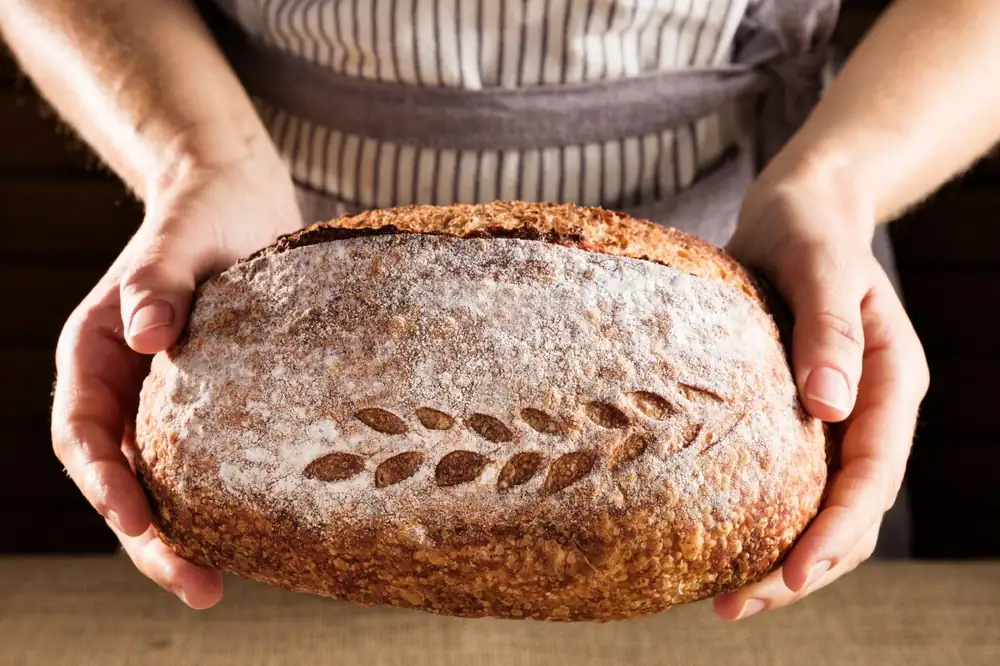
Bread, however, isn't always just good. Freshly baked bread smells good enough to make us forget the rest of lunch, but it's awkward to cut: the crust resists, the crumb compresses under the blade, and we end up with thousands of crumbs everywhere. It's best to place it on a corrugated or perforated cutting board with a crumb catcher, and use a serrated knife, letting the teeth work with long, light strokes. If you want a regular slice, waiting for it to cool is a small exercise in patience. If you want to eat a piece right away, just tear it off with your hands. Luckily, at home, you can.
The next day, its texture changes. A whole loaf is still ready for slicing; the slices forgotten on the table become drier. It's the moment when someone says "the bread is stale" and someone else puts on water for tomato soup. Or cuts it into cubes for soup, soaks it for panzanella, lets it dry completely to make breadcrumbs, sets it aside to feed to the chickens. These are different ways of realizing the same thing: bread shouldn't be judged only on its first day, another thing we've begun to understand again since we replaced small rolls with large loaves made with sourdough, skill, and expertise.
For two stale slices, there's a solution that takes five minutes and requires almost no recipe. Heat them in a pan or toaster until crispy. Then add a drizzle of oil and a pinch of salt; if desired, rub a clove of garlic on the hot surface. With a ripe tomato, chopped and pressed on top, they become a light lunch. With milk and egg, butter or oil, and a sprinkling of cinnamon or zatar, they become a sweet or savory breakfast, depending on what you put in the pan. Stale bread can be salvaged; if it's moldy, it should be discarded.
There's another reason why "as good as bread" works so well: bread accompanies foods that have nothing in common: it holds the sauce, makes room for the cheese, collects the remaining oil on the plate. Its shape and flavor change from one region to another, and everyone ends up considering the one from their childhood normal. A bland slice might seem incomplete to someone who grew up on salty bread; for those who've always eaten it, it's just the right slice next to something tasty. Perhaps that's why the compliment is given without qualification. "As good as bread" doesn't promise a perfect person, but it does suggest someone who comes naturally to sit down with, and with whom you'd gladly leave the last slice.
Want to try your hand at bread making but are reluctant due to obvious incompetence? Here's a recipe you can't miss, and it will make you a master baker in a day. Start with a mixture of water and flour to rest; halfway through, a few well-placed strokes; and finally, a little pampering. Here's how to make a loaf that's incredibly satisfying, effortlessly and without any special skills. While you knead, be kind, like him.