How to Slice a Brisket in 5 Simple Steps
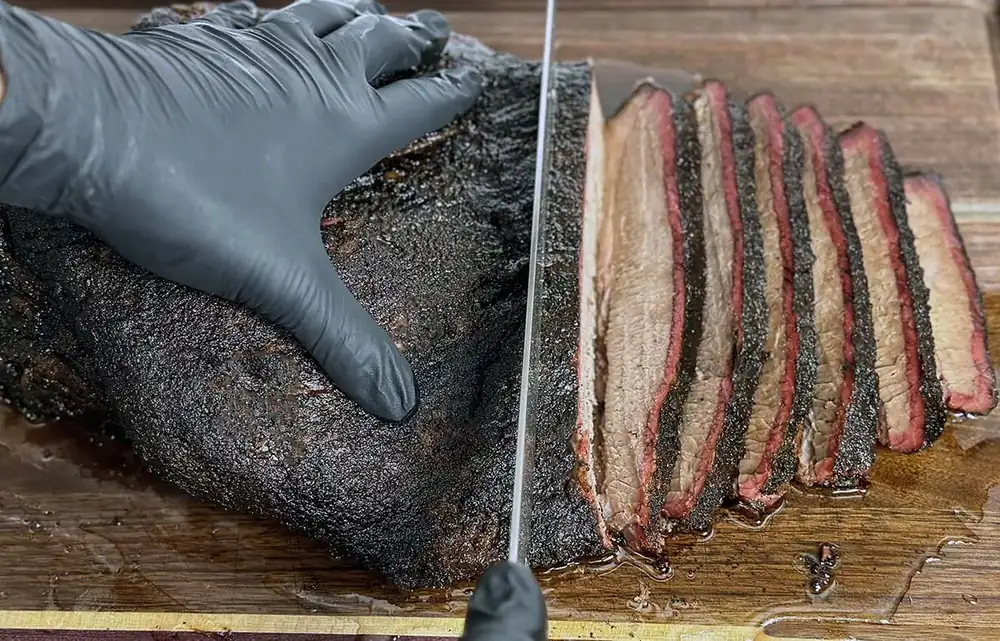
Resting your brisket, investing in a good brisket knife , and making sure you slice against the grain will keep you brisket moist, juicy, and delicious.
If you’ve got any brisket slicing tips, or you think we’ve missed a step on this list, we’d love it if you’d tell us about it in the comments below.
Got a question or have a pro tip to add? Leave a rating and let us know how your cook went.
A well-rested brisket
Slicing into a whole brisket fresh from the smoker before the meat has had time to relax is a mistake. After your brisket reaches an ideal temperature of 203-205°F, wrap it in foil (if you didn’t already) and a few old towels, and leave it in an old cooler. This acts as a faux cambro, keeping your brisket warm and safe for hours. The best way to stop the loss of juices is to rest your brisket for at least an hour before slicing. The reason that resting stops all those tasty juices from escaping is down to how the proteins in your meat react to the cooking process. Raw beef is around 75% water. As you cook the meat, the proteins in the muscle begin to contract, in diameter at first and then, when the temperature rises about 120°F, in length. These shrinking proteins, which can lose up to half of their length during the cooking process, literally squeeze the water out of the meat, leadin
A sharp slicing knife
It might seem like any old knife will do when it comes to carving into your brisket, but investing in a good sharp slicing knife can make getting perfect thin slices that much easier. As we noted in our guide to the best knives for slicing brisket, a thin slicing knife, around 12 inches long, will get you the best cut for your money. We designed our very own slicing knife specifically for pitmasters. Smoke Kitchen 12" Brisket Slicing Knife $89.95 Make perfect cuts every time you're slicing brisket or any larger cut of meat I wouldn’t recommend using an electric food slicer unless you were slicing cold brisket for sandwiches.
Large butcher’s block
Having your brisket sliding around as you try to cut it is going to make getting a good slice difficult, which is why we suggest you invest in a butcher’s block. What sets a butcher’s block apart from a standard chopping board is the weight and the size. You’re looking for something at least 2 inches thick to have enough weight to prevent it from sliding around. A good butcher block is an investment that will last you for many years if cared for correctly and does a much better job than a cheap cutting board. You’ll also want to lay your hands on something with sufficient space on it to allow you to move a large piece of meat around, like a brisket, and slice into it without pushing everything off the edges every time you move. If you don’t have the room for a butcher’s block, try placing a wet towel underneath your cutting board to prevent it from slipping around.
Separate the flat from the point
The key to slicing any piece of meat and retaining its tender juiciness is to slice against the grain. This cuts through the muscle fibers, shortening them and making the meat seem more tender by giving you less to chew through. The point and the flat of the brisket have fibers that run in two different directions, so the first step to slicing you brisket it cutting it in half to separate the flat from the point. This is where investing in a good butcher block with juice
Trim excess fat (unless your brisket was perfectly trimmed before cooking)
Fat does mean flavor, but depending on how much fat cap you left, too much fat can make your brisket taste greasy. After you’ve separated the point from the flat, trim any excess fat you can see from the top of your brisket.