Ike Jime. What is this Japanese technique and what does it involve? Fish aging
Japan has a way of preparing fish from which we can learn a great deal. Fish is a food whose flavor can be altered depending on how it is obtained or caught.
Fish undergo nerve stimulation from the moment they are caught. This stimulation, known as anoxia, is directly responsible for the lactate that gives fish a metallic taste when eaten raw. This, along with the decrease in pH, is the first step in the degradation of the fish's flesh.
Burnt tuna meat syndrome or yake
This entire process is known as the "burnt tuna syndrome," and in Japan, it's called yake. The presence of yake in tuna is very closely monitored and controlled there, as it directly impacts the potential price of the fish. Many pieces are even removed from sale and never purchased because of the presence of yake.
The best option available to them is to kill the fish in question as quickly as possible. The Japanese have achieved this thanks to the technique we will demonstrate today: Ike Jime, Ikejime (活け締め), or Ikijime (活き締め). This technique allows them to avoid killing so many fish that they won't eat, as it involves disabling the tuna's brains and preventing nerve impulses from reaching the body's muscles when they are caught.
What is Ikejime (活け締め) or Ikijime (活き締め)? How is it done?
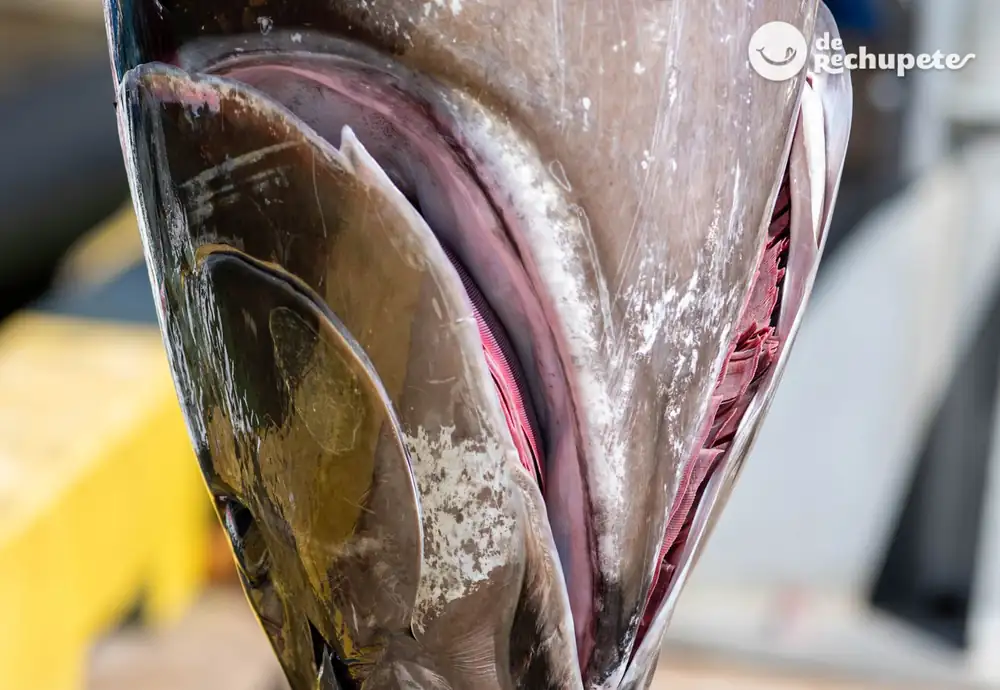
The technique is performed with spearguns, in the case of very large tuna, using one or more shots if done out of the water. If done underwater, a lupara (a type of speargun) is used. Afterwards, it is necessary to sever the blood vessels along the sides and below the pectoral fins, as these are responsible for the fish's countercurrent heating system.
The tuna, naturally, quickly empties of its blood, preventing it from overheating and producing stress hormones that could reach the muscles. The next step is to remove the spinal cord, which requires inserting a rod from the head end through the spinal canal of the dorsal fin.
Parameters such as quality, flavor, aroma, texture, and color are evaluated when preparing fish. In the case of fish maturation, the best results are obtained after six days, as this eliminates odor and the flesh stretches, resulting in an exceptional texture and flavor.
The maturation and quality of the fish
Maturation is an essential aspect of the entire fish production process if the goal is to obtain the highest quality. It results from the delayed onset of rigor mortis, causing the fish to initially resemble rubber, then become rigid, and finally relax again, retaining its juiciness.
It's also important to keep in mind that each fish species has a different maturation period. And while it's generally accepted that fish raised in the open sea produce a better product, farmed fish have improved in quality thanks to this method.
How was Ike Jime implemented?
It is true that much progress has been made in the way fish is handled from capture to consumption in Japan, but it remains extremely complicated how and where to puncture without causing stress to the fish.
In our country, its implementation is only taking place in fish farms and although the cultural shock is so evident, there is evidence of the improvement in the quality of fish that come from these fish farms.
So why isn't it more globalized?
This is because the handling process involves a greater workload, and at the same time, the physical characteristics of fish slaughtered using the Ike Jime method are unappealing because they are completely different and are mistaken for poor quality. These characteristics are: soft muscles, a sleepy appearance, a closed mouth, and a pinkish color.
There are no bad or low-quality products in the open sea; on the contrary, the quality is excellent. The problem lies in how the fish are handled and processed, because that quality is ultimately lost.