What is blanching: the cooking technique that improves vegetables, fruits and greens
Blanching is one of those cooking techniques that seems simple until you start using it properly. We're not talking about simply cooking vegetables until they're soft, or just boiling food.
That detail about timing changes everything. You don't blanch a tomato to cook it, but to peel it without struggling. You don't blanch green beans to make them wilted, but to better set their color, soften them just enough, and make them ready for a salad, a stir-fry, or later freezing. The key is to apply heat quickly, in a controlled way, and with a specific goal in mind.
What does scalding mean in cooking?
In cooking, blanching food means subjecting it to brief cooking in boiling liquid. It can last a few seconds or a few minutes, depending on the ingredient and the desired result. It's not always a technique intended to complete the cooking process, but rather to prepare food before further cooking.
That's why blanching is so common with vegetables, fruits, and nuts. At home, we do it, for example, when we put tomatoes in boiling water to peel them, when we briefly blanch spinach in the pot before sautéing it, or when we blanch almonds to make them easier to peel.
It can also be applied to meats, fish or seafood in specific preparations, although its most common use in daily cooking is in the plant world.
What is the purpose of scalding food?
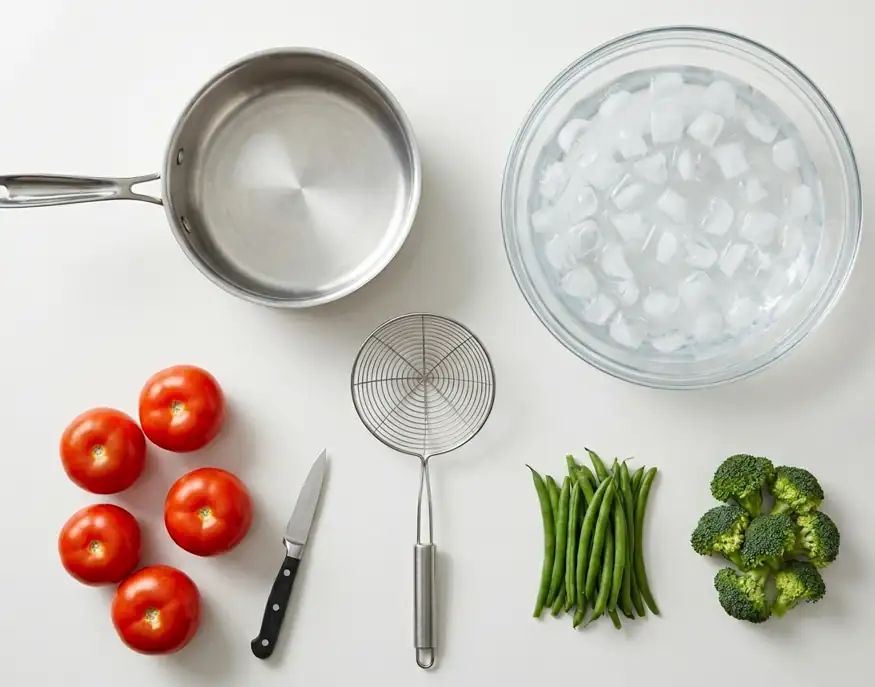
The first, and probably best-known, use is to make peeling easier. Tomatoes, peaches, almonds, and hazelnuts peel much more easily after a short blanching. In the case of tomatoes, simply make a shallow cross-shaped cut, dip it in boiling water for a few seconds, and then transfer it to cold water. The skin will peel off almost on its own.
It also helps to set the color of some vegetables, especially green ones. Green beans, broccoli, asparagus, peas, chard, or spinach benefit from a brief dip in boiling water, as they become more vibrant in color and have a more pleasant texture if they are then cooled quickly.
Another very practical use is to reduce strong or bitter flavors. Some vegetables benefit greatly from blanching because they lose some of that intensity that can be harsh. The goal isn't to leave them tasteless, but to soften them so they work better in the recipe.
In addition, blanching helps reduce the volume of leafy greens, such as spinach, chard, or cabbage. What seemed like an impossible mountain when raw becomes a much more manageable amount after just a few seconds of heat.
Scald before freezing
Blanching is also useful before freezing some vegetables. It's not just a whim: it helps preserve color, flavor, and texture because it slows down some of the processes that cause food to deteriorate over time. That's why many commercially frozen vegetables undergo blanching before being frozen.
At home, this is really useful when we have too many fresh vegetables and want to store them in better condition. They're blanched, cooled quickly, drained very well, and then frozen in portions. If they're frozen wet or clumped together, they stick to each other and are much worse when you use them.
How to scald properly
The technique is simple, but it's best to follow a little procedure. First, fill a pot with plenty of water and bring it to a rolling boil. If you're blanching vegetables, you can add a pinch of salt. Then, add the cleaned and chopped food, following the recipe.
The cooking time depends on the ingredient. A tomato might only need 20 or 30 seconds. Spinach, around half a minute or a minute. Green beans, broccoli, or asparagus might need a little longer, always aiming for tenderness but not overcooking.
Next comes the key step: removing the food and plunging it into ice water or, at least, under a good stream of cold water. This stops the cooking process and prevents residual heat from further softening the ingredient. If we skip this step, many vegetables lose their flavor, color, and texture.
Difference between scalding, boiling, and poaching
Although they may seem similar, they are not the same. Boiling usually involves cooking food for a longer period in boiling water or another liquid. This is what we do with pasta, potatoes, rice, or legumes, although each has its own specific cooking technique.
Blanching, on the other hand, is much shorter. The food comes into contact with boiling water for only a short time and is usually not fully cooked, except for very tender ingredients.
Poaching is something else entirely: it involves cooking in a hot liquid, but without a vigorous boil. It's the typical technique for poached eggs, where the goal is gentle cooking, not a vigorous boil.
Common mistakes when scalding
The most common mistake is overcooking. If a vegetable stays in the water too long, it stops being blanched and starts to be boiled. It loses firmness, the color fades, and the texture becomes dull.
Another mistake is adding too much at once. If you fill the pot to the top, the water stops boiling and the blanching process loses its effectiveness. It's better to do it in batches if you have a large quantity.
It's also important to drain food well after cooling. Blanched food that's full of water can ruin a stir-fry, dilute a sauce, or spoil a salad.
When is scalding worthwhile?
Blanching is worthwhile when we want to peel easily, better preserve the color of a vegetable, prepare food for freezing, remove a bit of bitterness, or leave an ingredient ready for faster subsequent cooking.
You don't need to blanch everything. A potato, for example, doesn't benefit from this technique in the same way as green beans or tomatoes. The key is to understand that blanching isn't a catch-all cooking method, but a specific tool to improve the final result.
When used correctly, blanching in cooking saves work, improves textures, and leaves many ingredients at that perfect point that is then noticeable in the dish.