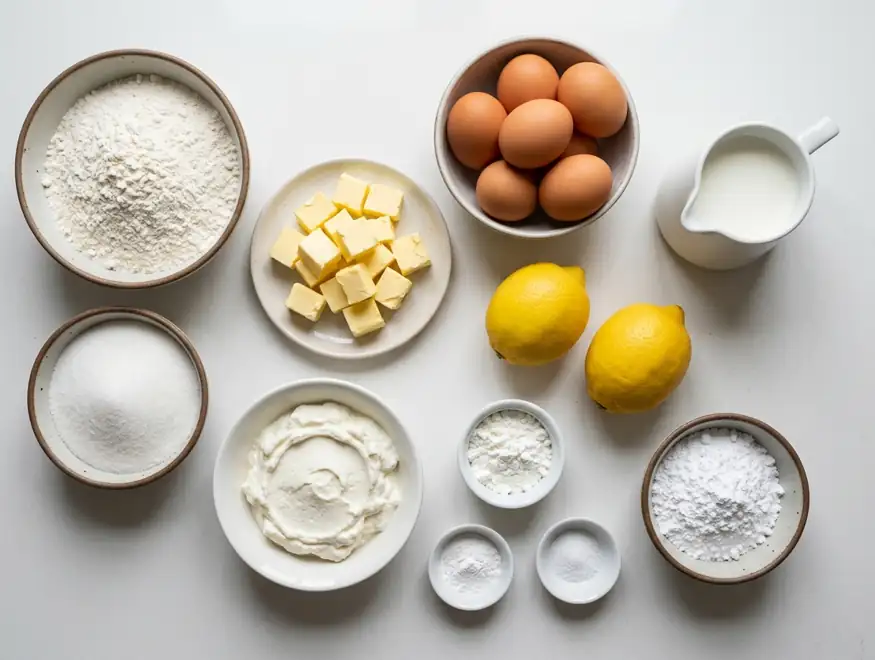
Neapolitan babbaiola. Posillipo's lemon and ricotta crostata
Para 8 1 €/pers. 330 kcal/100g.
- For the shortcrust pastry:
- 300g of all-purpose or pastry flour
- 150g of unsalted butter, cold
- 110 g of sugar
- 1 medium egg
- 1 egg yolk
- Finely grated zest of 1 untreated lemon
- 2 g of baking powder
- 2 g of salt
- For the lemon cream:
- 350 ml of whole milk
- 1 medium egg
- 2 egg yolks
- 100 g of sugar
- 30 g corn
- 15g of unsalted butter
- Peel of 1/2 untreated lemon, in strips and without the white part
- 25 ml of lemon juice
- To finish the filling:
- 200g of well-drained ricotta
- 70 g of sugar
- 1 medium egg
- Finely grated zest of 1/2 lemon
- For the finish:
- 10-15 g of icing sugar
- We start with the ricotta. Place it in a fine-mesh sieve over a bowl, cover it, and refrigerate for at least 1 hour. If it's particularly moist, you can do this step the night before. The drier the ricotta, the cleaner the Babbaiola will be when cut.
- We prepare the dough. We mix the flour with the sugar, yeast, and salt. We add the cold, diced butter and rub it in with our fingertips until we obtain a coarse crumb texture. We incorporate the egg, the yolk, and the zest of one lemon. We combine without over-kneading, form a disc, wrap it, and let it rest for 1 hour in the refrigerator. The shortcrust pastry doesn't need to develop gluten; the less we handle it, the more tender it will be.
- While the dough rests, we make the cream. Heat the milk with several strips of lemon peel (without the white pith) until it's almost boiling. Turn off the heat, cover, and let it infuse for 10 minutes. Remove the peel.
- In another bowl, whisk the egg and two egg yolks with 100g of sugar and the cornstarch. Gradually pour in some of the hot milk while stirring, then return everything to the saucepan and cook over medium-low heat, whisking constantly. When it thickens and begins to simmer gently, continue cooking for about 1 minute. Remove from the heat, stir in 15g of butter and 25ml of lemon juice. The cream should be thick and smooth, not runny.
- Transfer the cream to a wide container and cover it with plastic wrap, pressing it directly onto the surface. Let it cool completely. Do not mix the ricotta with the still-hot cream, as this will make the mixture too soft and complicate subsequent cooking.
- Beat the drained ricotta with 70g of sugar just until smooth. Add an egg and the zest of half a lemon. Then, fold in the cold pastry cream in two or three batches. Mix with a spatula until you have a uniform filling. There's no need to whip or aerate the mixture.
- Preheat the oven to 170°C (340°F), conventional setting (top and bottom heat). Lightly grease a 24cm (9.5 inch) springform or tart tin. Set aside about a third of the shortcrust pastry for the lattice top and roll out the remaining pastry between two sheets of baking paper to a thickness of about 3-4mm (1/8 inch). Line the base and sides of the tin, press down gently, and trim off any excess pastry.
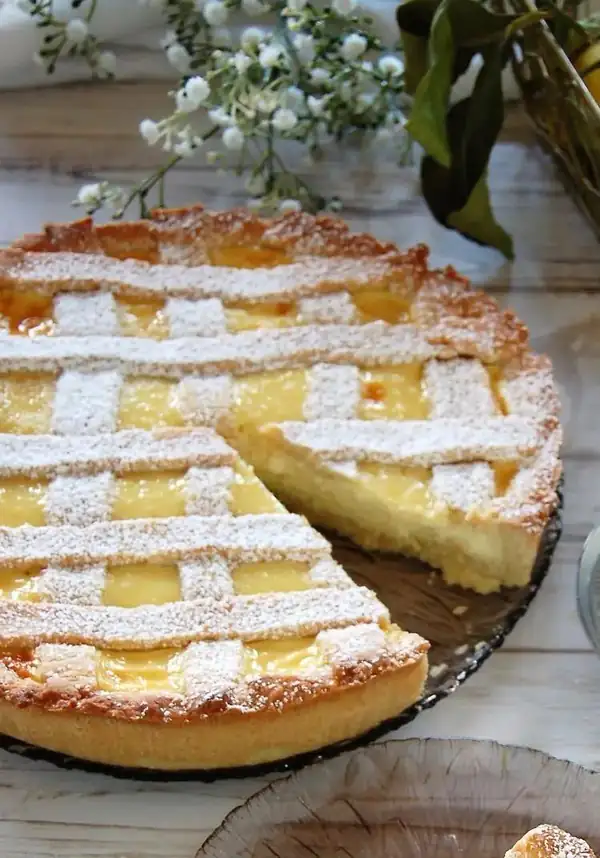
- Prick the base a few times with a fork. Pour in the filling and smooth it out. Roll out the reserved dough, cut strips about 1.5 cm wide, and arrange them in a simple lattice pattern, without aiming for perfect geometry. The homemade look of a crostata suits it better than a precise grid.
- Bake in the lower part of the oven for the first 20-25 minutes, then move the pan to a middle rack. Continue baking for another 20-25 minutes, until the edges and strips are golden brown and the center is set. It may jiggle slightly when you move the pan, but there should be no liquid cream visible in the center.
- Remove the Babbaiola from the oven and let it cool in the pan for 1 hour. Then refrigerate for at least 3 hours. Once chilled, unmold it and, before serving, let it sit at room temperature for 20-30 minutes and dust with powdered sugar. This resting time allows the filling to set and greatly improves the texture.
The name of the Neapolitan Babbaiola might be misleading, especially if the first thing that comes to mind is a rum-soaked babà. But there's no rum-soaked sponge cake or syrup here: it's a shortcrust pastry crostata with a buttery, crumbly base enclosing a smooth filling of lemon, cream, and ricotta. The contrast is precisely what makes it so interesting: a crisp edge, a creamy interior, and a clean citrus note that doesn't make the tart overly acidic.
It's associated with the Neapolitan area of Posillipo and Marechiaro and with a woman named Rosa, known as "la Babbaiola" for her skill in making babàs. The story is repeated in different versions, but there isn't a single, definitive recipe that we can rigorously present as "the original." Therefore, we offer a homemade version faithful to the style: lemon shortcrust pastry, custard, ricotta, and baked together in the oven.
The tricky part isn't making the lattice, but controlling the moisture. We need well-drained homemade or store-bought ricotta, cold pastry cream, and shortcrust pastry that we'll work just enough. If we add a hot filling or watery ricotta, the base will lose its definition and the tart will take much longer to set.
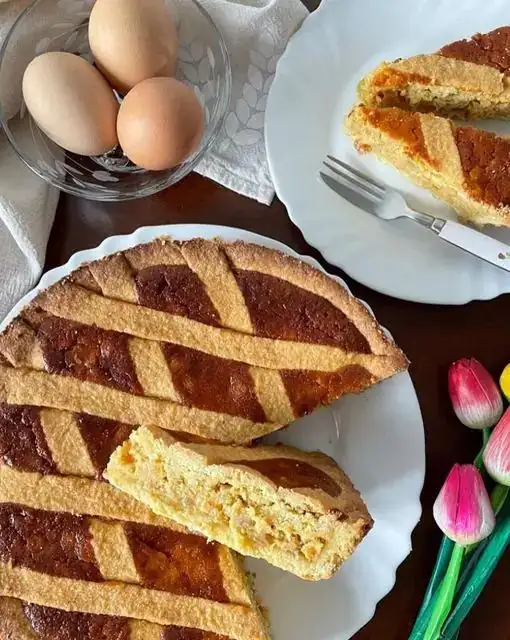
If you fancy continuing with Italian sweets, you can try the Neapolitan pastiera; the Neapolitan migliaccio, also with ricotta; and a jam crostata to continue with the family of Italian shortcrust pastry tarts.