The best recipes from Navarrese cuisine to enjoy its produce, stews and traditional sweets
Navarre is best understood when you sit down to eat. Within just a few kilometers, the landscape changes, and so does the cuisine: in the north, valleys, pastures, game, mushrooms, sheep's milk, and hearty stews reign supreme; in the Ribera region, you'll find incredible vegetables; and in the central region, market gardens, wine, cured meats, stews, and family recipes come together. This blend is
When it comes to traditional Navarrese recipes, produce plays a vital role. Navarrese asparagus, Tudela artichokes, Lodosa piquillo peppers, lettuce hearts, borage, and cardoons aren't just side dishes; they're often the star of the show. This is evident in dishes like vegetable stew, artichokes with ham, and stuffed peppers, where the key is to respect the ingredients and not overwhelm them with too many extras.
But Navarre isn't just about vegetables. It also has hearty stews, like lamb chilindrón, Navarrese-style beans, ajoarriero (a cod and potato stew), or migas de pastor (a breadcrumb dish). These are casserole dishes, meant to be enjoyed with bread, and you'll want seconds if there's anything left in the dish. And then there's the more festive and popular side, with chistorra (a type of sausage), Navarrese stuffing, lean pork with tomato, or trout with ham, dishes that evoke the aromas of bars, village houses, leisurely lunches, and unpretentious cooking.
There's plenty to discover on the sweet side too. Navarrese curd, cream-filled pastries, txantxigorri cakes, and Aoiz-style crusty pastries are all recipes with plenty of character, some humble and others more like pastry shops, but all with that irresistible homemade touch. So here's a wide-ranging, well-organized, and thoroughly enjoyable selection of savory and sweet dishes to explore Navarre without ever leaving your table.
Savory recipes from Navarrese cuisine
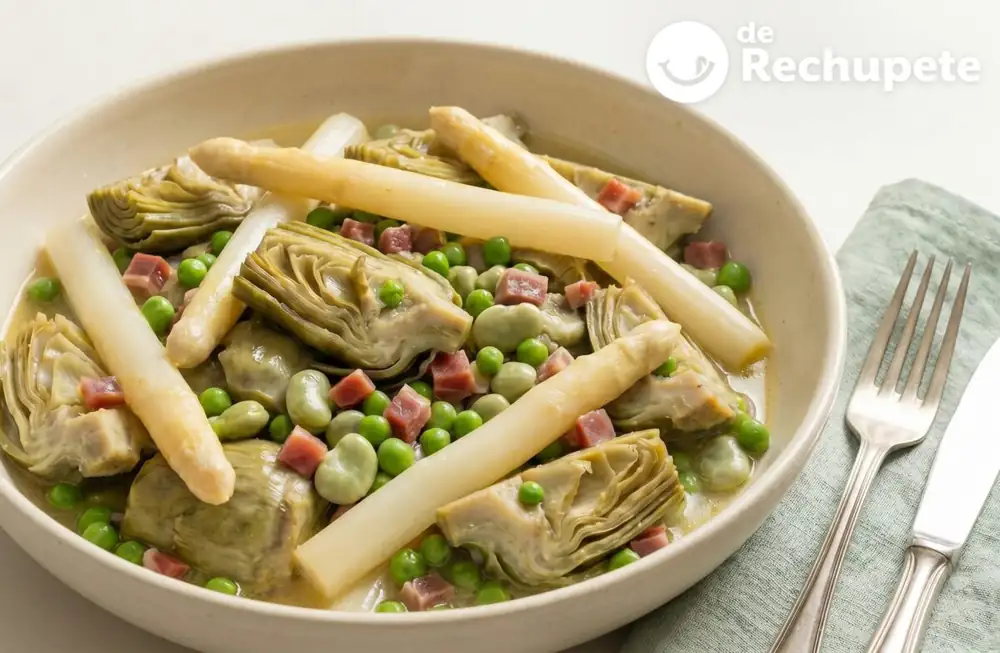
Navarrese vegetable stew is one of the great treasures of the local vegetable garden. It's not just about throwing vegetables together; it's about treating each one with the respect it deserves: asparagus, artichokes, peas, broad beans, cardoon, or carrots, each cooked to perfection. The finest version cooks the vegetables separately and then combines them with a mild sofrito, sometimes with ham, so that everything tastes clean and flavorful.
Pochas are tender, soft, and buttery beans, closely associated with the end of summer and the hearty stews of Navarre. They are usually cooked with vegetables such as bell pepper, tomato, garlic, and onion, although they can also be made with quail, chistorra sausage, or a touch of meat. When cooked properly, they are creamy but not heavy, with a rich broth and a flavorful base.
Navarrese ajoarriero has the soul of a traveler's cuisine and a home-cooked pantry staple. It's prepared with desalted cod, garlic, onion, peppers, tomato, and olive oil, all carefully blended until a juicy and flavorful mixture is achieved. In some homes, potatoes, eggs, or even prawns are added, but its base remains that rich, mellow sofrito with flaked cod that begs for bread from the very first bite.
Lamb chilindrón is one of those stews that feels like home. The meat is cooked slowly with onions, garlic, tomatoes, and peppers, forming a reddish, flavorful sauce that's perfect for dipping. It's a long-standing tradition in Navarre, especially when good lamb is used and the pot is allowed to do its work without rushing.
Navarrese-style trout is simple and easily recognizable: a cleaned trout, stuffed or accompanied by ham, dredged in flour, and fried until golden brown on the outside and juicy on the inside. The ham adds a touch of saltiness that pairs wonderfully with river fish. Served with lemon, potatoes, or a salad, it needs little else.
Lodosa piquillo peppers are a fantastic product on their own, but stuffed with cod, they're in a league of their own. The combination of roasted, sweet, and slightly smoky peppers with a mild béchamel or cod brandade works wonderfully. They're usually finished with a delicate, reddish piquillo pepper sauce, which rounds out the dish without making it heavy.
The Tudela artichoke has a very delicate flavor, with that elegant bitterness that makes it so special. With ham, garlic, and a little oil, it makes a simple, straightforward, and flavorful dish. They are also prepared stewed, in vegetable stews, or with clams, but the version with ham is one of the best examples of how delicious a well-prepared vegetable can be.
Cardoon Navarrese style is a common dish on winter and Christmas tables. It's cleaned, cooked until tender, and finished with a smooth sauce made with garlic, flour, stock, and ham. It's not a showy recipe, but it has that home-cooked flavor that improves the more you try it.
Borage is a very common vegetable in Navarrese and Aragonese cuisine. Cooked with potatoes and seasoned with a garlic sauté, it's light, simple, and very pleasant. Its texture is delicate, so it's best not to overcook it. It's one of those recipes that seems insignificant until you try a good one.
Navarrese relleno is a type of white blood sausage, without blood, made with rice, egg, bacon or pancetta, garlic, onion, parsley, and saffron. It is sliced and fried, usually served with tomato sauce or peppers. It is less well-known outside of Navarre, but it has a very distinctive character and deserves a place in any serious collection of Navarrese cuisine.
Shepherd's migas originate from a tradition of using up leftovers, with stale bread, fat, garlic, and sausage. In Navarre, you'll find versions with chistorra sausage, bacon, ham, or longaniza sausage, depending on the region and family custom. When prepared properly, they are loose, flavorful, and have that hearty touch that makes them a perfect winter dish for groups of friends.
Lean pork with tomato is a lunch dish closely associated with Navarrese and Aragonese cuisine, and in Navarre, it's a staple at bars, festivals, and local meals. It's prepared with slices of lightly cured ham, homemade tomato sauce, and often a fried egg. There's no need to complicate things: good tomatoes, perfectly cooked ham, and bread on the side.
Lamb stew is a country dish, slow-cooked and meant for gatherings. It includes chopped lamb, potatoes, garlic, onion, bell pepper, wine or stock, and is simmered gently until the meat is tender. It's a typical recipe from the Ribera region, perfect for celebrations, and ideal for making a large batch and enjoying at a leisurely pace.
Navarrese-style fried ham and cheese fritters are a classic version of this dish, and their construction is quite different from homemade ham croquettes. Here, the ham isn't chopped or spread throughout the batter. The trick is to create a layer of béchamel sauce, place the cooked ham and cheese in the center, and then cover it with more béchamel. When cut, they appear as square or rectangular pieces with a clearly defined center and a crispy exterior.
Sweet recipes from Navarrese cuisine
Cream-filled pastries are crispy on the outside and creamy on the inside, a winning combination. The dough is rolled into a tube, fried or baked depending on the version, and filled with custard. In Navarre, they are very common in restaurants and pastry shops, especially in the Ultzama and Baztan areas.
Txantxigorri cakes are made from leftover pork cracklings from the pig slaughter. They contain flour, lard, sugar, cinnamon, and those little bits of pork that give them a very distinctive flavor. They are sweet, but with a toasted, rich undertone that sets them apart from any ordinary pastry. Perfect for coffee, after a meal, or a traditional afternoon snack.
The Aoiz costrada is a rich, traditional sweet treat, with a dough made from egg yolks, lard, and sugar, and a moist, creamy interior. It has that old-fashioned, celebratory feel, the kind of pastry that wasn't made every day. Its golden, slightly crispy surface contrasts beautifully with the soft, tender interior.
Garroticos are a sweet treat closely associated with Pamplona. They are made with puff pastry and chocolate, usually in an elongated shape, and have that easy-to-eat quality that hooks everyone. They don't seem like a complicated recipe, but when the puff pastry is well made and the chocolate complements it perfectly, they are a little explosion of flavor.
The "Rocks of Puy" are typical of Estella-Lizarra and are usually made with chocolate and nuts. They have an irregular, rustic shape, and that's precisely where their charm lies. They are confectionery sweets, perfect for finishing a meal, accompanying coffee, or taking home as a culinary souvenir.
Pitillas polvorones are part of Navarre's most traditional, simple, and artisanal pastry tradition. They are sweets with a crumbly texture, made with lard, flour, and sugar, designed to melt in your mouth. Although they evoke Christmas, they are the kind of treat that perfectly illustrates the importance of local baking in small towns.
Candied almonds are a common sight at festivals and markets in Navarre. They don't need much explanation: almonds, sugar, and patience to achieve that crisp, shiny coating that sticks to your fingers. They're a simple street treat, perfect for snacking—the kind you buy to share and end up eating almost without realizing it.
A recipe book rooted in the land
The best thing about Navarrese cuisine is that it doesn't try to impress with fireworks. Its strength lies in the product and in well-prepared cooking: seasonal vegetables, slow-cooked stews, flavorful cured meats, river fish, sheep's milk, artisanal sweets, and recipes that have been passed down from family to family without losing their essence.
That's why this recipe book works so well for cooking at home. You can start with something simple, like asparagus with vinaigrette or baby gem lettuce with anchovies, followed by white beans or a cod and potato stew, and finish with curd or pastry-filled pastries. And if you're planning a large gathering, then it's time for lamb stew, vegetable stew, stuffed peppers, and a bottle of Navarrese wine nearby. With that, the meal is already well on its way.