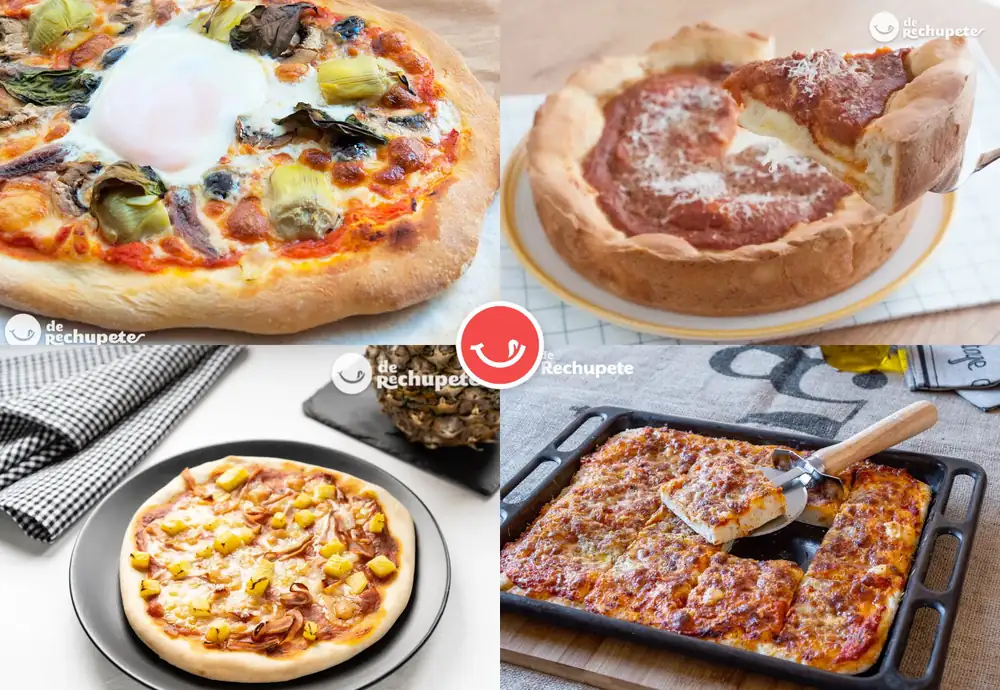
Our best homemade pizza recipes to prepare at home
Pizza is one of the most universal and beloved dishes in the world. Born in Italy but reinvented in every corner of the planet, this delicious combination of baked dough, tomato sauce, and cheese has won over palates with its endless variety of flavors.
In this special feature, we invite you to discover classic recipes and original versions, tips for achieving perfect dough at home, tricks for baking it like a pro, and options for all tastes: meat-eaters, vegetarians, vegans, and gluten-free. Because a good pizza isn't just about ingredients, but about passion, technique, and the pleasure of sharing something truly delicious.
Get ready for this journey through the world of pizza on De Rechupete, where every recipe tells a story and every bite awakens emotions. Whether it's a thin and crispy base, a fluffy Roman-style crust, or even a stuffed version, this special is a celebration of timeless flavor.
Our homemade pizza dough
My friend Luca taught me my pizza dough recipe, and since then, the way I make it has changed, and we've enjoyed authentic Italian-style pizzas ever since. So, let's get on with this recipe, which I hope will help you with your pizza-making needs.
A thin, crispy pizza base that we're crazy about today. The thin version, as opposed to the fluffy, bread-like kind, is one of the most widespread outside of Italy, especially in Spain, where we love that the edge gets toasted and the center holds its shape without sinking.
Yes, you can make pizza with chickpea flour. We've tried it at home, and while it's not like traditional pizza dough, it's really good. It's easier to work with than cauliflower pizza crust, and my little one loved it—he didn't leave a crumb!
This recipe for cauliflower crust pizza—not "pizza with cauliflower," because the base is made entirely of cauliflower—contains no flour or bread. It's a great way to get kids to eat more vegetables. Pizza is always a good idea, and since it can be hard to get youngsters to eat cauliflower (we've all been there), what better way than to "hide" it in such a tempting recipe?
Beyond what it might seem to those of us who don't suffer from it, having celiac disease, non-celiac gluten intolerance, or any other condition that prevents us from consuming gluten can significantly impact our diet, especially if we often eat out. Although it's increasingly easy to find gluten-free products on the market these days, they aren't always of the best quality and are often quite expensive.
Unleavened pizza dough is an ancient recipe; it seems that in Babylon and Egypt, people were already eating unleavened bread and dough baked in clay ovens. Many restaurants and pizzerias make delicious pizzas. There are even supermarkets that sell pre-made dough or whole pizzas. But honestly, isn't it better to make it at home with your favorite toppings? Besides saving money, you can personalize it, and it won't take much more time.
We'll also see how to make it using sourdough starter and fresh baker's yeast, and what the differences are between the two, so you can decide which method to use. Using whole wheat flour changes the flavor of the pizza we're generally used to. It also affects the texture and how filling it is. The result of a pizza dough made with whole wheat flour is, in any case, incredible. More flavorful and with more substance.
Our selection of homemade pizzas
I've always loved the name of this pizza, "capricciosa" or "whimsical." It made me imagine the ingredients in its recipe as a whim, either because anything goes when making this pizza or because it's so good that it's just that—a treat for the palate. I think the latter is more accurate, because it truly is impressive, from making the homemade pizza dough to the meticulous preparation of all its ingredients.
One of the most popular pizzas at home is the four-cheese pizza, or pizza ai quattro formaggi. In this recipe, I recommend a selection of Italian cheeses, but you can use whichever ones you like best. Combine them wisely and with a little balance, and you'll achieve your perfect pizza.
This type of Italian pizza consists of a Neapolitan pizza dough base and just six toppings. It's as simple as tomato sauce, mozzarella cheese, fresh basil, salt, freshly ground black pepper, and extra virgin olive oil. It's undoubtedly the most popular Neapolitan pizza.
This homemade Italian primavera pizza has that perfect freshness from the vegetables, the melted mozzarella, and the fresh arugula added at the end, which doesn't burn in the oven and stays nice and crisp. This recipe is easy, with a simple homemade pizza dough, crushed tomatoes, mozzarella, cherry tomatoes, red onion, black olives, and arugula, and it's baked at a high temperature of 250°C to achieve a golden base and crispy edges.
I had some leftover ham hock with turnip greens that my mother had made, and some Arzúa-Ulloa cheese. The combination immediately came to mind, and I assure you the result is delicious. A 100% leftover recipe.
The ingredients for Neapolitan pizza couldn't be more basic, but to make a truly exceptional Neapolitan pizza, they have to be of the highest quality and flavor. Real mozzarella (buffalo mozzarella is even better), fresh basil leaves (never dried), and homemade tomato sauce—with all that, you'll have a pizza that's absolutely delicious.
It's also important that you like the flavors of this pizza, as the pesto sauce is quite unique. It's a sauce recipe that combines a good extra virgin olive oil, fresh basil, cheese, pine nuts, and salt. In fact, I recommend trying this pizza with various Italian pestos, such as pesto rosso, or even combining the two types, green and red.
Chicago-style pizza originated in the USA and is a variety of pizza with a thick bread base and a generous amount of mozzarella cheese and tomato sauce. It's definitely not a pizza for dieters; the cheese is abundant, the thick bread crust is very different from the pizza dough you're used to, and it's incredibly flavorful. The pepperoni and copious amounts of tomato sauce create a festival of tastes and aromas.
This is one of the pizzas I served to some friends at a dinner party a few months ago at home, and it disappeared in just a few minutes—it was undoubtedly the most popular. This pizza isn't your classic Italian pizza; it has a Galician twist.
Starting with the basics—chicken, tomato, and mozzarella—you can add any toppings you like. My recommendation is not to overload it and make a pizza with 2-3 toppings at most. This way, the flavors come through better. Also, keep in mind the baking times for each ingredient, so you don't burn them by putting them in the oven too soon. What is important is that the chicken "crust" is in the oven for at least 15 minutes, so it's cooked through and has a crispy edge.
One thing's for sure: pineapple is an incredibly versatile fruit. It can be prepared and enjoyed in so many ways, and honestly, we think this combination with tomato, cheese, ham, and that crispy pastry base is simply amazing. Plus, it has a perfectly balanced flavor, and that fresh, sweet, and tropical touch of pineapple... it's already whetted our appetites!
Lahmacun is simple, and once assembled, it's ready to devour in just five minutes in the oven. The most tedious part is waiting for the dough to rise, but it's the perfect time to chop the vegetables and mix them with the meat and seasonings needed for the topping.
It's characterized by its thick crust, which can reach up to two centimeters. This makes it very filling, and one piece is more than enough to satisfy your hunger. However, its sponginess and simplicity make it irresistible, and it's hard not to go back for a second slice.
If you're vegan and cheese isn't part of your daily diet, be sure to try this recipe.
The name of this pizza actually comes from the Sicilian language and literally means Sicilian pizza. Traditionally, it's made with anchovies and pecorino cheese, but we've brought you the version we love most at our tables (it has Grana Padano—we love Grana Padano!).
The foundation of a stromboli is its pizza dough, which provides the perfect balance: tender on the inside and crispy on the outside. Inside, it's filled with meat. Salami is especially popular, although some use pepperoni or other Italian cured meats. Each contributes a distinctive savory flavor, but all are delicious.
This pizza has that smoky flavor, the perfect blend of meats and melted cheeses that makes it a guaranteed hit. Plus, it's the perfect recipe to make at home on a Friday night or on the weekend, when we have a little more time to enjoy ourselves.
In the world of pizza, few options are as popular as pepperoni. It's simple, flavorful, and has that spicy kick that hooks you from the first bite. The advantage of making it at home is that you control the ingredients and can make it exactly how you like it.
It's one of those recipes that are a hit at home because they combine two fairly universal pleasures: homemade pizza and a creamy carbonara-like topping, closer to the version that so many popular pizzerias have made famous than to the classic Roman carbonara.
In Montevideo, pizza doesn't always come out of the oven round. The tradition of pizza a la pala—long, with a spongy crumb, and cut into rectangular slices—also gave rise to one of its simpler variations: the Uruguayan figazza. Here, there's no tomato sauce or a layer of cheese hidden underneath. The surface is onion, lots of onion, with oil and oregano; no tomato sauce. The dough is firm enough to hold the bread without becoming a dry crust.
The preparation is linked to the Buenos Aires tradition of deep-dish pizzas and to the Banchero family, of Genoese origin, who popularized fugazza with cheese in La Boca. Argentine cuisine eventually developed its own distinct pizza identity, with thicker crusts and much more cheese than Neapolitan pizza; this contrast is clearly illustrated in guides to the differences between Argentine and Italian pizza.
Pizza is much more than fast food or a simple recipe: it's an expression of creativity, culture, and flavor that adapts to every palate and occasion. Whether lovingly baked at home or enjoyed in an artisanal pizzeria, each version has its own charm and story. This special feature is an invitation to explore new combinations, perfect techniques, and, above all, savor the pleasure of sharing a good pizza with those we love most.