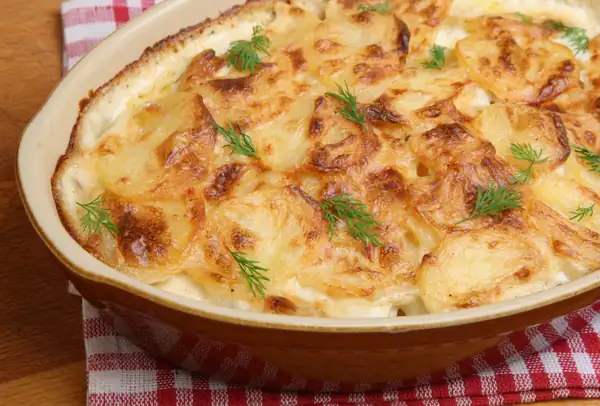
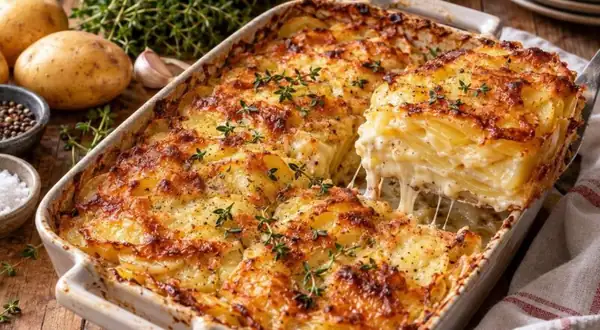
Gratin dauphinois: the French creamy potato gratin without cheese
Para 4 0.8 €/pers. 130 kcal/100g.
- 1 kg of potatoes, preferably Monalisa or an all-purpose variety
- 250 ml of whole milk
- 250 ml of whole liquid cream, with 30% fat content
- 25g of butter
- 1 clove of garlic
- 8 g of fine salt, approximately
- Freshly ground black pepper, to taste
- Freshly grated nutmeg, to taste
- Preheat the oven to 160°C, with heat from both the top and bottom. Peel the potatoes, wash them thoroughly, and dry them.
- We slice them into rounds about 2 mm thick. A mandoline helps us maintain this thickness without mixing very thin slices with thick ones. Once sliced, we don't wash them again: we want to preserve the surface starch because it will help bind the cream during baking.
- Cut the garlic clove in half and rub the cut side all over the inside of a 28 x 20 cm baking dish. Then spread about 15 g of butter over the bottom and sides.
- We put the milk in a saucepan with the salt, a few turns of black pepper, and a pinch of nutmeg. We bring it just to the first boil and remove it from the heat. We only want to heat and flavor the milk, not reduce it.
- We cover the bottom with a layer of potatoes, slightly overlapping. We spread a few spoonfuls of cream, add another layer, and repeat until all the potatoes and cream are used. We try to keep the height fairly even, but without making the assembly too rigid.
- Pour the hot milk slowly so it seeps between the layers. It should reach almost to the top without leaving the potatoes floating. Scatter the remaining 10g of butter over the top in small pieces.
- Place the dish in the middle of the oven and cook for 90 minutes at 160°C (325°F). The liquid will reduce and thicken as the slices become tender. Do not stir: the layers should remain in place while cooking.
- From that point, check the center with a thin knife. If it still offers resistance, continue cooking for another 15 to 30 minutes. The gratin is ready when the knife goes in almost without resistance, the surface has a light, uneven golden brown, and there's a creamy bubbling around the edges, not a film of milk.
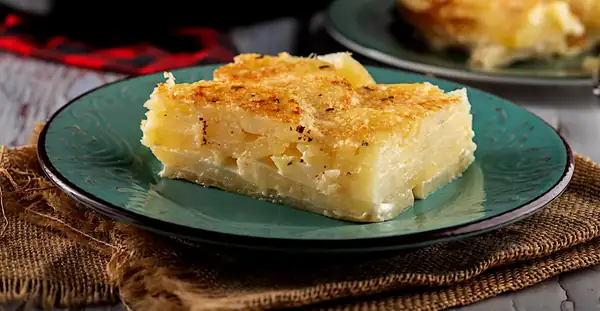
- We take the dish out of the oven and let it rest for 15 minutes before serving. During this time, it stops bubbling, the cream finishes setting, and it's much easier to remove a slice without the layers sliding off each other.
Two millimeters doesn't seem like much until all the potatoes in a dish have to cook at the same time. In gratin dauphinois, that thickness allows the layers to soften evenly, stack on top of each other, and be bound together by a creamy sauce that doesn't contain flour. We're not aiming for a mountain of potatoes or a geometrically perfect surface: we're looking for thin, tender, and well-bound layers.
It's one of the most recognizable dishes in French cuisine and also a good example of how gratinating doesn't necessarily mean covering something with cheese. Here, the potatoes are cooked slowly with milk and cream, flavored with garlic and nutmeg, and the oven concentrates the dairy until it creates a golden surface and a creamy, but not runny, interior. The recipe is simple in terms of ingredients, but it requires two specific things: a uniform thickness and sufficient cooking time.
We cut the potatoes and prepare the dish
Do you have to cook the potatoes before assembling the gratin dauphinois? It's not essential. Some French chefs cook their potatoes beforehand in milk or milk and cream, but it's also prepared with raw potatoes directly in the dish. In this recipe, we use slow cooking from raw potatoes, which keeps the layers very distinct and avoids having to handle already soft slices.
We layered the ingredients with cream and hot milk.
Does gratin dauphinois include cheese? The classic Dauphiné version doesn't. Adding cheese makes another perfectly valid potato gratin, but it's a departure from this particular dish. If you're looking for a French potato recipe where cheese is the star, then tartiflette is a good option: it's much more substantial and its approach is different.
We bake slowly and let the gratin set.
Why might the gratin dauphinois be runny? Usually, it's because it hasn't cooked long enough, the potato slices are too thick, too much liquid has been added, or too much starch was removed when washing the pre-cut potatoes. Before considering thickeners, let it finish cooking and check the center. The liquid should reduce and thicken between the layers.