No need for cheese: that's how you get a beautiful golden crust on the gratin dauphinois
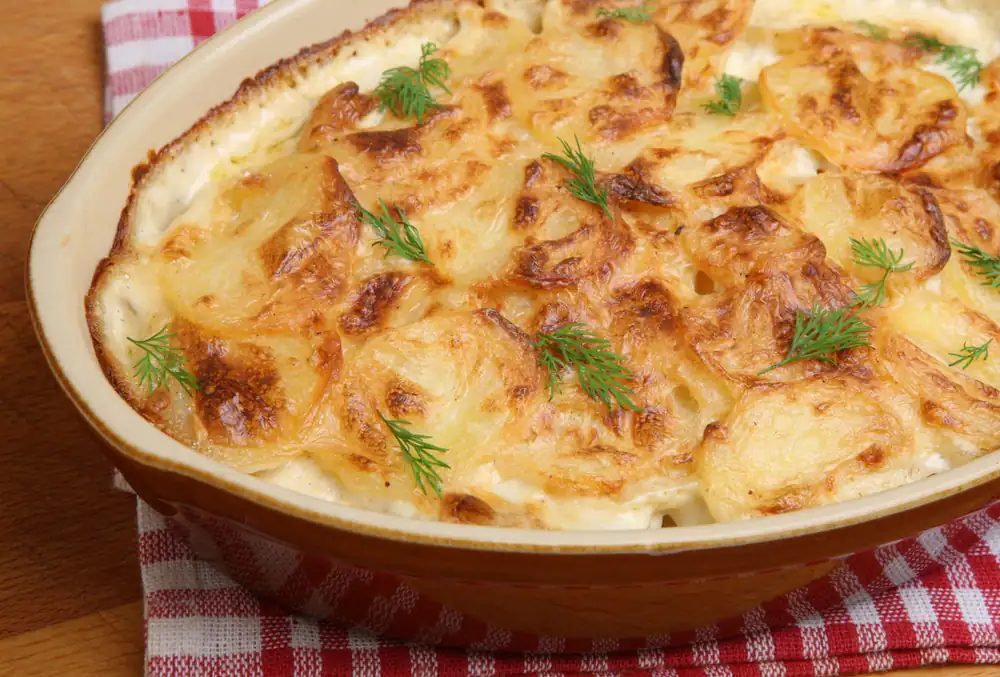
Cheese or no cheese in gratin dauphinois? The topic is divisive: on one side, there are the purists who advocate for the traditional recipe (without cheese), and on the other, those who prefer it with a layer of cheese on top, "because that's the only way it gets that nice golden crust," they argue.
Your grandfather was one of the few people in the family who could do it: when his gratin dauphinois came out of the oven, it had that irresistible caramelized layer on top. How did he achieve it? "It takes a lot of love," he always told you. An enigmatic answer you never quite deciphered. Later, you noticed that chefs used the same expression. In cooking, love doesn't just refer to the care and generosity put into a dish. Very often, this term refers to an ingredient. This is what chef Eloi Spinnler suggests in this video. In his gratin dauphinois, he puts a lot of love and thus obtains the famous golden layer on top. To do this, he starts by slicing the peeled potatoes into strips about 0.5 cm thick: this size allows for the right texture-to-melt ratio, he explains. For baking, he uses a large, oven-safe sauté pan. He generously butters the bottom to prevent the gratin from sticking, then layers the potato slices two-thirds full. He seasons them, covers them with cream, and just before baking, adds one last ingredient: he scatters small cubes of butter on top. A symbol of love for many cooks, this ingredient allows for the famous Maillard reaction during cooking. It melts, then caramelizes. That's the secret to the beautiful crust that makes your mouth water!
So, the next time your gratin dauphinois stubbornly refuses to brown, there's no need to reach for the grated cheese. A few knobs of butter are all it takes to give it that sought-after golden and delicious crust.