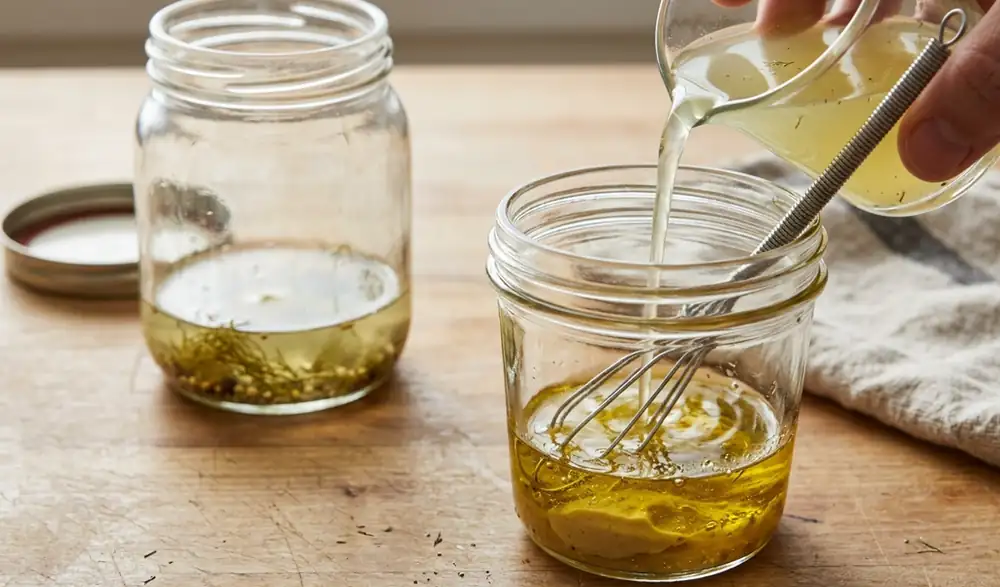
How to make the most of pickle juice: ideas for using the brine in cooking
When you finish the last gherkin in the jar, what's left isn't just vinegar water. That liquid already contains acidity, salt, and flavorings; depending on the brand or recipe, it may also contain sugar, dill, garlic, mustard, pepper, or other spices.
It's the same logic we apply when cooking with preserves: the brine can also be an ingredient. If we regularly make pickled gherkins or cucumbers at home or buy them ready-made, it's worth considering the brine at the bottom of the jar as another ingredient. However, it's important to distinguish this culinary use from a different question: whether you can drink the brine. Here, we're interested in how to use it in cooking.
It's also important to keep one thing in mind: not all brines taste the same, and the liquid that has been in contact with the pickles may no longer retain the original acidity. For cooking, it can be very useful. But not for improvising a new preserve that will be stored at room temperature.
Before using it, test a teaspoonful
The flavor varies considerably from jar to jar. Some are very vinegary, others quite sweet, some heavily flavored with dill, and others with garlic or chili. Therefore, it's best to taste the brine before adding it and consider its intended purpose.
If it's very acidic, you can replace some of the vinegar or lemon juice. If it's strong and salty, it works best as a seasoning. If it's quite sweet, it can be used in a barbecue sauce or another sweet and sour dressing. And in all cases, it's best to add salt to the dish at the end, because the liquid itself already provides saltiness.
It's also worth distinguishing between an open commercial jar and liquid from homemade pickles. To use it in cooking, the simple rule is to keep it refrigerated, use clean utensils, and discard it if it shows mold, an unpleasant odor, or clear signs of spoilage.
Substitute vinegar in a vinaigrette
This is probably the most straightforward use. The liquid from the pickles provides the acidity of the vinegar, but it also comes with added salt and aromas. For a quick vinaigrette, you can start with one tablespoon of brine to three tablespoons of olive oil and add mustard, pepper, or herbs to taste.
There's no need to add salt initially. We emulsify, taste, and adjust later. It works especially well in potato salads, legumes, leafy greens, or roasted vegetables because it cuts through the richness and brings out delicate flavors.
Add more flavor to mayonnaise and creamy sauces
A teaspoon can completely transform mayonnaise without turning it into a sauce that tastes solely of pickles. You can use the liquid in place of some of the vinegar or lemon juice in homemade mayonnaise, or mix it into ready-made mayonnaise.
It also works naturally in tartar sauce, yogurt-based dressings, sandwich and burger sauces, or cheese-based creams. The key is to add it gradually: a creamy sauce needs acidity, but adding too much liquid will make it lose its body.
Use it in potato salad, potato salad and pasta salad
Here it's especially useful because it pairs well with two ingredients that really benefit from acidity: boiled potatoes and mayonnaise. We can add a few teaspoons to the dressing of a Russian salad or a potato salad to make the dish less bland and fresher. It's the same logic behind how a little vinegar can improve a potato salad, only here the acid is already accompanied by the aromas of the pickle.
Something similar happens with pasta salad. It's better to mix the brine with the dressing than to pour it directly over the pasta. This way, it's distributed evenly, and you can better control the texture. In a preparation with mayonnaise, yogurt, or mustard, a small amount of pickle juice balances the creaminess without overloading it with vinegar.
Improve a coleslaw
Coleslaw calls for a dressing that offers a contrast of fat, acidity, and a touch of sweetness. The liquid from the jar can take care of some of that at once. Mixed with mayonnaise or yogurt, mustard, and a hint of honey or sugar if needed, it provides a tangy and spicy profile that pairs perfectly with cabbage, carrots, and onions.
Again, it's best to taste before adding salt. Many commercial brines are already strong enough that the seasoning doesn't need any more salt.
Use it as part of a marinade
Pickle juice can also be used in marinades for chicken, pork, or tofu. Its blend of salt, acid, and spices adds flavor, especially to the surface of the food, and can help season it evenly.
There's no need to submerge the meat in pure brine. We can combine it with oil, herbs, garlic, pepper, or spices and adjust the time according to the size of the pieces. With strips or small cubes, it's best to start with short times so the acidity doesn't overpower the flavor. With plant-based foods, we can apply the same idea as with marinated tofu, using the brine as part of the flavoring liquid.
There's one rule that doesn't allow for shortcuts: if the marinade has been in contact with raw chicken, meat, or fish, it shouldn't be reused as a cold sauce. The simplest and safest option is to set aside a clean portion if you plan to use it for serving and discard any that has touched the raw food.
A tangy touch for potatoes, legumes, soups, vegetables and dips
Sometimes a dish doesn't need more salt or fat: it needs acidity. A teaspoon of brine can liven up boiled potatoes, a legume salad, a cream of vegetable soup, or a soup that's turned out a bit flat. It's the same principle as when we finish a dish with a few drops of vinegar or lemon, but here we also add the aromas of pickling.
The best way is to add it at the end, with the heat already low or off, and taste after each small addition. This way we preserve the aromatic character and avoid over-acidity.
A creamy dip can be greatly enhanced with a touch of vinegar. In hummus, cream cheese, vegetable pâté, or yogurt sauce, the liquid from pickles can replace some of the lemon or vinegar and add a hint of dill, garlic, or spices.
The one-teaspoon rule works particularly well here: mix and taste. If the goal is to add depth, the pickle flavor doesn't need to be prominent.
Try using it in bread dough
It's a less obvious use, but brine can also be part of the liquid in dough. In breads with a strong flavor, especially rye bread or doughs that can tolerate a touch of acidity, we can substitute a small portion of the water with pickle brine.
Two things need to be considered: it already contains salt, and its acidity varies. Therefore, it's not advisable to blindly replace all the liquid in a recipe. It's better to start with a small amount and reduce the added salt if the dough requires it.
It also works in a Bloody Mary and other tomato drinks
The acidic, salty, and spicy profile of the brine pairs beautifully with tomatoes. A small splash can replace some of the salt and acid in a Bloody Mary, but it can also be used in a non-alcoholic tomato drink with pepper, celery, lemon, or hot sauce.
The amount here should be small: the liquid in the jar acts as a condiment, not as the base of the drink.
What not to do: Use it as if it were a new brine for preserving.
This is the most important point. After coming into contact with the pickles, the acidity of the liquid may have changed. Some of the acid passes into the food, and the remaining brine no longer necessarily maintains the proportion of vinegar, water, salt, and sugar specified in the original recipe.
Therefore, we shouldn't simply reuse it to prepare a new preserve intended for storage at room temperature. The National Center for Home Food Preservation distinguishes between a fresh pickling solution that hasn't come into contact with food and a brine that has already been used. The latter can be used refrigerated for a short period in preparations such as dressings, marinades, or coleslaw, but it shouldn't be treated as a preservation method with a known acidity level.
If we want to add new vegetables to the brine to flavor them, we should think of it as a refrigerated, quick-to-use preparation, not as a shelf-stable preserve. For long-lasting preservation, we follow a tried-and-tested recipe and prepare a fresh brine.
An easy rule to avoid going overboard
Pickle juice concentrates several seasonings at once. That's why it usually works better by the spoonful than by the glass. In a vinaigrette, it can replace vinegar; in a creamy sauce, one or two teaspoons are enough; in a potato or pasta salad, you can add it little by little to the dressing; and in a marinade, it's best to combine it with other ingredients rather than using it straight.
The idea is simple: treat it like a pre-seasoned ingredient. If we use it this way, the liquid that usually ends up in the sink can become a useful kitchen resource with a real place in everyday life, just like other ideas for using up leftover food instead of throwing it away.