Which should you buy: the right or the left salmon? The surprising differences you might not know
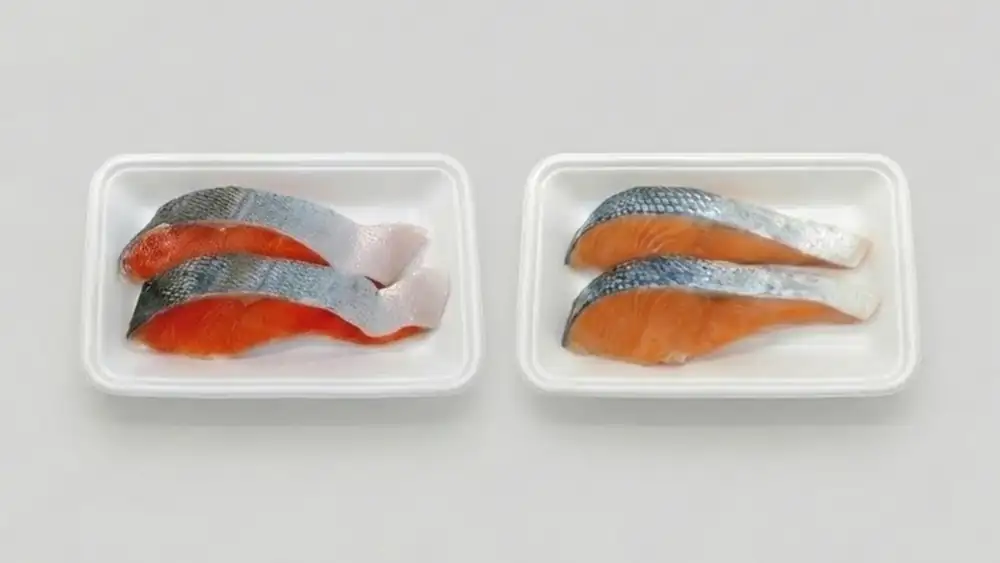
Two types of salted salmon are lined up in the fresh fish section of the supermarket. The one on the left has a deep red color, while the one on the right has a lighter color. Can you tell which one you should buy? Think carefully and try to guess the answer.
Which should you buy for delicious salmon: the right-hand or left-hand side? The surprising differences you might not know.
In the second half, we'll introduce some delicious recipes using salted salmon. Please read to the end!
Right or left? Which should you choose? What's the correct answer...?
The answer is... both are correct! It's best to use them interchangeably depending on the dish and your personal preference.
Actually, these two salmon are different species. The one on the left is called "sockeye salmon," and the one on the right is called "coho salmon." Sockeye salmon, which are mainly wild-caught, have a deep red flesh and a rich, flavorful taste, but are relatively low in fat. On the other hand, coho salmon, which are mainly farmed, are characterized by their high fat content and plump, tender flesh. If you want to enjoy a robust salmon flavor, choose sockeye salmon; if you prefer juicy, fatty flesh, choose coho salmon. You might want to choose according to your mood or the dish you're making.
Here are some recommended salted salmon recipes!
Now, let's introduce some recommended recipes for enjoying salted salmon. We've picked out some exquisite recipes that make the most of the saltiness and umami of salted salmon, such as crispy and fragrant deep-fried salmon (Tatsuta-age style) and rich cream stew with green onions. Be sure to check them out!
1. Salted salmon Tatsuta-age (deep-fried salmon) that goes well with rice.
Materials (for 2 people)
Salted salmon (2 slices)
Seasoning
1 tablespoon of cooking sake
1 teaspoon of grated ginger
1/2 teaspoon soy sauce
3 tablespoons potato starch
Frying oil (appropriate amount)
Two shiso leaves (for garnish)
procedure
1. Remove the bones from the salted salmon and cut it into bite-sized pieces.
2. Place the ingredients from step 1 and the seasoning ingredients in a tray, rub them together with your hands, cover with plastic wrap, and refrigerate for about 15 minutes.
3. Put potato starch in a separate tray and coat the entire contents of step 2 with it.
4. Pour about 3 cm of frying oil into the bottom of the frying pan, add step 3, and fry at 170°C for about 5 minutes until cooked through, then drain the oil.
5. Place shiso leaves on a plate, arrange the ingredients from step 4 on top, and it's ready to serve.
2. Creamy stew of salted salmon and plenty of leeks
Materials (for 2 people)
Salted salmon (total 150g) 2 slices
100g of green onions
cream sauce
1 tablespoon of cake flour
250ml milk
1 teaspoon of consommé granules
A pinch of salt
Two pinches of black pepper
10g salted butter
Parsley (fresh, finely chopped) appropriate amount
procedure
2. Cut the green onions diagonally into 5mm wide pieces.
3. Heat a frying pan over medium heat, add salted butter, add ingredient 1, and cook over medium heat for about 3 minutes until lightly browned, then remove to a plate.
4. Add step 2 to the same frying pan and stir-fry over medium heat until the oil is evenly distributed.
5. Sift in the all-purpose flour and sauté over medium heat until the flour coats everything. Add the remaining cream sauce ingredients and bring to a boil.
6. Return the ingredients from step 3 to the pan and simmer over medium heat for about 3 minutes. Turn off the heat, transfer to a serving dish, sprinkle with parsley, and it's ready.
3. Salted salmon potato cheese balls
Materials (for 2 people)
1 slice of salted salmon
1 teaspoon of cooking sake
3 potatoes
Processed cheese 40g
(A) 2 tablespoons potato starch
(A) Salted butter 10g
(A) Aonori (dried green seaweed flakes) 1 teaspoon
Frying oil (appropriate amount)
Chervil (appropriate amount)
1 tablespoon ketchup
procedure
Preparation: Remove the sprouts from the potatoes and peel them.
1. Cut the processed cheese into 1cm cubes.
2. Place the salted salmon in a heatproof dish, pour cooking sake over it, and cover with plastic wrap. Heat in a 600W microwave for 3 minutes until cooked through, then remove the skin and bones and flake the flesh.
3. Cut the potatoes into bite-sized pieces. Place them in a heatproof bowl, cover with plastic wrap, and heat in a 600W microwave for 5 minutes, or until the potatoes are soft.
4. While still hot, mash with a potato masher, add (A) and 2 and mix well. Divide into 12 equal portions, place 1 in the center of each, and shape into balls.
5. Pour about 5 cm of frying oil into the bottom of the frying pan, heat it to 180°C, and fry step 4 for about 3 minutes.
6. Once browned, drain off the excess oil, place on a plate with chervil, and serve with ketchup.
*Heating times may vary depending on your microwave model, the type of heat-resistant container, and the condition of the food. Please adjust the heating time while checking the progress. If necessary, heat until the food is completely cooked through.
Let's expand our repertoire of salmon recipes!
So, what did you think? We've introduced the differences between sockeye salmon and coho salmon, along with some delicious recipes. Knowing the characteristics of each will help you choose the perfect salmon for your menu each day. Don't just grill it; try incorporating a variety of salted salmon recipes into your meals, including Western-style dishes and fried dishes!
*Drinking alcohol is prohibited by law for those under 20 years of age. Drinking alcohol during pregnancy or while breastfeeding may adversely affect the development of the fetus or infant. Also, please refrain from consuming alcohol while driving, playing sports, or bathing.
*Some parts of this article use AI-generated images.