Eight recipes
Cooking and sharing meals have been fundamental to the development of culture and civilization. Culinary traditions are important because, in the words of historian Fernando Rueda, “A people’s cuisine and traditional dishes give those who cook and eat them a sense of belonging to a community.
This is especially true of family meals. “The diner needs to recognize the flavors and meanings of each bite,” explains anthropologist Isabel González Turmo. “This need is even more crucial when it comes to family meals. Without them, there is no memory, no sense of shared experience. Family cooking should transform food into a bridge that connects time and strengthens bonds between loved ones.”
When we migrate, we carry the cuisine of our families and our homelands in our suitcases. A series of dishes that are an umbilical cord to our identity and memories, and a comfort in times of nostalgia. Dishes that take on special significance on occasions like Christmas. We asked cooks from various Latin American countries living in Spain to tell us which dishes are essential to them; what they will cook and eat for Christmas Eve dinner to feel closer to home. We also asked for their recipes, because in addition to their meaning, they are delicious dishes that enrich the culinary repertoire on the other side of the Atlantic.
Mauricio Giovanini (Argentina)
Mauricio Giovanini and Pía Ninci long dreamed of returning to their native Córdoba, Argentina. They arrived in Marbella in 2002 with a few dreams shattered by the Corralito (the economic crisis of 1988) and many more to build. They did so step by step, stone by stone and dish by dish, and today, Messina, with its Michelin star, is one of the must-visit restaurants in glamorous Marbella. Their three children were born in Spain, and they feel a connection to both places. But when homesickness strikes, especially at Christmas, they soothe it by preparing roast goat, a dish that, curiously, unites their birthplace and their adopted home.
Ingredients:
1 suckling goat or kid, about 4.5 kg dressed weight. Chimichurri: 60 g garlic cloves, 300 g onion, 10 g fresh thyme, 5 g dried oregano, 10 g ground chili pepper, 20 g sweet paprika flakes, 1 g bay leaf, 5 g dried parsley, 25 g fine salt, 140 g apple cider vinegar, 500 g sunflower oil, 500 g olive oil.
Elaboration:
Chimichurri: Finely chop the garlic and onion and combine with the rest of the ingredients. It's best to make the chimichurri a week in advance so it develops a more intense flavor.
Roasting in a domestic oven: Preheat the oven to 160°C (325°F). Salt the kid goat, butterflied but left whole, without cutting in half. Generously brush the inside of the goat with oil and place it on a roasting tin, skin-side down. Put it in the oven and leave for approximately 2 hours. Remove the tray from the oven and turn it over very carefully so as not to break it. Brush the skin side again with oil. Increase the oven temperature to 180°C (350°F) and leave it until the skin is very golden brown, about 30 minutes. You can brush it with chimichurri sauce occasionally.
Roasting in a clay oven: Light the oven with plenty of holm oak, beech, or cherry wood. Leave it covered with the damper open until the wood has formed bright red embers. Remove the embers, leaving some inside the perimeter of the oven, against the walls.
The oven temperature can't be too high, or the goat will burn. My father used to put a piece of newspaper on the bottom of the oven. If it caught fire, the temperature was too high, so he'd leave the oven door open for a while, then put another piece of newspaper on top, and if it turned black without catching fire, it was the perfect temperature.
Place the tray with the kid goat skin-side down, well brushed with chimichurri, cover the oven and close the vent, and leave it in the oven for approximately 2 to 3 hours. In this case, you won't need to turn it over, as the skin will brown nicely from being in contact with the oven floor.
Diego Gallegos (São Paulo, Brazil):
As journalist Xavier Agulló, married to a Brazilian and a part-time resident in Rio de Janeiro, reminds us, “Brazil is a multicultural country, and its Christmas dishes reflect that colorful gastronomic melting pot.”
“Among the top Christmas specialties are roast turkey, prepared in the American Thanksgiving style and served with fruit; tenders (a lean, smoked, boneless cut of pork), always served with fruit such as pineapple; rice with raisins; shredded chicken salad with mayonnaise and potatoes; cod prepared in various ways (the dourado oa Braz is one of the most popular during the holidays); rabanada (bread soaked in milk, coated, and sprinkled with sugar and cinnamon); pavé de Navidad (a layered cake with sponge, creams, fruit, etc.); fresh fruit; and nuts.
“In the Amazonian areas, regional dishes such as pirarucu de casaca; tacacá (tucupi, broth extracted from the bitter cassava, tapioca gum, dried shrimp, jambu, chicory and garlic); rice with chestnuts; cupuaçu cake; açaí with tapioca; or tapioca pudding are gaining popularity for Christmas.”
However, Agulló points out that there is one essential dish: “Farofa natalina: toasted cassava flour with raisins, walnuts, crystallized fruit, onion and bacon.”
It is precisely this dish that represents Christmas for Diego Gallegos, chef of the Sollo restaurant (1 Michelin star and a Michelin green star). “A memory from all my Christmases while my Brazilian grandmother was alive was that on the 24th, roast turkey with its side of sweet farofa was a must for dinner. She added the special touch of green plantain. It's something I hold very dear, and every year when these holidays come around, I try to make something similar, but it will never taste the same,” he says.
Ingredients:
- 500g cassava flour, 2 peeled garlic cloves, 80g smoked bacon, 1 white onion, 1 plantain, 40g raisins, 100ml white wine, 40g prunes, 2 eggs, olive oil, salt.
Elaboration:
Soak the raisins in the white wine. Slice the garlic and fry it in oil. Add the diced bacon. When it's golden brown, add the finely diced white onion. Stir in the raisins with the wine and the chopped prunes. Add the peeled and sliced plantain. Add the eggs and stir until everything is crumbled. Set aside. In a non-stick pan, toast the cassava flour over low heat. Once toasted, add the flour to the other ingredients. Adjust the salt to taste.
Dolce Nilda (Colombia-Caribbean)
Dolce Nilda and her husband, Juanlu Fernández, from Andalusia, are celebrating the awarding of their second Michelin star this year to their restaurant, Lu, Cocina y Alma. Besides being a couple and working together at the fine-dining restaurant and Krombol Bakery, their café and pastry shop, they have come to feel each other's cultures as their own. "Juanlu says Colombia is his second home," she laughs. At Christmas, their cuisines merge. On Christmas Eve in Andalusia, with Juanlu's family, Caribbean rice cakes, which remind her of her childhood, find a place on the table, and on January 1st, all their friends attend the Colombian brunch where Dolce cures her hangover from the night before with a hearty sancocho.
Ingredients (10 cakes)
10 chicken thighs, 1 kg of pork, 1 kg of long beans, 500 g of carrots, 500 g of potatoes, 500 g of red onions, 500 g of green bell pepper, 500 g of garlic, 5 cabbage leaves, half a bunch of cilantro, 5 celery stalks, oil, annatto, pepper, cumin, salt, garlic vinegar, chili pepper vinegar, 20 bijao leaves, pita string for tying.
Elaboration:
Marinate the chicken and pork overnight with a blend of green bell pepper, aji topito pepper, onion, garlic, aji vinegar, and cumin. Heat the oil and annatto in a pan and let it cool. This will be used throughout the preparation. Cook the chicken and pork for 25 to 30 minutes over low heat. Remove from the heat even if not fully cooked, as it will finish cooking inside the pie. Let it cool and reserve the cooking liquid. Cut the remaining vegetables, which will be placed raw inside the pie: onion, bell pepper, carrots, potato, cilantro, and celery. Clean the bijao leaves and remove the fibers before beginning assembly.
Assembly: On two overlapping bijao leaves, previously brushed with annatto oil, place half a cabbage leaf, then a layer of rice, allspice to taste, a little garlic vinegar, and a little chili pepper vinegar. Close the pastry, tie it, and cook it in chicken broth with pork bones for 2 hours. Let it cool for 12 hours after cooking to achieve the ideal pastry consistency.
José Alberto Callejo (Mexico)
José Alberto Callejo began his professional career in Málaga as the Marketing Director of the city's football club, but his family's connection to the hospitality industry and his love of food led him to the restaurant business. After opening establishments with renowned chefs, he founded KGB with his wife, chef Irene Garrido. KGB was a fun and original bar concept serving tapas with recipes contributed by top chefs, and it had locations in both Málaga and Madrid.
He currently combines his successful career as a crime novelist with some hospitality projects and, above all, continues to cook at home. The recipe he shares with us is his personal adaptation of the classic Mexican Christmas turkey.
Ingredients:
A 4-5 kg turkey, 3 large onions cut in half, 1 head of garlic peeled and cut in half, 5 Guajillo chiles, 4 to 6 Cascabel chiles, 3 liters of chicken broth, 2 liters of boiling water plus enough to cover the turkey after adding the broth. Salt, large avocados. For the chile paste: 4 to 6 rehydrated Guajillo chiles plus the cooked chiles from the broth; 4 to 6 Cascabel chiles plus those cooked in the broth, 6 cooked garlic cloves from the broth, 150 g of butter, 75 g of mustard, a little cold broth.
Elaboration:
The day before Christmas: clean the turkey to remove any traces of blood. Place it in a pot large enough to fit it. Pour boiling water over it, ensuring it reaches the inside of the turkey, especially the split bones, to seal them. Add the chicken broth and then fill the pot with hot water until the turkey is completely covered.
Add the onions, garlic, chili peppers, and dried red peppers and simmer over low heat for 2 to 4 hours, until the turkey is cooked through and the juices run clear when pierced. Turn off the heat. Pierce the turkey breast all over with a wooden skewer and leave it overnight, ensuring it's well-ventilated. It will be cold by early morning.
Prepare the chili sauce. Pierce the dried chilies and add boiling water. Cover with a small plate so they are submerged, and leave overnight.
On Christmas Day: Carefully remove the turkey from the oven, being careful not to break it, and place it on a baking tray. Pat it dry thoroughly with paper towels, being careful not to break the skin. Strain the broth and set aside the chili peppers, 1 onion, and 12 garlic halves.
Blend the chili peppers and dried red peppers from the broth, plus the rehydrated ones, along with the cooked onion and garlic, butter, mustard, and a little of the broth. Blend until you have a paste thick enough to spread with a brush.
Spread the paste over the turkey and bake for 30 to 45 minutes, preferably using convection, until golden brown and the paste has turned a deep red. Reserve some of the chili paste.
Reduce the broth by half and adjust the salt. Prepare a gravy with some of the broth, a little of the chili paste, butter, and cornstarch. Serve the broth with diced avocado, and then serve the turkey pieces with the gravy on the side.
Reyna Traverso (Panama)
Although originally from Panama, Reyna Traverso trained as a chef in Mexico and has dedicated her restaurant, Niña Bonita Cantina, to Mexican cuisine. “Besides being one of the best in the world, Mexican cuisine is very popular in Spain; other Latin American cuisines are less well-known,” she says. This year, she received the Copil Seal, awarded by the Casa de México to Mexican restaurants that achieve excellence in authenticity.
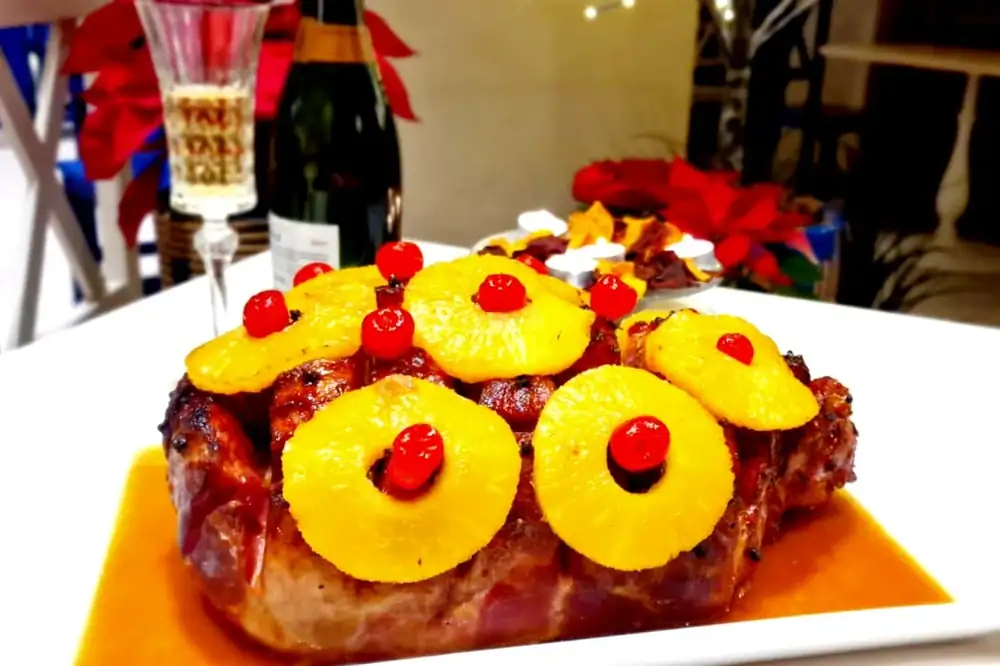
However, at Christmas Eve dinner, on the table, in addition to the traditional Andalusian dishes of her husband's family, the roasted and lacquered sweet ham shines (especially because it is a very showy dish).
Ingredients:
One boneless smoked roast or cooked ham, 1 can of pineapple with its juices, 2 small jars of maraschino cherries with their juices, cloves, 4 tablespoons of mustard, 200g of brown sugar.
Elaboration:
Preheat the oven to 160ºC (325ºF). Remove the skin from the ham. Make shallow cuts in a square pattern, spread with 3 tablespoons of mustard, and place a clove in the center of each square. Mix the brown sugar with the juices from the preserved fruit and the remaining mustard. Set aside. Bake the ham for about 10 minutes, then begin basting it with the reserved mixture of fruit juices, sugar, and mustard. Continue basting the ham with this mixture and the pan juices until it is nicely browned. Once finished, decorate with pineapple slices and cherries (use toothpicks to secure them). Bake for a little longer to allow the fruit to brown.
Dora Ortiz (Paraguay)
After working in savory kitchens at restaurants like Gastón Acurio's Yakumanka (Barcelona), Dora Ortiz moved south to Málaga and focused on pastry. This led to the creation of Ñanduti by Dora Ortiz, a bakery that also offers catering with a Paraguayan flair.
“In Paraguay,” he says, “we have a rich culinary tradition that blends unique flavors and recipes passed down from generation to generation, so no two recipes are alike, and that’s our excuse to go to our neighbors’ houses to try their dishes and say, ‘My grandmother’s is better.’” Some of our typical Christmas dishes are Paraguayan soup, stuffed turkey or chicken, clericó (our Christmas sangria), spit-roasted meat, roast suckling pig, vitel toné (a newer addition), and chipa guazu.
Ingredients:
6 large ears of corn (fresh shelled corn, 500 ml of milk, 3 eggs, 250 g of Paraguayan cheese or fresh cheese (it can be gouda or similar), 1 medium onion, chopped and sautéed, 2 tablespoons of sunflower oil or melted butter, salt.
Elaboration:
In a Thermomix blender, combine the corn kernels with the milk and blend until you have a semi-liquid mixture. For a more rustic texture, you can use an immersion blender. In a skillet, heat the oil or butter and sauté the onion until translucent; set aside. In a large bowl, mix the blended corn with the beaten eggs. Add the crumbled cheese, the sautéed onion, and salt. Stir until well combined. Grease a baking dish (you can use butter or oil) and pour in the mixture. Bake in a preheated oven at 180°C (350°F) for 40-50 minutes, or until the top is golden brown and a knife inserted into the center comes out clean. Remove from the oven, let it rest for a few minutes, and cut into portions. Serve as a side dish or main course. If you don't have fresh corn, you can use canned or frozen corn, but the flavor will be milder.
Mario Céspedes (Peru)
Mario Céspedes grew up playing with his cousins among the fruit stalls of Lima's Central Market. He came to Spain to work for five years, but met Conchi Álvarez, his partner and business associate. They married, and now, in addition to working on television programs, his restaurant Ronda 14, which originated in Avilés, has branches in Madrid and Málaga, offering a fusion of Nikkei and Asturian cuisine. "In Peru," Mario says, "the typical Christmas dish is roast turkey with many side dishes: sweet rice, potato salad, sauces, etc. For me, it's the most cherished thing and what I miss the most. It's always been a part of my family's diet."
Ingredients:
A 6-7 kilo turkey, aji panca paste, aji amarillo paste, 1 head of crushed garlic, vegetable oil, ground pepper, cumin, oregano, soy sauce, salt, beer, pisco, 6 oranges, butter.
Elaboration:
We marinate the turkey overnight with a mixture of aji panca paste, aji amarillo paste, crushed garlic paste with oil, ground pepper, cumin, oregano, half a glass of soy sauce, salt, half a glass of beer, a splash of pisco, and one glass of orange juice. We mix everything well. We make a few incisions in the breast so the marinade can penetrate.
Once the turkey is ready for roasting, insert small pieces of butter into the incisions made in its breast. This will help with juiciness and flavor. When it's time to put it in the oven, cover the surface of the turkey with orange slices. These help prevent burning and add flavor. I also usually put a couple of oranges inside the carcass. Roast in the oven at about 180ºC (350ºF) for an average of 3-4 hours; about 30 minutes of cooking time per kilogram (1 pound). Once the turkey is golden brown and the skin is crispy, remove it from the oven, prepare a slightly spicy huacatay sauce, and make the side dishes.
This Venezuelan chef arrived in Spain at a young age and began working in beachside seafood restaurants on the Costa del Sol, where he first encountered oysters. This product has become iconic in his career. A Spanish champion in oyster shucking speed, he has created his own line, selecting oysters for his restaurants and other clients. He is the creator of Mercado San Martín, a restaurant that combines Caracas street food with oysters served in countless ways. He also currently manages La Bocaná, a tapas bar and delicatessen in the heart of Málaga.
“In Venezuela, when Christmas Eve arrives, there’s no doubt. The king is the ham bread, which is usually eaten as part of a mixed plate with hayacas and chicken salad. But the ham bread is a must. I’ve introduced it to my restaurant so that customers can get to know it, and it’s been a big hit,” he says.
Ingredients:
Dough: 500g wheat flour, 10g dried yeast, 50g sugar, 1 tsp salt, 2 eggs, 200ml lukewarm milk, 50g melted butter. Filling: 250g smoked ham, 100g raisins, 100g pimento-stuffed olives, 50g bacon (optional).
Preparation:
Dissolve the yeast in the warm milk with a teaspoon of sugar. Let it sit for 10 minutes until it foams. In a bowl, mix the flour, sugar, and salt. Add the yeast mixture, eggs, and butter. Knead until you have a smooth dough. Cover the dough with a cloth and let it rise for 1 hour, or until it has doubled in size. Roll out the dough into a rectangle. Place the ham, raisins, olives, and bacon on the dough. Carefully roll it up and seal the edges. Place the loaf on a greased baking sheet, brush it with beaten egg, and let it rest for 20 minutes. Bake at 180°C (350°F) for 30-40 minutes, or until golden brown.