Can hojicha dethrone matcha? The trendy Japanese roasted tea!
Its deep green color has made it one of the most recognizable Japanese teas outside of Japan. But lately, another name is starting to appear more frequently on beverage menus and in specialty shops:
hojicha.
Japanese green tea, but that's where many of the similarities end. Hojicha is roasted, acquires a brown color, and develops
Aromas reminiscent of nuts, toasted grains, or caramel. It doesn't have the pronounced vegetal profile of matcha and is usually less bitter and astringent.
What is hojicha?
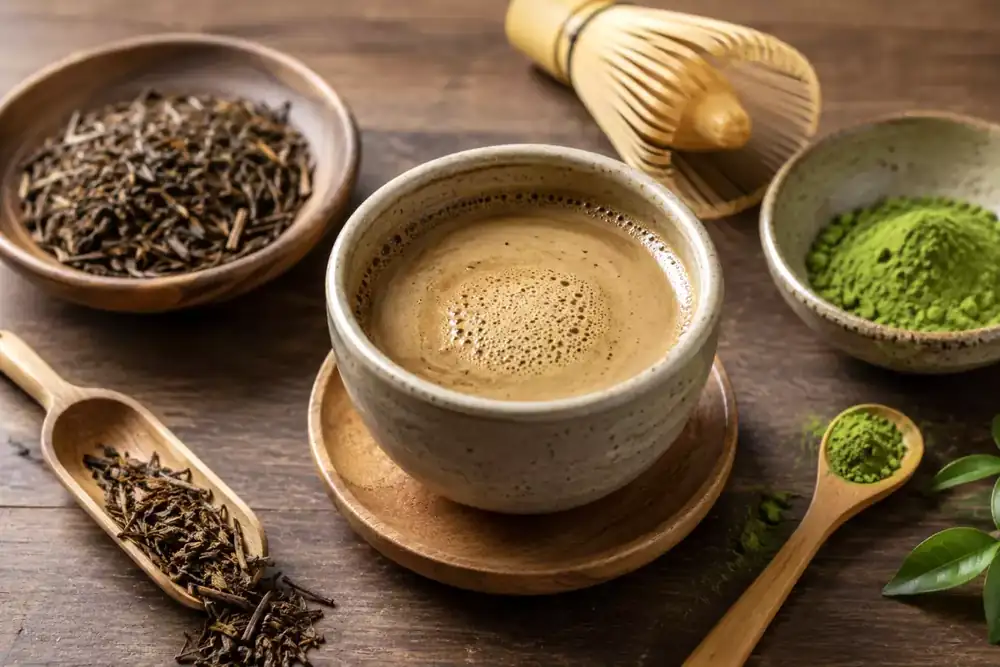
Hojicha is a Japanese tea made by roasting green tea leaves. Traditionally, it can be prepared from sencha, bancha, or other teas, which are subjected to high temperatures until the leaves acquire their characteristic brown hue. The Japanese Ministry of Agriculture includes it among the traditional types of green tea and defines it precisely by this roasting process.
a more toasted and smooth profile, with notes that may remind you of nuts, cereals, cocoa or caramel.
In Japan, it is commonly consumed as leaves, infused with hot water. Outside of Japan, it has also become popular in powder form, a practical format for preparing milk-based drinks or using in baking.
Why is he being talked about so much now?
growing visibility outside the country.
.
It works especially well with milk. Its roasted aromas are more reminiscent of coffee or cocoa than a classic green tea, making it familiar even to those who don't usually drink tea.
It contains less caffeine than matcha.
Does it really have less caffeine?
They may contain less caffeine than the young leaves used for other teas. Official Japanese sources specifically describe hojicha as a tea with lower caffeine content and less bitterness than other green teas.
Hojicha and matcha: they are less alike than they seem
Both come from Japanese green tea and are used today. But the flavor is very different.
Matcha has a vegetal, herbaceous, and umami profile. Depending on its quality and preparation, it may also exhibit bitterness and astringency.
Hojicha takes a different approach. Roasting reduces those green notes and generates warmer aromas: toasted cereals, nuts, wood, cocoa, or light caramel.
How to prepare a hojicha latte at home
powdered hojicha.
It works with cow's milk and also with oat, soy, or almond milk. If you want to sweeten it, just add a small amount of honey, sugar, or maple syrup.
It also has a place in desserts
It can be added to cakes, cookies, creams, ice cream, panna cotta, or tiramisu. It can also be used to flavor whipped cream, rice pudding, or pastry cream.
The latte tip is still helpful: start with a small amount. The goal is to add a recognizable toasted flavor, not for the entire dessert to taste solely of hojicha.
So, is it going to dethrone matcha?
That's probably not the most useful comparison.
Matcha has a well-established identity and its own cultural and historical uses. Hojicha doesn't need to take its place to be successful.
What's interesting is that it offers something different: a roasted Japanese tea, less vegetal, usually with less caffeine and very easy to integrate into milk drinks and desserts.
Perhaps that's why it's starting to be seen more outside of Japan.
More than the next matcha, hojicha seems destined to be another gateway to the world of Japanese tea. And for those who never quite understood the matcha craze, it could be a pretty good one.