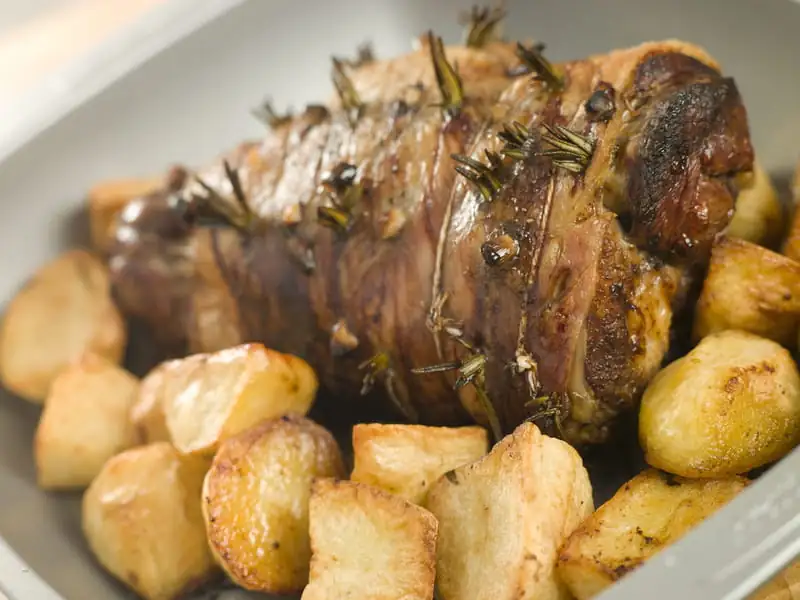
7-hour leg of lamb (slow-cooked)
Isn't a temperature of 170°C too high for a 7-hour cooking time?
- 1 leg of lamb weighing 2.5 kg
- 500g peeled and seeded tomatoes
- 300g small onions
- 250 g rind
- 200g carrot
- 50 cl white wine
- 30 cl beef broth
- 10 cl olive oil
- 10 cl cognac
- 1 bouquet garni
- cell
- pepper
- Season the leg of lamb with salt and pepper, then brown it in hot oil.
- Line the bottom of a casserole dish with pork rinds (fat side out). Place the leg of lamb on top, and surround it with carrots, onions, and tomatoes.
- Add the remaining ingredients, season with salt and pepper.
- Bake for 7 hours in the oven at 170°C (gas mark 5-6). Monitor the cooking and add water if necessary.
- Adjust the seasoning and serve by spoonfuls from the casserole dish.
Indeed, for a truly traditional 7-hour leg of lamb, a lower temperature between 120°C and 140°C is often preferable to prevent the liquids from evaporating too quickly. If you follow the recipe at 170°C, make sure your casserole dish is perfectly airtight (you can seal the lid with a strip of dough) and regularly check that there is enough broth so the meat doesn't dry out.
What is the role of the rind at the bottom of the casserole dish?
The rind plays a crucial dual role. Firstly, it protects the meat from direct contact with the bottom of the pot, preventing it from burning during the long simmering process. Secondly, as it melts, it releases collagen, which naturally thickens the cooking juices, giving them an incredibly smooth and syrupy texture.
Can this leg of lamb be prepared in advance or the day before?
It's even highly recommended. Like all long-simmered dishes, a 7-hour leg of lamb is even better the next day after it has infused its juices. Furthermore, letting the dish cool in the refrigerator will allow you to easily skim the fat from the juices, as it will solidify on the surface and can be removed with a simple flick of a spoon before reheating it over low heat.