Spaghetti Omelette
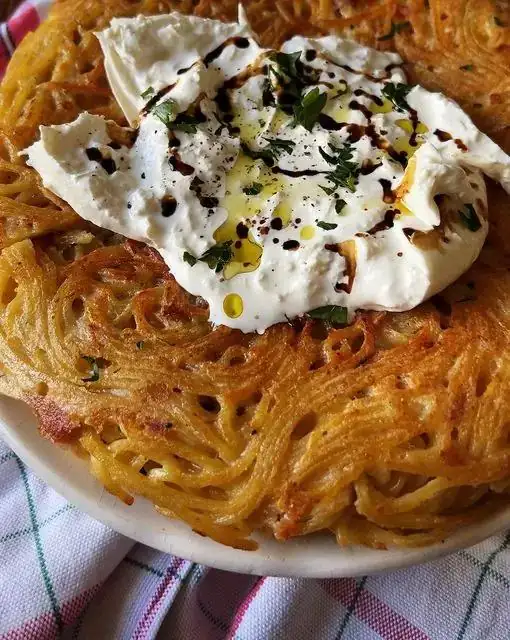
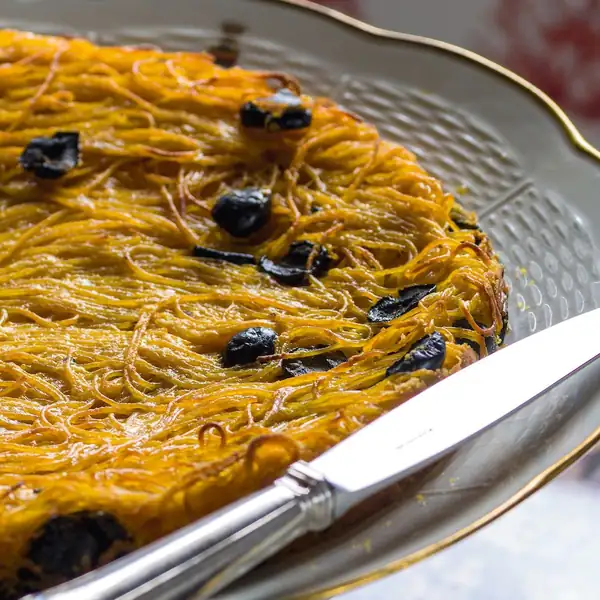
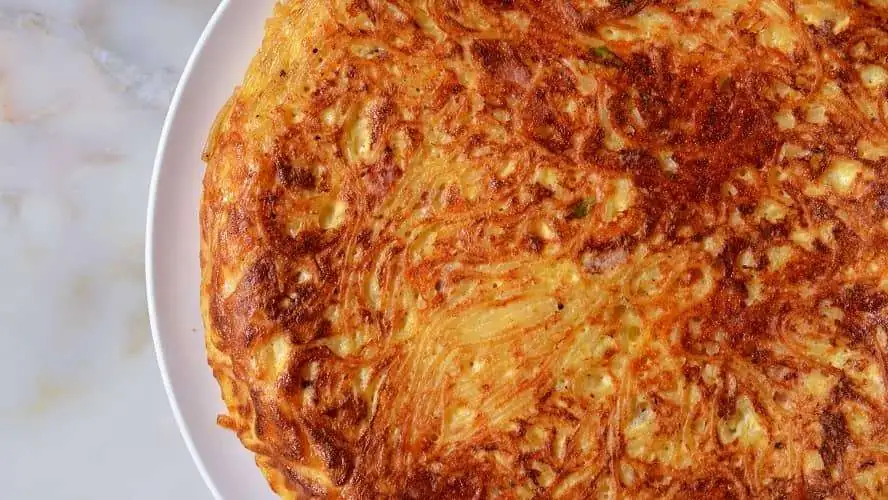
Pasta frittata, or frittata di spaghetti, is a typical Italian dish originating in Naples. It is traditionally made with leftover pasta from making spaghetti, but it can also be made with freshly cooked pasta.
Ingredients · Servings 4
- 250 grams of spaghetti (half a package)
- 80 ml of milk (whole/full-fat, preferably)
- 80 grams of mozzarella cheese (regular mozzarella, or prato, flamengo, gouda, etc.)
- 40 grams of grated cheese (Parmesan, Grana Padano, or similar)
- 4 eggs
- 80 grams of bacon, pancetta or prosciutto (half a cup)
- 1 clove of garlic
- black pepper
- 1 sprig of thyme or basil
- 2 tablespoons of olive oil
- olive oil or neutral vegetable oil (canola, sunflower, corn, etc.)
Method · 30 min
- Cooking pasta: cook the spaghetti according to the manufacturer's instructions. Leftover pasta can also be used (this is more traditional); in this case, it is not necessary to cook the pasta again.
- To prepare the ingredients: cut the mozzarella into small pieces; cut the bacon/ham into small pieces and grate the Parmesan cheese; fry the bacon for a few seconds.
- Beat eggs: mix the eggs, milk and thyme and beat until smooth.
- Cheese and bacon: add the Parmesan and mix well; then add the mozzarella and bacon.
- Pasta: Mix the olive oil with the pasta, then mix the pasta with the other ingredients.
- Frying: Place a frying pan over high heat; add oil to the pan and rub it with a clove of garlic; discard the garlic clove.
- Frying: When the oil is hot, add the egg noodles and other ingredients; fry over high heat for 1 minute, then reduce the heat and fry for another 10 minutes.
- Flip: Using a plate, flip the frittata; fry for another 5 minutes.
- Eating: the frittata is ready and is delicious hot or cold (great for picnics).
The spaghetti is mixed with beaten eggs, bacon (or ham), and cheese.
- Medium frying pan
- Pot for cooking pasta
- Drainer
- 80 ml of milk (whole/full milk, preferably)
- 80 grams of mozzarella cheese (or cheddar, Gouda, etc.)
- Cooking pasta: cook the spaghetti according to the manufacturer's instructions. Leftover pasta can also be used (this is more traditional), in which case it is not necessary to cook the pasta again.