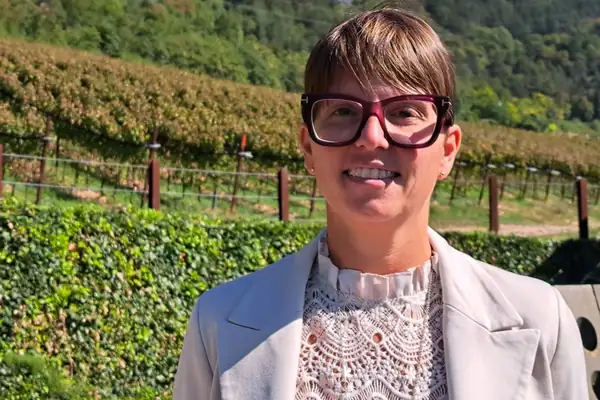
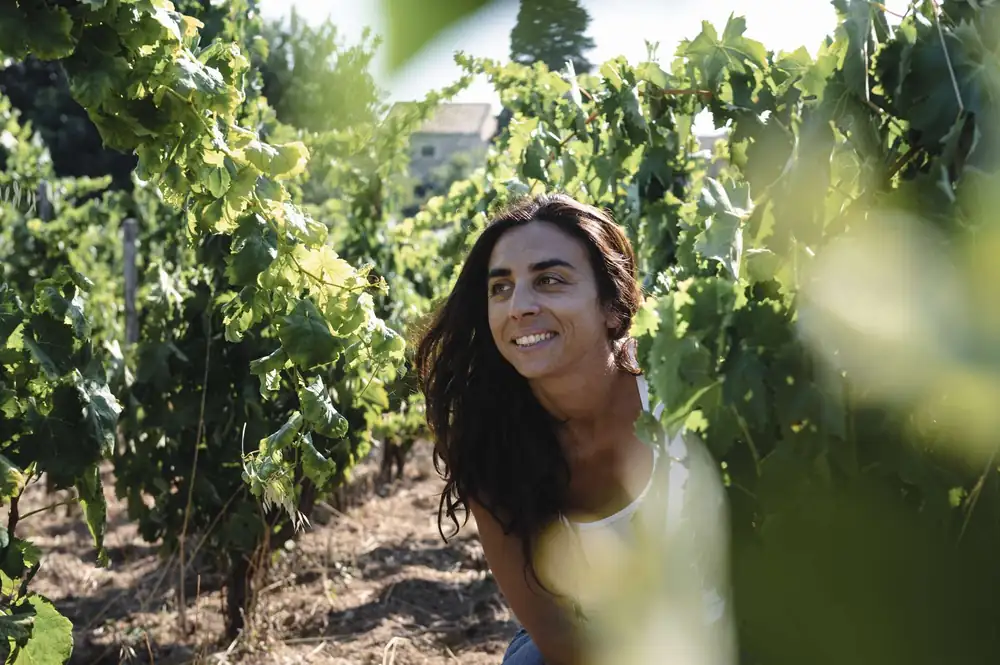
Arianna Occhipinti: “We are inspired by the idea of wine's harmony.”
In the world of viticulture, few figures have managed to stand out for their strong will and their constant commitment to research and innovation: Arianna Occhipinti is one of them.
Founder of the Arianna Occhipinti winery in 2004, she has transformed her vision of natural wine into a reality that not only celebrates the Vittoria area (a small town in the province of Ragusa, Sicily) but also promotes sustainability and biodiversity throughout the Mediterranean. In this interview, Arianna described her farming practices and her commitment to organic and biodynamic agriculture, revealing how her experience and business philosophy have evolved over the years to meet the challenges of an increasingly competitive market. This is the journey of a winemaker and entrepreneur who has made natural wine her trademark.
How has your vision as a winemaker and entrepreneur changed over the years, from the winery's founding in 2004 to today? How do you convey your winery's values and philosophy to the public and consumers in such a competitive market?
Exploring the world of wine from a young age gave me the opportunity to immediately delve into its complexity and depth, driven by genuine curiosity. My connection to wine has matured and strengthened over time, becoming an integral part of my identity, my memories, and my future aspirations. Today, I can proudly say that the company is well-structured and that we have achieved important goals, always maintaining a focus on what drives the company every day: the creation of an excellent wine that speaks of the Vittoria region, Mediterranean biodiversity, and the well-being of the people involved and who appreciate our products. I like to convey the idea that the only possible wine is natural: a "human" wine, a pure expression of its terroir, whose identity and originality must be preserved as much as possible.
How do you measure the environmental impact of your farming practices? Do you use specific indicators or collaborate with external organizations to monitor this aspect?
The impact of a company like ours is essentially measured by the well-being of the ecosystem we protect, thanks to a balance manifested by nature as a whole—vineyards, olive groves, wheat fields, vegetable gardens, fruit trees, and human beings. This balance is also evident in how this biodiversity resists climate change or difficult years. But I understand that this isn't enough, and we must also look beyond our own instincts. For several years, we have been collaborating with the SOStain Foundation, which aims to promote ethical and sustainable development in the Sicilian wine sector, supporting and guiding wineries toward the ongoing measurement and reduction of the impact their agricultural practices have on the landscape.
What was the biggest challenge you faced in transforming your company into a fully sustainable business, and what was the greatest benefit from it?
We find ourselves in an area, Sicily, where sustainable agriculture, seemingly simpler to implement, had to be accepted first and foremost by the people I work with. It was never enough for me to be the only one convinced—or rather, it was necessary to be determined not to give up—but I always felt that making it shared and accepted could help us achieve our goals more quickly.
Faced with the daily challenges of farming, where there are hundreds of variables, increasingly complex every day, working on and with people has been my most difficult challenge, but also the most beautiful. It's difficult, just as it will be difficult to address climate change, increasingly humid springs and scorching summers, and the lack of water, but communicating through our actions, a sensitive approach, is the only way we can reduce our impact, a commitment to ourselves and then to others.
Who were your mentors or inspirational figures in the world of organic and biodynamic viticulture?
Several people have inspired my journey into viticulture. First and foremost, my uncle Giusto, founder of the Cos winery, instilled in me the importance of working in harmony with nature and growing vines organically and naturally. He taught me traditional and artisanal winemaking techniques that enhance the authenticity of the terroir and local grape varieties. Besides my uncle, I have been inspired by many other producers and wine regions. The sensitive approaches of winemakers like Elena Pantaleoni, Giovanna Morganti and Giuseppe Rinaldi, Stanko Radikon, and Dario Princic have been an example to me and have influenced my thinking and approach to viticulture. Collaborating and learning from them has been crucial to the development of my work.
What are the most important international markets for your company, and how does it adapt its offering to the different consumer preferences in the markets it operates in?
We operate in over 60 countries worldwide, including the United States, Singapore, Japan, Australia, Canada, and more. The best-performing market remains the United States, where we've achieved excellent results in recent years. I remain convinced that the market, intrigued by the first purchase, will only continue to follow you if the product proves to be good. For this reason, we've always focused on this aspect, as well as on offering a project rich in interesting content. Convincing people takes time, as does building a good team, but we've succeeded in both goals and will continue to move forward.
How do international consumers respond to your biodynamic wines compared to Italian consumers? Do you notice any significant differences?
The foreign market has always been attentive and sensitive to our wines; I could almost call it a pioneer. We're very pleased that consumers in Italy are increasingly curious and interested.
I belong to a group of Triple A producers with whom we share best practices in the cellar and in the vineyard. Over the years, we have instilled sound principles that have always been evident in our wines. It took time, but today the Italian market is certainly giving us considerable satisfaction.
How do you select importers and distributors in foreign markets? Is there a specific criterion you follow to ensure they share your philosophy?
We seek to understand their sales philosophy, their partnerships, their values and principles, such as respect and appreciation for our choices. We don't just seek partnerships based on the principles of economic convenience, but also aim to create a close human relationship. Only this will make us a family.
What is your vision for the future of organic and biodynamic wine in Italy and around the world? How might it evolve?
Today, there's certainly a greater awareness of biodynamic agriculture and probably a greater degree of understanding than a few years ago. We're deeply inspired by the idea of "wine harmony" and the principles of biodynamics, which perceive the land, the winemaker, and agriculture as part of a single movement that expresses itself in unison.
I don't like to label my wines according to specific methods; we accompany them naturally as they develop in the cellar, maintaining consistency with the work done in the fields. Respect for biodiversity and the vineyard, along with the expert practices of sensitive and natural agriculture, which treats wine as a living being, are concepts that underpin our daily work. These are the values we should always place at the heart of our actions.
What advice would you give to a young person who decides to pursue a career in winemaking, especially in this era of climate change and economic challenges?
One piece of advice I'd like to offer is to be daring, be curious, and delve into any topic through study, even outside of viticulture. Today, we must embrace a nature that has been harmed by humans in recent decades. Air pollution and global warming are tangible proof of this.
We practice biodynamics and use green manure in the vineyard, planting legumes and grasses to increase the organic matter in the soil. In difficult years like 2023, characterized by a strong presence of downy mildew, we had to abandon about 50% of the harvest. If someone asked me if it was worth it, I would always say yes. We live in a wonderful place that deserves to be promoted for its biodiversity. It's probably necessary to disseminate best practices more widely, so as to maximize the value of biodiversity itself.