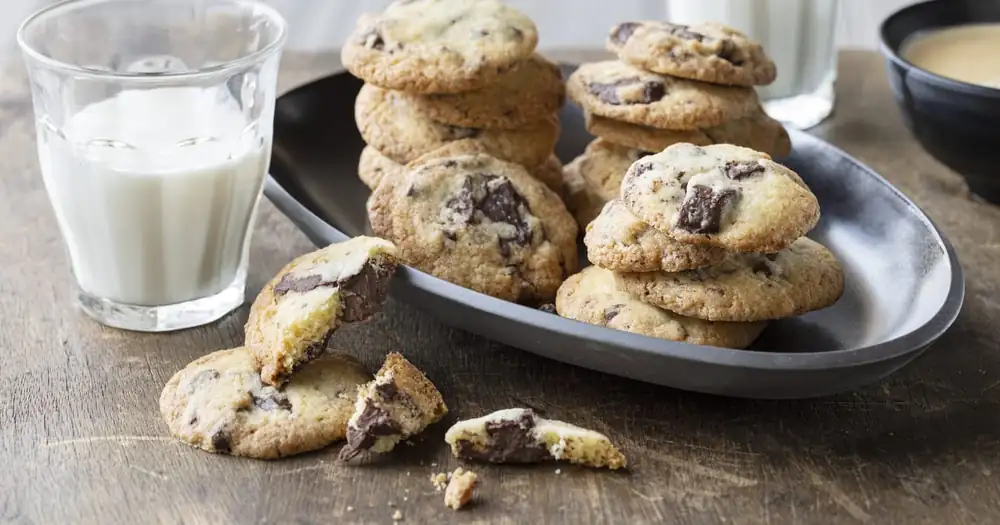
Cookies – the irresistible hype of a cult pastry
Cookies everywhere: Why we can't get enough of them.
Whether as a sweet treat with coffee, a gift, or simply a little indulgence during a snack attack: cookies have become an indispensable part of our daily lives. Hardly any other pastry has experienced such a hype in recent years. But where did this trend actually come from, and why are we so fascinated by these cookies with chocolate chips? I've done the research for you. Let's delve into the history, variety, and current cookie trend.
From accidental product to cult pastry?
The story of the chocolate chip cookie begins in the 1930s in the USA – more precisely, in Massachusetts. Ruth Wakefield is credited as its inventor. She and her husband ran the "Toll House Inn," a restaurant renowned for its exquisite desserts. Searching for new delicacies to serve her guests, Ruth invented the world-famous chocolate chip cookie in 1938. Several myths surround the origin of the recipe. One claims that Ruth ran out of regular chocolate. So, she simply broke a bar of semi-sweet chocolate into pieces and mixed them into the dough, hoping the chocolate would melt during baking and distribute evenly. It sounds plausible, but it's not entirely true. The prevailing theory is that Ruth created the famous cookie through her talent and hard work while searching for a new dessert for her guests. This iconic treat is therefore no accident – sorry to all myth lovers. Later that same year, the recipe for the cookies was published in Wakefield's own cookbook, "Tried and True." The cookies – which were crispy at the time – quickly became very popular in the region.
Missed out on the deal of a lifetime?
Soon after, the recipe was printed in newspapers and became very popular. Just a short time after inventing chocolate chip cookies, in 1939, Ruth Wakefield struck a deal with Nestlé. Nestlé offered Wakefield a lifetime supply of chocolate and (only) one US dollar. In return, they demanded the rights to the recipe and the right to print the name "Toll House" on their chocolate packaging.
Fun fact: Ruth Wakefield later said in an interview that she never received that dollar.
Nestlé quickly developed a strategy to capitalize on the cookie recipe. Shortly after acquiring the rights, the company launched "Toll House morsels"—a bag of chocolate chips specifically designed for making chocolate chip cookies. This innovation significantly simplified the process for home bakers to prepare the popular cookies. To this day, Toll House morsels are still available, and the packaging still features Ruth Wakefield's original recipe. Given the product's success, Ruth Wakefield may have missed out on the deal of a lifetime…
Cookies and the Second World War
Initially known only in the eastern regions of the USA, these cookies gained even more popularity during World War II. Soldiers from Massachusetts stationed overseas received "care packages" filled with treats from home, including Toll House Cookies. These delicacies were shared among the soldiers, and Toll House Cookies quickly became known to other soldiers far from their place of origin. Before the war, the cookies were primarily found on the East Coast; after the war, Toll House Cookies were among the most popular dessert recipes in the USA.
Still a hit 80 years after its invention
From then on, the story of chocolate chip cookies unfolded. From the invention of ready-to-buy cookie dough in supermarkets in the 1950s, to the introduction of Ben & Jerry's famous chocolate chip cookie dough ice cream in the 1980s, to their designation as the official cookie of the state of Massachusetts in 1997, chocolate chip cookies have made their mark, and not just in the USA. Even today – over 80 years after their invention – these cookies continue to delight people worldwide.
The great debate
It's time to address the big question about cookies: Crunchy or chewy cookies? Hard and crisp or soft and smooth? Of course, it's a matter of personal taste. But which type came first, and what are the differences between the two when baking? We'll explore that now.
From a historical perspective, the first round of the debate goes to the crunchy cookies – sorry, "Team Chewy." The original Toll House Chocolate Chip Cookies were small and crispy. This is also revealed by Ruth Wakefield's original name; she initially wanted to call the cookies "Toll House Chocolate Crunch Cookies."
That answers the original question. But how do the two cookie varieties differ in recipe and preparation?
Golden brown and crispy – crunchy cookies
To make cookies nice and crunchy with a satisfying crackle when you bite into them, you need ingredients that allow the cookies to expand during baking. Here are some tips on how to make perfectly crunchy cookies.
Butter is ideal for cookies and offers perfect properties for a crispy, aromatic taste experience.
For the sugar, you should use regular table sugar, as this makes the cookies nice and crispy.
Don't use eggs. Eggs add moisture and make the cookie dough lighter. Cookies without eggs are therefore flatter, thinner, and crispier than those made with eggs.
Bake the cookies a little longer. Be careful, this doesn't mean you want to burn them. Simply leave them in the oven for a little longer (1 to 2 minutes) while keeping a close eye on them. It's important to remember that cookies are still soft when fresh out of the oven; they only firm up as they cool.
Fluffy and soft – chewy cookies
There are also a few little tricks regarding the preparation of chewy cookies:
For chewy cookies, it's best to use soft or even liquid butter.
Brown sugar makes the cookies really chewy. Instead of brown sugar, you can also mix regular Swiss sugar with molasses – a great regional alternative.
Use eggs. Adding eggs to the dough makes the cookies moister, and they also provide structure and thickness.
Only work with chilled dough. This will prevent the cookies from spreading too much and browning too much. Ideally, shape the dough into small balls and chill them for about 20 minutes. Then, place them on a baking sheet with enough space between them and bake.
Baking time is also important. The cookies will harden further as they cool. So, if you think they need about two more minutes, take them out of the oven.
Which is it? Crunchy or chewy?
My recommendation: Try both versions and find out which one you prefer!
The multifaceted world of cookies
From classic chocolate chip cookies to cinnamon roll cookies and swirl cookies, the variety of cookies is vast. But one type of cookie has stood out for several months, or even years: the so-called "crumbly cookie." You can find them all over the internet, and they are increasingly being sold here in Switzerland as well. But what exactly are crumbly cookies, and what makes them so special?
Crumbl Cookies – a trend conquering the world.
Founded in the USA in 2017, Crumbl has made a name for itself with its weekly changing, creative flavors and the signature soft texture of its cookies. The cookie creations are often large and topped with generous toppings – similar to cupcakes – making them a visual and gustatory delight. Crumbl cookies have not only achieved great popularity through their brick-and-mortar stores in the USA, but have also become a cultural phenomenon. The brand's success extends far beyond traditional bakeries, as the cookies have amassed a huge following on social media and beyond – not least because of social media.
Do you also feel like making your own crumb cookies? Then we have the perfect recipe for you here:
Unusual, but delicious – cookies with a twist.
And for those who still haven't had enough of cookies, here are three more cookie recipes to finish.
Do you already snack on about half the dough while it's baking? Don't worry, you're not alone: Cookie dough for eating with a spoon has long since established itself as a trend in its own right – best of all, of course, if it's homemade, then you know exactly what's in it.
Are you avoiding sugar or currently building muscle? No reason to forgo cookies. There's now a suitable cookie recipe for (almost) every diet.
Do you love cookies so much that you'd love to have them for breakfast? No problem. How about a cookie spread for your bread? Yes, you heard right. You can even spread cookies. And an added bonus: no food waste!