Pumpkin and chickpea curry
Pumpkin and chickpea curry is an incredibly simple and delicious meatless dish. This recipe is perfect for autumn, and the curry is so aromatic and creamy that it's hard to resist a second helping.
- you prepare everything in one pot - you can use Hokkaido or Provençal pumpkin - you can easily replace the chickpeas with canned lentils
Preparation time: 1 hour Number of servings: over 1100 g of curry In 100 g of curry: Energy value 137 kcal Carbohydrates 11 g - Of which sugars 3 g Protein 3 g Fats 9 g Diet: low-sugar, vegetarian.
- fresh pumpkin, e.g. butternut squash 500 g - weight after peeling
- onion 220 g - 1 large
- 3 cloves of garlic
- 2 tablespoons of oil for frying
- clarified butter 20 g
- coconut milk 1 can - 400 g
- canned chickpeas 260 g drained from 1 can
- tomato paste 30 g
- fresh ginger, 2 cm piece
- curry spice 1 teaspoon
- baby spinach 100 g
- turmeric half a teaspoon
- ground cumin 1/3 flat teaspoon
- chili powder 1/4 teaspoon or more
- any quantity of jasmine rice
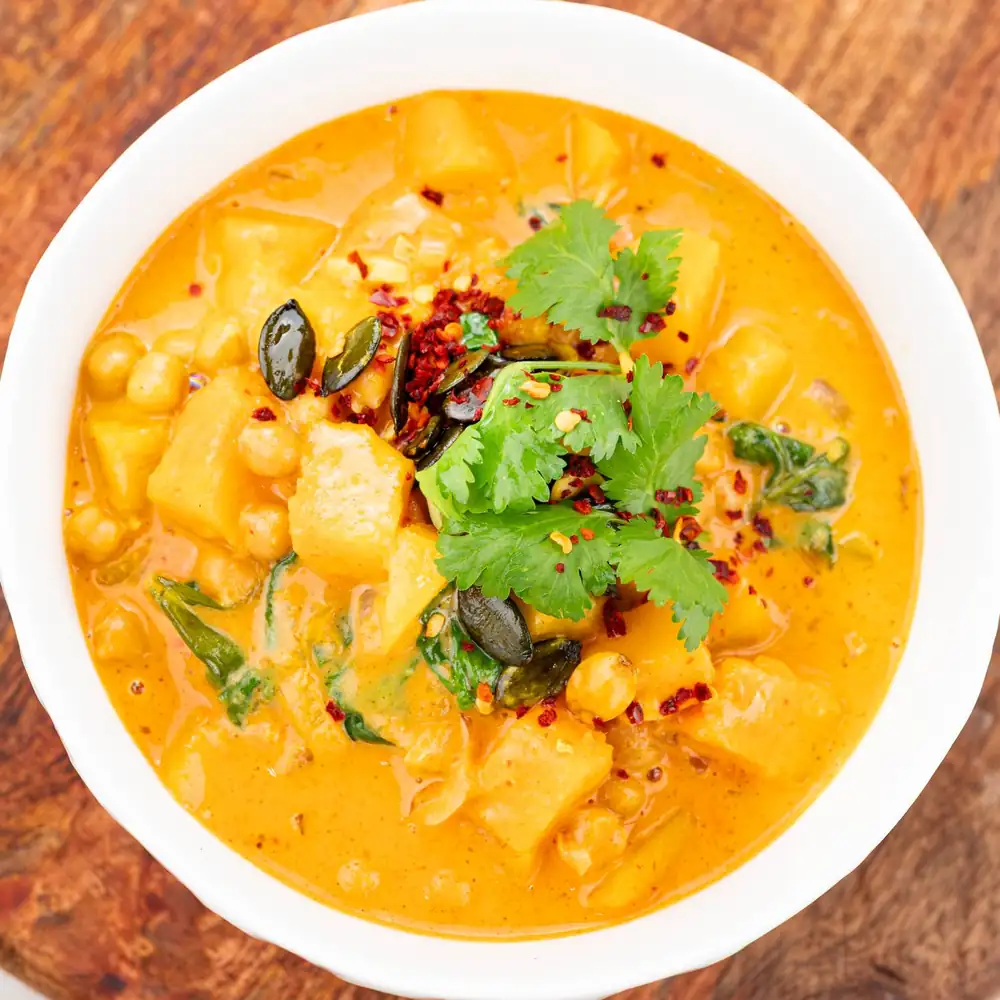
- any amount of pumpkin seeds fried in olive oil with chili
- fresh cilantro or parsley for decoration
- lime or lemon slices for decoration
Pumpkin and chickpea curry
Before you start making pumpkin curry, I recommend reading the entire recipe to prepare for the next steps. You'll find information on what you can substitute for butternut squash and how to serve this homemade curry. You can substitute some of the spices with ready-made curry paste, which I also covered in step two.
Prepare the pumpkin and chickpea curry in a single pot or in a large, deep skillet. Turn the heat to medium-high. Pour two tablespoons of oil into the pot and add a peeled and finely chopped large onion. Sauté for about five minutes, uncovered, until translucent. Reduce the heat if necessary.
Add three peeled and finely chopped garlic cloves to the pot with the sautéed onion. Add 20g clarified butter and a 2cm piece of fresh, peeled and finely chopped ginger. You can replace the fresh ginger with 1/2 teaspoon ground ginger. Add 1 teaspoon curry powder, 1/3 teaspoon ground cumin, 1/2 teaspoon turmeric, and at least 1/4 teaspoon chili powder. Mix thoroughly and sauté for about 2 minutes to release the spice flavor.
Tip: You can replace some of the spices (cumin, chili, and ginger) with ready-made red curry paste. This paste typically contains chili peppers, garlic, lemongrass, galangal, and cumin, so it simultaneously provides the heat, aroma, and citrus freshness that I normally achieve by combining these spices separately. In curry, red curry paste acts as a concentrated flavor base: it thickens the sauce, gives it a distinctive color, and builds spiciness and depth. Add it carefully, starting with much less than you think, and season the rest at the end, once the sauce has blended with the coconut milk and other ingredients.
For the curry, you'll need 500g peeled pumpkin, cut into even cubes about 1-1.5cm square. I usually choose butternut squash because it has a rather versatile, sweet, buttery flavor that pairs well with spices. Add a whole can of good coconut milk, preferably full-fat, with at least 60-75% coconut extract. The higher the coconut content and the shorter the ingredients (no thickeners or large amounts of water), the creamier the curry will be. If the milk has separated the coconut cream, I don't stir it before using it; I add it all to the pot, which will thicken the sauce faster and achieve a velvety consistency. Stir everything together. Cover the pot with a lid and simmer the curry over low to medium heat until the pumpkin is tender. This can take 10 minutes or much longer, depending on the type of pumpkin used and the size of the pieces.
Tip: Provençal and regular pumpkins also work well, as long as they are ripe and firm. If using Hokkaido pumpkins, I don't peel them, as the skin softens during cooking and adds color. I always remove the seeds and fibrous core from every pumpkin; only the flesh goes into the curry.
After this time, add canned chickpeas, drained, to the pot (min. 250g, preferably 250-300g). If you have a larger can, use 300g. Stir again. Cover the pot with a lid and simmer the pumpkin and chickpea curry for 2-3 minutes.
Tip 1: Don't throw away the chickpea liquid (aquafaba). You can froth it and use it as a vegan egg white substitute, for example, in meringues, chocolate mousse, coconut milk, mayonnaise, or as a binder in cakes and pancakes. Tip 2: If you want more sauce, add more coconut milk, regular water, or homemade vegetable broth.
Add about 30g of tomato paste and a generous handful of fresh baby spinach (at least 100g) to the pot. Mix thoroughly and bring the curry to a boil (without the lid). Taste the sauce. Adjust seasoning if necessary: add your favorite spices and a pinch of salt if the recipe doesn't include it. You can add a little red curry paste, but be careful not to overdo it.
Tip: For a slightly tart flavor, add 1–3 tablespoons of freshly squeezed lime juice at the end. To enhance the curry's flavor, you can add 1–2 teaspoons of peanut butter or an additional 50–100 ml of coconut milk for creaminess. 1 teaspoon of fish sauce or a dash of soy sauce also works well.
Serve this hot chickpea and pumpkin curry immediately. It tastes best sprinkled with chili flakes and freshly chopped cilantro. Toasted cashews and pumpkin seeds fried in a little chili oil also go well here.
I usually serve it with jasmine rice, but basmati rice, rice noodles, and pearl couscous also work well. It tastes wonderful with warm flatbreads: chapati, naan, or tortillas, which soak up the sauce perfectly. Besides rice and bread, I recommend serving the curry with bulgur or even pearl barley. If you prefer a lighter side dish, try quinoa. A dollop of thick plain yogurt can be served on top to soften the spiciness.
Homemade chickpea curry tastes best immediately after making it, but I've been able to store it in the refrigerator for up to three days in an airtight container. It's suitable for freezing, and when reheating on a low heat, it's worth adding a tablespoon of water or coconut milk to thicken the dish.
Enjoy your meal.