Fish three ways – try these if baked salmon makes you tired
Is baked salmon too often your choice of fish dish of the week? Take the tips in this article if you're craving a change.
I would like to eat fish more often and in a variety of ways. However, the recipes that are familiar to me on a daily basis easily take the lead and I end up grabbing salmon for my shopping cart at the store. Stop for a moment to explore the fish counter and dare to try the fish species that are in season! These cooking methods will help you get started.
1. Crispy skin in a pan
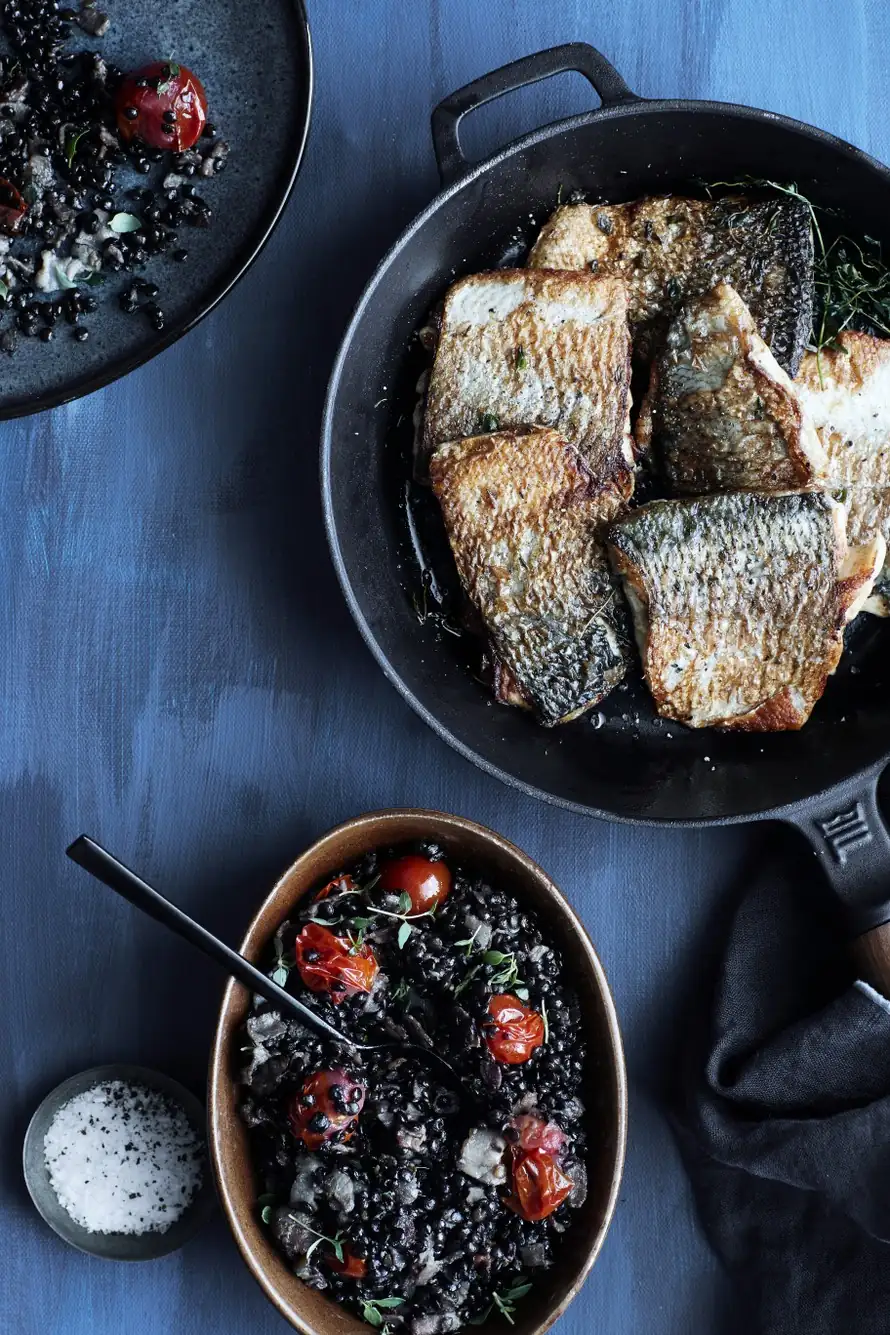
There are a few different ways to get a crispy, slightly fatty and wonderfully flavorful surface on fish. You can scale a fish fillet with the skin still on and fry it in fat in a hot pan until crispy. Ask to have the fillet scaled at the fish counter to save yourself from scales flying everywhere.
At home, it's a good idea to bring fish to room temperature about 15 minutes before cooking. It's also a good idea to pat the fish dry with paper towels before frying to avoid the worst of the splatters.
There are two different methods for getting crispy skin. The cold pan method is great for thick, fatty fish, such as salmon. In this method, the fillet is placed in a cold pan, skin side down, and fried on one side only as the pan slowly heats up. The butter is added to the pan at the very end, and the hot melted butter is spooned over the fillet. The skin remains intact and crisps evenly.
For thinner and smaller fillets, cooking in hot fat in a hot pan is more suitable. It is important to heat the pan properly and add butter to the hot pan. Press the fish fillet skin side down against the hot pan with a spatula so that it does not crack and cooks evenly. Depending on the thickness of the fillet, turn it over after a minute or two and cook the other side for another twenty seconds.
Cooking in a hot pan is great for whitefish fillets, for example. Try the method in this pan-fried whitefish recipe.
2. By breading homemade fish fingers
You can also add crunch to fish dishes by breading the fish. Instead of traditional breadcrumbs, it's a good idea to use Asian panko flour with fish. This makes the breading a little airier and lighter, but still really crispy.
Double breading will give you the best and most consistent results. You will need three bowls, one for spices and wheat flour, one for beaten egg, and one for panko breadcrumbs.
The fish pieces are dried with paper towels, rolled first in wheat flour, then in egg, and finally in panko breadcrumbs. The breaded fish pieces can be fried until golden in a pan or deep-fried in oil at about 175 degrees.
At its simplest, breaded fish pieces are of course served as fish sticks with potatoes. However, breaded, crispy fish is also suitable as a filling for tacos, for example. Try these Finnish bread tacos, where pike-perch or other white fish is fried until crispy.
3. Baking paper protects against messes
Quickly, neatly and without excess fat? Steaming fish inside a baking paper ball solves many problems. This cooking method is suitable for both small fillets and whole fish. The fish does not dry out and becomes perfectly flaky.
To accompany the fish, you can either add just the spices inside the baking paper or alternatively assemble the entire portion into a dumpling. The chopped side vegetables will cook at the same time as the fish.
For the dumplings, it is a good idea to choose a piece of baking paper that is large enough to roll up the edges tightly. This will prevent steam from escaping from inside the package. It is a good idea to place the fish and other fillings roughly in the middle of the baking paper.
The finished, tightly sealed dumpling is placed on a baking sheet and cooked in a 200 degree oven for 15–30 minutes, depending on the size of the fish. When opening the baking paper dumpling, be careful of the hot steam inside.
In this char in dumplings recipe, tomatoes and zucchini are cooked inside baking paper with the fish.