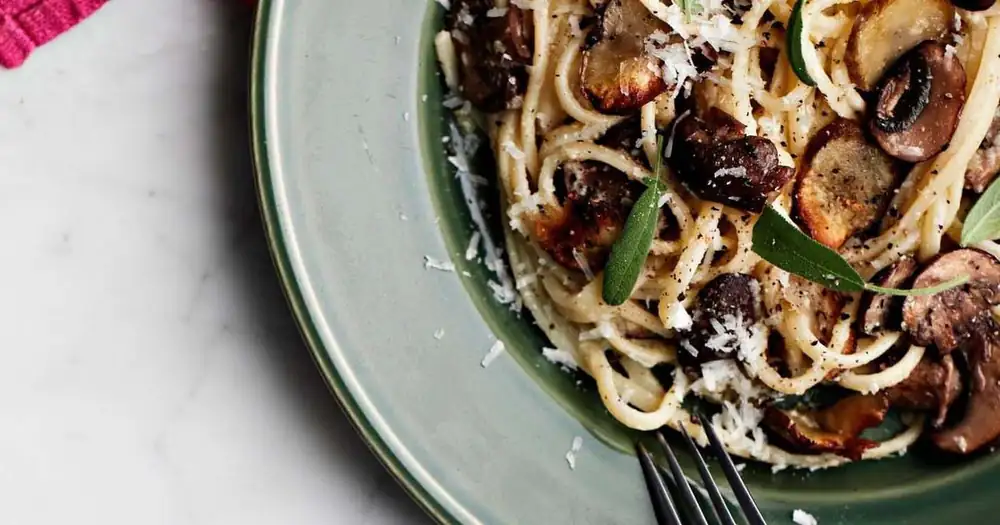
Two artichoke pasta
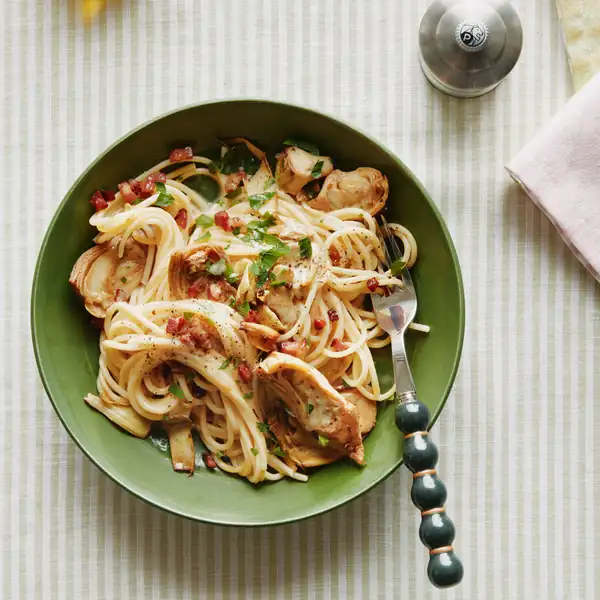
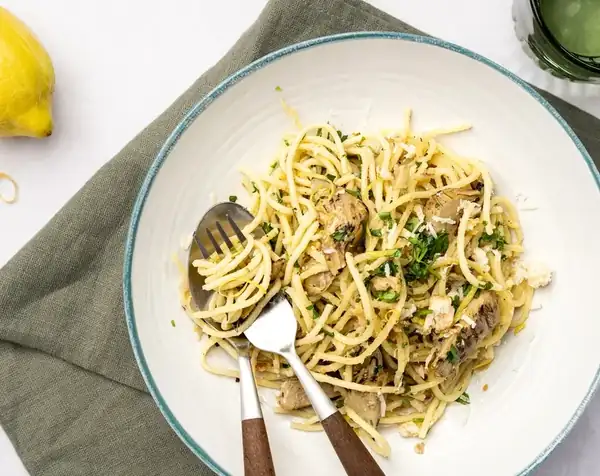
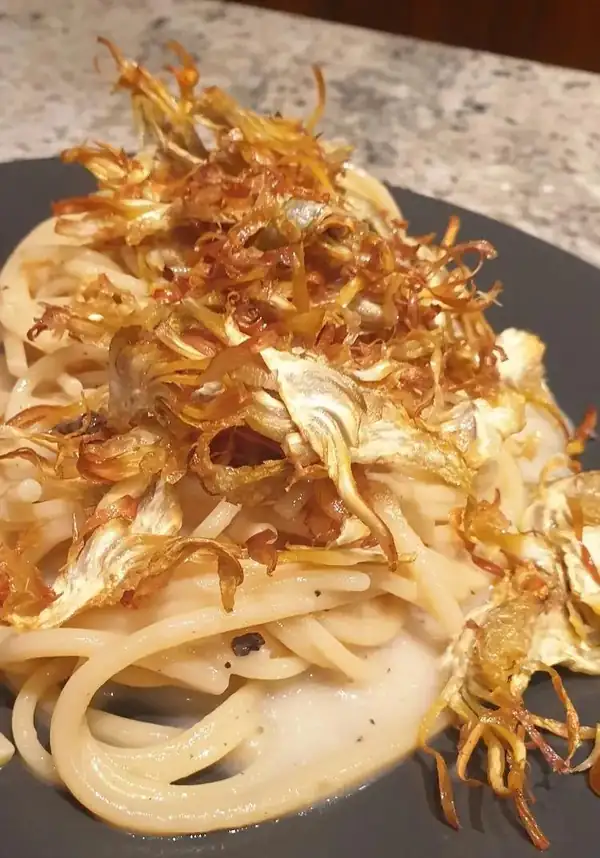
Jerusalem artichokes, fresh sage, lemon juice and garlic make a delicious sauce for pasta. The Jerusalem artichokes are roasted in the oven and served on top of the pasta.
- 2 cans (240/390 g each) of artichoke hearts preserved in water
- ½ lemon
- 1 dl water
- ½ dl olive oil
- 1 garlic clove
- ½ teaspoon salt
- ¼ teaspoon black pepper
- 10–20 sage leaves, depending on size
- 300 g Jerusalem artichokes
- 2 tablespoons olive oil
- 1 teaspoon salt
- ½ teaspoon black pepper
- 300 g mushrooms or shiitake mushrooms
- 500 g ribbon pasta
- 2 tablespoons truffle oil
- a piece (approx. 20 g) of pecorino cheese
- Drain the canned artichoke hearts and place them in a blender bowl.
- Squeeze the juice from the lemon (about ¼ dl) and put it in a bowl with the artichokes. Also add the water, oil, peeled garlic clove and spices. Tear the sage leaves into it. Puree the ingredients until smooth.
- Preheat the oven to 200 degrees.
- Wash and dry the Jerusalem artichokes well. Cut them into slices, with the skin on. Place the slices on a baking sheet lined with baking paper.
- Drizzle with 1 tablespoon olive oil. Season with salt (½ teaspoon) and black pepper (¼ teaspoon). Roast for about 20 minutes, until the artichokes have slightly browned.
- Slice the mushrooms and fry them in a little oil until nicely browned. Season with salt (½ tsp) and pepper (¼ tsp).
- Cook the pasta according to the package directions. Drain the pasta, return it to the pot, and add the artichoke sauce. Quickly heat the pasta, stirring. Add the roasted Jerusalem artichokes and sautéed mushrooms. Pour the pasta into a serving bowl.
- Drizzle truffle oil over the top and grate pecorino cheese on top. Serve immediately.
Preserved artichoke hearts are very tasty, but they can be a bit tricky to use due to their variable composition.
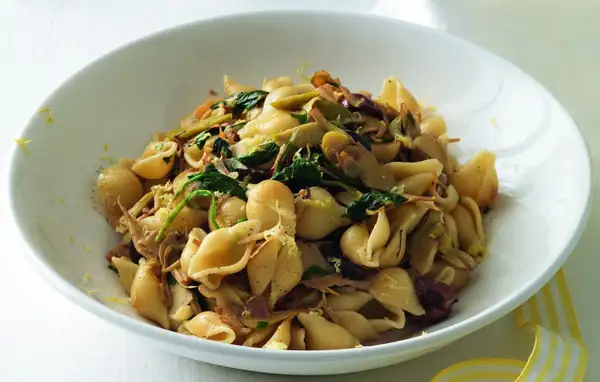
In this recipe, artichoke hearts are pureed into a delicious pasta sauce with lemon juice, garlic, spices and oil. Fresh sage is also torn into the sauce. In addition to the sauce, fried mushrooms are added to the pasta for a rich flavor.
The pasta is called two-artichoke pasta because the dishes are finished with thin slices of Jerusalem artichoke that have been roasted until crispy in the oven. Best of all, you don't need to peel the lumpy Jerusalem artichokes, as long as you wash them well with a root vegetable brush!