Pulled Pork: Recipes and tips for a juicy pulled pork burger
"Low and slow" – that's the motto when preparing pulled pork: it's cooked slowly for several hours at low temperatures. The long wait is worth it, though, because the meat is tender and juicy when you take it steaming off the charcoal grill.
The road to your perfect pulled pork dream is long, but with our help, it's guaranteed not to be rocky. With our tips and tricks, you can prepare this popular dish, now offered in countless restaurants, right at home.
What does "pulled pork" mean and what exactly is it?
The English term "pulled pork" has also become established in this country. It survived the long journey from the United States across the Atlantic not only because the literally translated term "pulled pork" sounds far less appetizing, but also because the meat is considered a delicacy in the USA and its preparation is an art in itself.
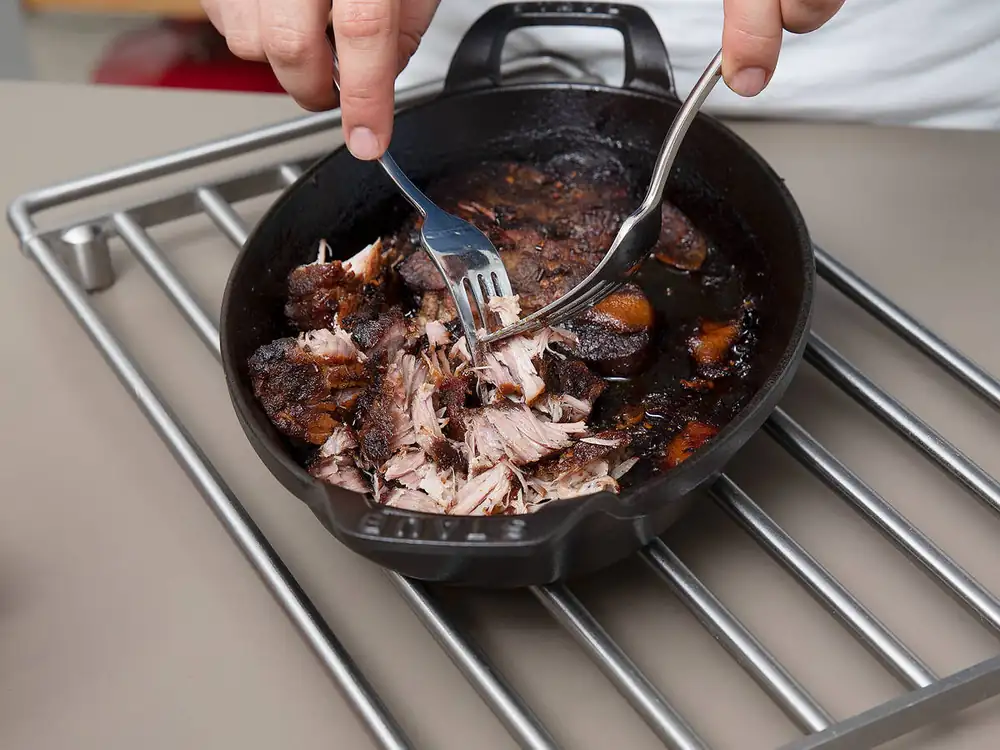
"Pulled" refers to the lengthy preparation of the pork. Before it becomes tender and juicy and can be easily pulled apart by hand, it must be cooked for approximately 24 hours at very low temperatures. Therefore, anyone wanting to enjoy this delicate meat dish needs a large dose of enthusiasm and patience.
Traditionally, pulled pork is prepared in a smoker or on a charcoal grill. If you don't have the equipment, like most Southern families in the USA, there are other cooking methods that will allow you to get closer to this tender pork.
What kind of meat do you need for pulled pork?
For juicy pulled pork, pork shoulder with the bone in is best; alternatively, you can use boneless pork neck. These cuts of pork are marbled with fat and connective tissue, which keeps the meat moist and makes it easy to pull apart after cooking. Remember: quality comes at a price, but high-quality meat tends to lose less liquid and flavor. You can get a good cut from a butcher or farm you trust; you should avoid meat from discount stores.
Before cooking the meat, you need to marinate it and let it sit in the refrigerator, wrapped in cling film, for 12 to 24 hours. We'll explain the best way to marinate it later.
Core temperature: How hot does pulled pork need to be cooked?
The internal temperature of the pork shoulder or neck is crucial for the texture and flavor of the final product. Since it needs to cook for a longer time at lower temperatures, you should constantly monitor the internal temperature of the meat. If you choose to cook it on a charcoal grill, insert a thermometer through the top air vent and into the center of the meat. Temperatures of 100 to 120 °C are ideal inside the grill.
The internal temperature of the meat will constantly change. It will go through so-called plateau phases, which are caused by the evaporation of the liquid on the meat. Never be tempted to increase the grill temperature during these phases. After a few hours of cooking, the first plateau of about 65°C (149°F) will be reached. A second plateau will occur at a temperature of around 80°C (176°F). The meat is done when it reaches an internal temperature of 92°C (198°F). This takes approximately 14 to 18 hours in total.
Which marinade makes it especially delicious?
The crust of your pulled pork, once pulled apart, mixes with the meat, providing crispy, aromatic flavor. That's why it's so important to pay special attention to the marinade. The dry rub provides the flavor base. It consists of various spices, which you can either create yourself or buy ready-made blends.
If you prefer it spicy, you can use a little more chili; for an oriental touch, it's best to mix in more cumin or cinnamon. Sugar and salt should always be part of your rub, as they provide flavor and create a nice crust. Other suitable spices include rosemary, smoked paprika, curry powder, mustard and coriander seeds, onion powder, and pepper. Place all the ingredients in a non-stick pan and toast them for two minutes to release their aromas. Then grind everything into a powder using a mortar and pestle.
To help the spice mix adhere to the meat, rub it with mustard, honey, or even just water. Then, generously apply the powder. Don't skimp on the amount; the meat should be well coated on all sides. Finally, wrap it in cling film and let it marinate in the refrigerator for 12 to 24 hours.
With cola, coffee, and more: Pulled pork with a twist.
You drink a glass of cola with a portion of pulled pork – sounds perfectly logical, right? But what does coffee have to do with the delicate meat? Cola and coffee are often listed not only as drinks but also as ingredients.
What might initially sound like an unusual experiment could very well become a secret weapon for pulled pork lovers. Cola finds its place in the sauce in which the meat cooks. It makes it more tender and, thanks to its flavor components, imparts a unique aroma. The same applies to coffee, which can release its roasted aromas either in the sauce or as a powder in the dry rub.
Pulled Pork Burger: The recipe for the classic
Pulled pork, piled high with crisp lettuce and melted cheese between two crusty buns – what more could you want? A pulled pork burger is undoubtedly a top-class burger, packed with flavor. Once you've prepared the tender pork at home, you can store it in a cool, airtight container for several days, making the time spent preparing it seem effortless.
When it comes to burger toppings, you can vary them among a wide range of delicacies, but the juicy pulled pork will always be the star of the show. The key to your taste experience is the harmonious interplay of the ingredients. From Camembert to Cheddar, from peanut sauce to honey dressing, or a variety of salads, you can choose what sounds like the most exciting flavor explosion to you. We'll give you a delicious incentive with our burger recipe:
Of course, you can make the individual components like bread rolls and sauces yourself, thus reaching master level. But before we delve into expert-level cooking, let's first clarify the basics. How do you actually make pulled pork, and what do you need for it?
Which bread rolls go well with it?
The flavor of the tender pork will always be the star of the show, no matter the combination. But a pulled pork burger also needs the right buns. Because without good buns, there's no good burger – that's the bitter truth. A freshly baked, warm, light and airy burger bun is what truly showcases the meat.
At the bakery around the corner, you'll probably only find unsuitable rolls with crusts, and the supermarket varieties leave much to be desired thanks to plastic packaging and additives. So grab your apron and flour your work surface—homemade simply tastes better! And you'll definitely have enough time while your pork shoulder cooks for hours. In our video tutorial, we show you all the important steps for perfect, homemade burger buns.
Side dishes: What goes well with pulled pork?
We've already established that pulled pork is traditionally served between burger buns. But the enjoyment doesn't end there, as this delicacy is a must-have at barbecues with friends. Pulled pork pairs perfectly with coleslaw, corn on the cob, or potatoes prepared in any way you like. Are you in the mood for crispy fries, or would you prefer roasted potatoes or a potato gratin?
Recipe for sauerkraut or coleslaw
Besides its use in burgers, it can be served like any other salad as a crunchy accompaniment to pork. The preparation method is almost as versatile as it is ingenious: after finely shredding the cabbage, onions, and carrots, you only need a few more ingredients before it's ready to eat.
Following a classic American recipe, you can jazz up the cabbage with mayonnaise. Don't use too much, though, as the salad will release quite a bit of liquid while chilling in the refrigerator. For a more exotic twist, add cranberries to the cabbage base. A little buttermilk and sour cream provide a pleasant acidity and also make the coleslaw easier to digest.
Making your own pulled pork: Special tips for different appliances
Even if you don't have professional equipment at home, you don't have to wait any longer for your next restaurant visit. We'll show you which appliances will soon bring pulled pork to your plate.
For good heat distribution in the kettle grill
Masters of meat preparation cook pork in a kettle grill. There are a few things to keep in mind, but in the end, you'll be rewarded with exceptionally tender pulled pork with a smoky aroma. The choice of briquettes, the type of charcoal, airflow regulation, and the internal temperature all play a crucial role in maintaining a consistently low temperature over a long period.
From the smoker for a smoky aroma
Another classic method is cooking in a traditional smoker. Professionals swear by it, as the smoky flavor of the juicy meat from a smoker is unmistakable. Unlike a charcoal grill, a smoker has two chambers so that the meat doesn't come into direct contact with the flames, but is cooked solely by the heat and hot smoke. The crucial point: This method requires experience and close attention to keep the fire and temperature under control.
On a gas grill – is that even possible?
If you can do without the typical smoky flavor, a gas grill offers the perfect alternative to a kettle grill or smoker. Ideally, you'll have a three-burner gas grill in your garden that can distribute heat evenly and indirectly. Set the left and right burners to their lowest setting and leave the middle burner off.
Place a roasting pan filled with hot apple juice or water on the grill and put a rack on top of it, on which you position your meat. This ensures the heat reaches the pork evenly and cooks it uniformly. At 100 to 110 °C, the pork shoulder will take approximately 12 to 15 hours to reach an internal temperature of 92 °C.
In the oven – with or without a roasting bag
You can also cook pulled pork in the oven. Prepare the meat with the marinade as described above, fill a roasting pan with apple juice or water, and place it on the bottom of the oven. Preheat the oven to 100–110°C and insert a thermometer into the center of the meat (be careful: don't let the thermometer get near the bone, as it will be cooler than the meat).
Place the pork in the center of an oven rack and slide it into the oven above the roasting pan. Now you can sit back and relax: it could take up to twelve hours until the internal temperature reaches 92°C.
For more flavor, you can also use a roasting bag and seal the marinated meat and its liquid inside to prevent any dripping. However, with this method you have to estimate the internal temperature or, alternatively, insert a meat thermometer into the meat.
Suitable cooking time in the slow cooker
A slow cooker offers you a simple, energy-saving way to quickly prepare juicy pulled pork. The cooking time is approximately eight hours. The food cooks below boiling point, preventing burning.
In a Dutch oven: Pulled pork from the fire pot
The so-called fire pot lives up to its name: A Dutch oven is a cast-iron vessel that is hung over an open fire for cooking, roasting, and baking. Pulled pork can be ready in just 4 to 5 hours if it's pre-smoked for about an hour. The pork then cooks gently in the fire pot – so how about a traditional campfire gathering, just like the cowboys did back in the day?
Pulled Pork sous vide
Finally, we'd like to introduce you to another masterclass in pulled pork preparation: Sous vide cooking brings out the maximum flavor in the pork shoulder. This method makes your meat exceptionally tender, as it's vacuum-sealed and cooked in a water bath at a constant temperature. After 18 to 24 hours in a 74°C (165°F) water bath, it will have thoroughly absorbed the marinade and is then finished cooking in the oven or on the grill for approximately three more hours.
How do you prepare your pulled pork? What side dishes and marinades do you like best with it? Share your experiences with us in the comments!