The hall reaches all the way to the Senate, but why hasn't it been given the place it deserves in the restaurant industry?
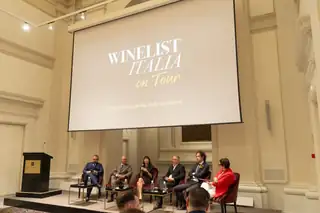
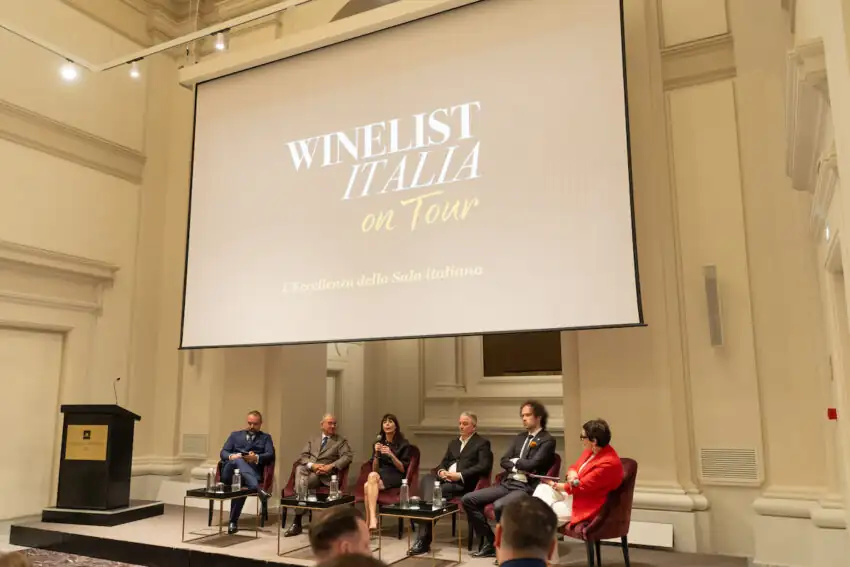
On May 4th and 5th, two events were held in Rome—the Wine List Italia Grand Tasting and the Senate's Excellence Award for Italian Dining Room—which brought the role of sommelier and dining room staff back to the forefront of contemporary dining.
In recent years, Italian restaurants have built a powerful narrative around cuisine. Chefs have become characters, restaurants narrative spaces, and the figure of the cook something to be desired, imitated, and followed. The dining room, on the other hand, has almost always remained in the background. Yet, it is there that a huge portion of the time spent in a restaurant is played out.
The story of the restaurant has left the dining room behind
This is why the two-day event in Rome (May 4th and 5th) organized by Wine List Italia between Palazzo Ripetta and the Senate was interesting—not only for the prize, but also for the grand tasting with dozens of sommeliers and hundreds of wines for tasting, but above all for what it revealed about the current state of dining room work in our country. Something, clearly, is moving.
On the one hand, there's an attempt to create opportunities for discussion among professionals who often work in isolation, without real opportunities for exchange. On the other, there's a desire to finally build a different narrative around these professions: not as accessory figures in the restaurant industry, but as individuals who make a decisive contribution.
The issue, ultimately, is always the same: dining room work continues to be perceived as far less important than it really is (we've already discussed the role and value of the waiter title at length in this previous article).
The work in the restaurant industry remains little talked about
During the Rome press conference, the need to create a sort of "star system for the dining room" was repeatedly discussed, attempting to do for sommeliers, maître d's, and hospitality professionals what has been done for chefs over the past fifteen years. The comparison may seem far-fetched, but the point isn't to turn sommeliers into celebrities. The point is that the kitchen, over time, has succeeded in building imagery, allure, and desirability. The dining room, much less so. And the consequences are evident today.
There's a shortage of workers. Hotel management schools are experiencing extremely high dropout rates. Young people struggle to imagine themselves in this profession. And the industry often continues to portray itself in one way: endless shifts, sacrifice, stress, and fatigue. Which in many cases is true—be careful!—but almost no one talks about the other side of the coin, namely how wonderful this job can be. Which is perhaps the most interesting point that has emerged in recent days.
Between Skills and Invisibility: What Those Who Work in the Dining Room Really Do
Because someone who works well in the dining room isn't simply someone who carries plates or uncorks bottles. They're someone who builds relationships, reads the tables, interprets people, creates atmosphere and a welcoming atmosphere. Someone who must have technique, of course, but also empathy, sensitivity, and the ability to adapt. And it's interesting that many of the words that emerged during the Roman meetings revolved precisely around concepts like identity, relationships, and sharing. At ALMA (the leading international center for advanced training in Italian cuisine and hospitality), for example, one of the first things taught isn't service technique but greetings. Even before wine, table settings, or room management, there's the way people are greeted. It seems trivial, but it isn't at all.
For years, the dominant narrative of the restaurant industry has focused almost exclusively on the food—on aesthetics, creativity, and culinary performance. Meanwhile, however, many restaurants have gradually lost ground in terms of hospitality. And today, more and more people choose a place, and more importantly, return, partly because of the way they are treated.
Wine as a Story: The Role of Sommeliers Today
It's no coincidence that the role of the sommelier is changing so dramatically in the world of wine. A well-crafted wine list isn't a list of bottles crafted to impress the customer. It increasingly becomes a personal narrative, a selection that reflects the sensibility, research, and even the identity of the person who creates it. And this is perhaps the most interesting approach of projects like Wine List Italia: putting the focus back on the people who share the story of wine every day at the table, highlighting the research behind it. At the tasting tables were 45 sommeliers, each selecting six labels: three tied to their local area; a "gem" discovered during their professional career; a selection of sparkling wines; and one designed for serving by the glass.
Education, languages and new generations
But is this enough to truly change the perception of the profession? No. Because the problem remains primarily cultural. And it also concerns the way the sector speaks to younger generations. Today, Gen Z communicates differently, has different speeds, different imaginations, different expectations regarding work and quality of life. Continuing to describe the dining room with "old" languages risks simply alienating it even further. We need schools that are more connected to the industry, more practical training, more opportunities for professionals and students to meet. But above all, we need a new narrative. A narrative capable of explaining that working in the dining room doesn't mean being a step below others. That it's not a temporary stopgap while waiting for something else. And that within this profession, there can be gastronomic culture, study, discipline, travel, human relationships, and enormous growth opportunities.
From this perspective, seeing an award dedicated to these figures reach the Senate of the Republic is certainly a sign: on May 5th, 30 figures from across the country received an important recognition during the first edition of the Sala Italiana Excellence Award. But symbolic recognition alone is not enough. The real challenge will be to transform these moments into something more structural: ongoing dialogue, training, contemporary narratives of the profession, and, above all, the ability to make it desirable again. Because the problem today is not just finding staff. The problem is that for too long no one has truly expressed how wonderful this work can be.