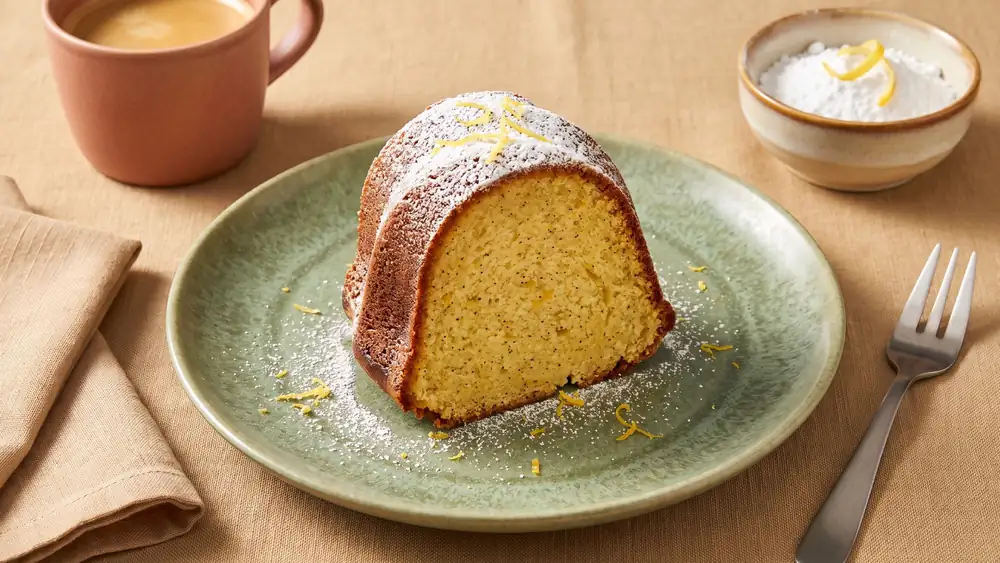
Moist vanilla and lemon sponge cake for your afternoon
As soon as the oven door opens a crack, a warm aroma of real vanilla and fresh citrus wafts through the room. This is the moment when the anticipation for the first slice of cake is at its peak. This vanilla-lemon sponge cake is perfect for a relaxing afternoon on the sofa.
- 250 g soft butter
- 200 g sugar
- 1 packet of vanilla sugar
- 1 vanilla bean 🛒 (the seeds, or 2 tsp vanilla paste)
- 4 Owner
- 300 g wheat flour
- 2 tsp baking powder
- 1 pinch of salt
- 100 ml milk
- Zest of 2 organic lemons
- 3 tablespoons lemon juice
- 2-3 tablespoons of lemon juice (optional)
- a little icing sugar for dusting
- Preheat the oven to 175°C (350°F) using conventional oven settings (top and bottom heat). Grease the baking pan thoroughly and dust it lightly with flour.
- Cream the softened butter with the sugar and vanilla sugar for several minutes until light and fluffy. Scrape the seeds from the vanilla pod and stir them in. If using vanilla paste, add it directly.
- Add the eggs one at a time, mixing each egg thoroughly before adding the next.
- Mix flour, baking powder and salt in a separate bowl.
- Stir the flour mixture and the milk alternately into the butter-egg mixture. Mix only until a smooth batter forms.
- Add lemon zest and lemon juice and briefly stir both into the dough.
- Pour the batter into the prepared pan and smooth it out. If desired, use a knife to draw a shallow line lengthwise through the center of the batter so that the cake cracks evenly.
- Bake the cake on the middle rack for about 50–60 minutes. Towards the end, do the toothpick test: if no moist batter sticks to the wooden toothpick, the cake is done.
- Remove the cake from the oven and let it rest in the pan for about 10–15 minutes. Then carefully turn it out onto a wire rack. If desired, pour lemon juice over the cake.
- Let the vanilla lemon sponge cake cool completely and dust it with a little powdered sugar.
Cake bliss: Bake a vanilla-lemon sponge cake
A solid batter forms the foundation of many traditional baking recipes and often evokes memories of cozy Sundays with the family. The great advantage of this type of batter lies in its uncomplicated nature. You don't need complicated techniques or fancy equipment to achieve a convincing result. Furthermore, this pastry deliberately avoids elaborate decorations made of fondant or thick layers of cream. A light dusting of powdered sugar or a glossy glaze made of powdered sugar and freshly squeezed lemon juice perfectly complements the flavor profile. This allows the focus to remain entirely on the moist crumb and the delicate aromas.
The actual work in the kitchen only takes a few minutes. The most important thing for a batter is that all ingredients are at room temperature.
Quickly combine the ingredients in a large bowl until a smooth batter forms. Avoid overmixing once you add the flour. Otherwise, the gluten will develop too much and the cake will lose its light and airy texture. Then, pour the mixture into a well-greased and lightly floured pan. This will ensure that the cake can be easily removed from the pan later.
In a preheated oven, the dough needs about an hour to bake until golden brown. It's best to do the toothpick test towards the end of the baking time. If no liquid batter sticks to a wooden skewer, you can take the pan out of the oven.
After baking, be sure to let the vanilla-lemon sponge cake rest in the pan for another 15 minutes. This allows the crumb to stabilize, preventing the cake from falling apart when you turn it out onto a wire rack. For an even more intense citrus flavor, lightly prick the surface of the still-warm cake several times and drizzle with pure lemon juice. The juice will penetrate deep into the batter, making it exceptionally moist.
A reliable basic recipe always invites you to try out your own ideas. The combination of lemon and vanilla goes wonderfully with various additions. A few tablespoons of poppy seeds in the dough provide an appealing look and a slightly nutty note. Chopped pistachios, on the other hand, add a pleasant texture and a light crunch to every bite. Depending on the season, you can also fold in fresh fruit. In summer, gently stirred-in raspberries or blueberries are absolutely delicious. In the cooler months, a pinch of cinnamon or some ground cardamom gives the dough a warming, wintry feel.
Ultimately, it's precisely this unpretentious versatility that makes vanilla lemon cake so valuable. With just a few simple steps, you have a reliable cake on the table that delivers a truly satisfying taste and can be easily adapted to what you have on hand. Often, it's the down-to-earth classics that bring the most joy in everyday life and are baked again and again with pleasure.
Craving more fresh flavors and unique cake ideas? Then try the grapefruit polenta cake, the lime olive oil cake, or an aromatic saffron honey cake. Three recipes, three surprising flavor combinations – perfect for anyone who loves discovering new things while baking.