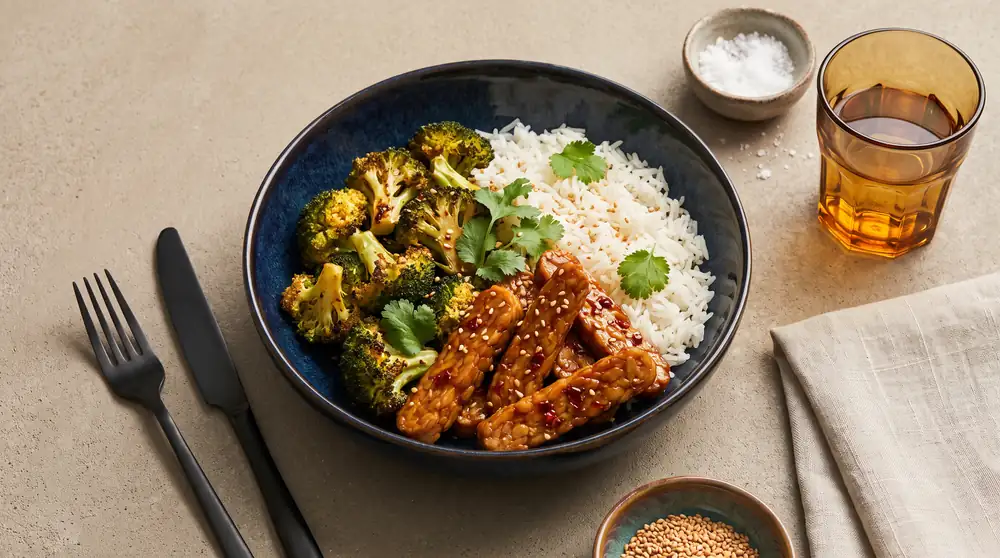
Vegan Broccoli Tempeh Bowl with Soy Maple Glaze
If you need a quick lunch that will also keep you full for a long time, bowls are the ideal solution. Our broccoli and tempeh bowl puts the spotlight on an ingredient that still languishes in obscurity in many kitchens: tempeh. These fermented soybeans naturally have a firm texture and a delicate, nutty flavor.
- 1 head of broccoli (about 500 g)
- 1 tbsp olive oil
- salt and pepper
- 250 g Basmati rice
- 400 g Tempeh
- 2 tbsp rapeseed oil
- 4 tbsp soy sauce
- 2 tbsp maple syrup
- 1 tsp chili flakes (optional)
- Sesame
- Fresh coriander (for decoration)
- Cook the basmati rice according to the package instructions and keep it warm.
- Preheat the oven to 200 °C (top/bottom heat).
- Cut the broccoli into florets and toss with salt, pepper, and 1 tablespoon of olive oil. Spread the broccoli on a baking sheet and roast in the oven for 20 minutes, until golden brown and tender-crisp.
- Cut the tempeh into strips. Heat 2 tablespoons of rapeseed oil in a pan and fry it over high heat until golden brown.
- Mix together soy sauce, maple syrup, and chili flakes, then deglaze the tempeh with this mixture. Reduce the heat and let it glaze over, stirring occasionally.
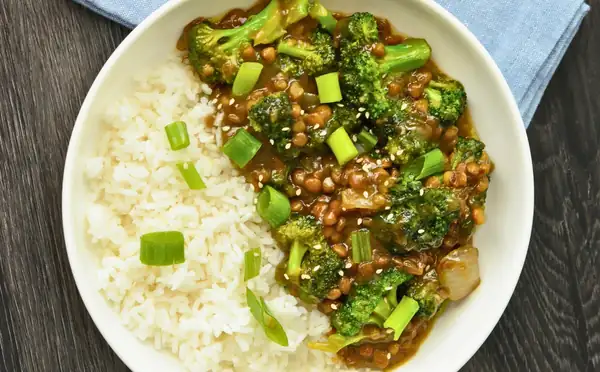
- Arrange the rice in bowls and top with the roasted broccoli and glazed tempeh. Sprinkle with sesame seeds and garnish with fresh coriander.
How healthy is a broccoli tempeh bowl?
A plant-based diet doesn't have to be monotonous or complicated. Anyone who has only thought of classic tofu when it comes to soy products will be surprised by the Indonesian specialty, tempeh. Unlike tofu, which is made from curdled soy milk, tempeh consists of whole, cooked soybeans. These are inoculated with a beneficial mold and then fermented. By using the whole bean, a large portion of the natural fiber is retained.
The fermentation process not only preserves the beans but also breaks down the proteins they contain. This makes tempeh significantly easier for our bodies to digest than unfermented soy products. At the same time, the soy block boasts a remarkable protein content, far exceeding that of conventional tofu. The microorganisms produced during fermentation also support a balanced diet. A generous serving of this broccoli and tempeh bowl will therefore provide you with plenty of plant-based energy for the rest of the day.
Tempeh truly reveals its culinary potential when cooked in a pan. You can simply cut the block into bite-sized cubes or thin slices. A little kitchen trick helps with preparation: steaming the tempeh for a few minutes before frying removes any bitterness and allows it to absorb marinades even better. In this recipe, we're using a reduction of salty soy sauce and sweet maple syrup. As soon as the liquid caramelizes in the hot pan, it coats the tempeh with a glossy, sticky layer. The result is wonderfully crispy on the outside and pleasantly firm to the bite on the inside.
Broccoli provides a refreshing contrast to the rich glaze. Instead of boiling it in water, it's roasted. The dry heat evaporates the water from the vegetable, concentrating its natural flavor and giving the florets delicate, crispy tips. This works perfectly on a baking sheet in the oven, but it's even faster and more energy-efficient if you prepare the vegetables in an air fryer. A little vegetable oil and a pinch of salt are all you need to bring out the wonderful roasted aromas in the broccoli.
The base of this broccoli and tempeh bowl is simple white rice. It perfectly absorbs the excess soy-maple sauce and binds the individual components together. You can use jasmine rice for a slightly floral note or classic basmati rice. Arranging the warm rice, roasted broccoli, and glazed tempeh together in a deep bowl creates a complete lunch or dinner. The combination of savory umami, subtle sweetness, and diverse textures makes this dish a reliable everyday companion.