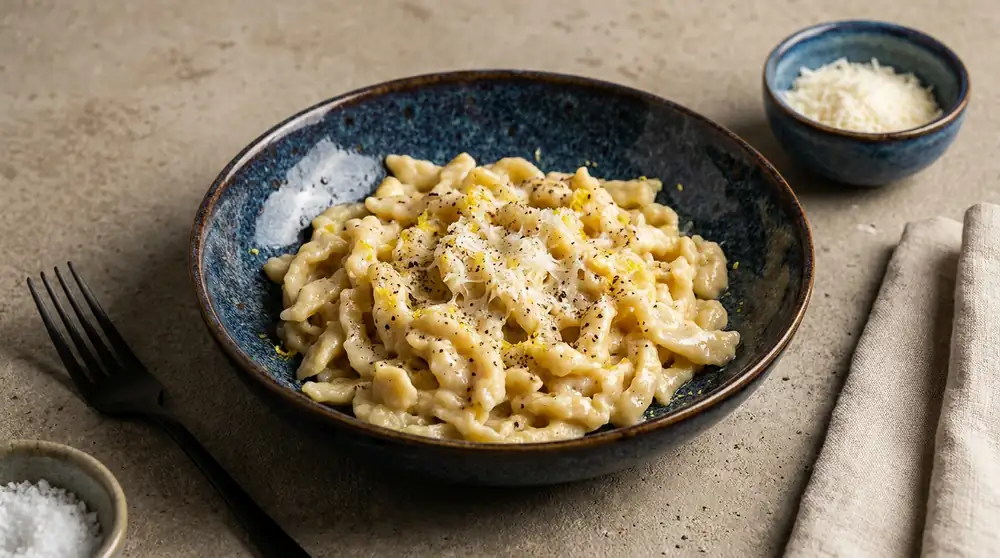
Cacio e Pepe with Spätzle for a creamy fusion dish
When you think of classic Roman pasta dishes, a plate of steaming spaghetti probably immediately springs to mind. But sometimes it's worth venturing off the beaten path and exploring new culinary boundaries. In this variation of an absolute classic, Swabian egg noodles take center stage.
- 120 g Pecorino Romano (very finely grated)
- 30 g Parmesan (very finely grated)
- 100 ml lukewarm water
- 1 1/2 tsp black peppercorns
- 600g fresh spaetzle from the refrigerated section
- 1 teaspoon of salt for the cooking water
- 200 ml spaetzle cooking water
- 50 g Butter
- 30 g Pecorino Romano (finely grated)
- 1/2 organic lemon
- 1/2 tsp black pepper (freshly ground)
- Place the very finely grated Pecorino and Parmesan cheeses in a bowl.
- Gradually add the lukewarm water and whisk everything together to form a thick, smooth cheese cream.
- Roughly crush the black peppercorns in a mortar.
- Place the peppercorns in a large, dry pan and toast them over medium heat for 30–60 seconds, until intensely fragrant. Then remove the pan from the heat.
- Bring a large pot of water to a boil. Add the salt and cook the fresh spaetzle according to the package instructions.
- Reserve 200 ml of the spaetzle cooking water before draining. Then drain the spaetzle.
- Add the butter to the roasted pepper in the pan and let it melt over low heat.
- First, add 100 ml of spaetzle cooking water and mix it with butter and pepper.
- Put the hot spaetzle into the pan and toss them in the pepper butter for about 1 minute.
- Remove the pan completely from the stove.
- Stir the prepared cheese cream into the spaetzle in portions, continuously swirling the pan.
- Add more cooking water a little at a time until a smooth, glossy sauce has formed that clings creamily to the spaetzle.
- Distribute the remaining Pecorino cheese over the Spätzle Cacio e Pepe.
- Wash the lemon thoroughly with hot water and finely grate a small amount of zest over the dish.
- Add freshly ground black pepper.
Creamy spaetzle with pecorino and black pepper
Of course, this is neither a traditional Italian recipe nor a classic of southern German cuisine. Rather, it's a clever combination that unites the best of both worlds. The soft pasta provides a wonderful texture. At the same time, the aged pecorino cheese delivers a generous dose of umami and a subtle saltiness. The coarsely ground black pepper, in turn, contributes a comforting warmth and a gentle spiciness. Together, these elements create a flavor profile that, despite the minimalist ingredient list, feels incredibly deep and complex.
The real challenge in preparing this dish lies not in sourcing the ingredients, but in precise temperature control. Hard cheeses tend to form unsightly lumps or become stringy when exposed to strong, direct heat. To achieve a silky consistency, first mix the finely grated cheese with a little lukewarm pasta water in a small bowl to form a thick paste. Add this mixture to the hot pasta in the pan only at the very end. The stovetop must be turned off at this point. By constantly swirling and stirring, the paste will combine with the remaining liquid to create a smooth, homogeneous sauce.
Another crucial step for perfect flavor is how you prepare the peppercorns. You should definitely grind them fresh and then briefly toast them in a dry pan. The heat opens up the aromatic structures, allowing the essential oils to develop optimally. This makes the pepper taste much more intense and well-rounded. However, a little finesse is required here. The toasting process happens extremely quickly, and the pepper can easily burn, which would result in bitter notes. About half a minute to a maximum of one minute is perfectly sufficient. As soon as an intense aroma rises from the pan, remove it from the heat immediately.