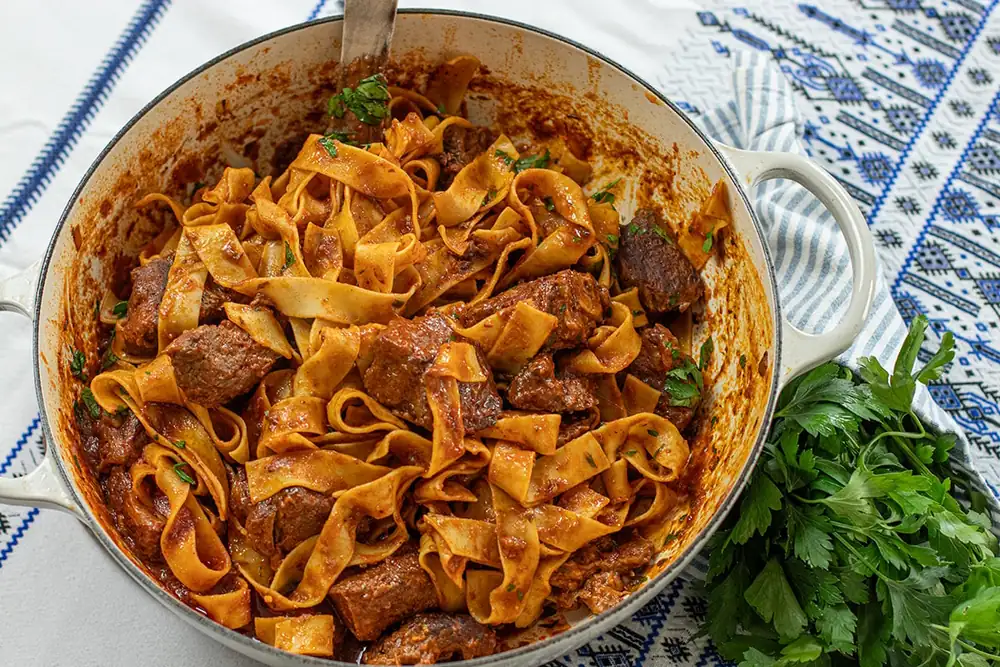
Greek Beef Stew with Egg Noodles Moschari Kokkinisto me Hilopites (with Pappardelle)
This Greek beef stew is pure comfort and will warm your soul from the inside out!
- 2 tablespoons olive oil
- 3 pounds chuck roast, cut into large cubes
- 1 onion, finely chopped
- 5–6 garlic cloves, grated
- 4 tablespoons balsamic vinegar
- Beef broth, as needed for deglazing
- 1 cinnamon stick or ½ teaspoon ground cinnamon
- 3 whole cloves
- ½ teaspoon allspice
- 2 bay leaves
- 1 (28-ounce) can crushed tomatoes
- 1 sprig fresh rosemary
- Salt and freshly ground black pepper, to taste
- 400 g pappardelle noodles, cooked al dente
- Fresh parsley, finely chopped
- Grated kefalograviera or Parmesan cheese
- Crumbled feta, optional
- Heat the olive oil in a large heavy-bottomed pot or Dutch oven over medium-high heat. Add the beef in batches and brown well on all sides. Remove the beef from the pot and set aside.
- In the same pot, add the chopped onion and cook until soft and lightly golden, about 5–7 minutes. Stir in the grated garlic and cook briefly until fragrant.
- Deglaze the pot with the balsamic vinegar, scraping up all the browned bits from the bottom. Add a splash of beef broth if needed to loosen the fond.
- Return the beef to the pot and add the cinnamon, cloves, allspice, bay leaves, crushed tomatoes, rosemary, salt, and pepper. Stir well and bring to a gentle boil.
- Reduce the heat to low, cover, and simmer for 1½ to 2 hours, or until the beef is very tender and the sauce has thickened.
- Remove the rosemary sprig, bay leaves, and cinnamon stick before serving. Adjust seasoning with additional salt and pepper if needed.
- Cook the pappardelle noodles in well-salted boiling water until al dente. Drain and either stir the noodles directly into the beef stew or serve the stew spooned generously over the pasta.
- Finish with chopped parsley and grated kefalograviera or Parmesan. Add crumbled feta on top if desired.
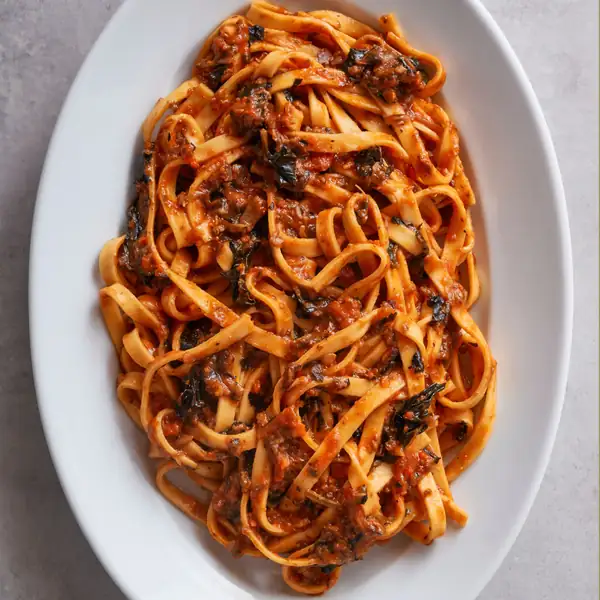
This Greek beef stew with egg noodles is a comforting, classic dish known as moschari kokkinisto me hilopites. Tender chunks of beef are slowly simmered in a rich tomato sauce scented with warm spices, then tossed with wide egg noodles. Since traditional hilopites can be hard to find and expensive, pappardelle noodles make an excellent and accessible substitute.
Moschari kokkinisto is a delicious and cozy stew known for its deep tomato flavor and warm, aromatic spices like cinnamon and allspice. Hilopites are egg noodles, usually tiny squares, made at home or at any grocery store in Greece or at Mediterranean stores in the US. I’m using pappardelle noodles because hilopites are a little hard to find here, and when you add pappardelle to the sauce, it really soaks up the delicious flavors. This stew gets better with time, making it ideal for slow weekends, family dinners, or make-ahead meals.
Why will everyone love this Greek beef stew?
What cut of beef works best?
Chuck roast – Ideal for slow cooking, chuck becomes tender and flavorful as it simmers, infusing the tomato sauce with richness. Cut it into big chunks, since it tends to shrink a bit while it cooks.
What builds the sauce?
Olive oil – Not too much, but enough to brown the beef and build flavor. Onion – Adds sweetness and depth as it softens and caramelizes slightly. Garlic – Grated garlic melts seamlessly into the sauce, adding warmth without overpowering, but minced works well, too. Balsamic vinegar – Adds gentle acidity and sweetness while lifting the browned bits from the pot. Beef broth – Used as needed for deglazing and creating a silky, well-balanced sauce. Crushed tomatoes – Forms the base of the kokkinisto sauce, providing richness and body.
What spices give kokkinisto its signature flavor?
Cinnamon stick – Adds warmth and subtle sweetness to the red-sauce stew. Whole cloves – create depth and aromatic complexity, and pair so well with the cinnamon and allspice. Allspice – Brings a gentle, rounded spice that ties everything together. Bay leaves – Add savory layers of flavor during the simmer. Fresh rosemary – Adds an earthy note that complements the beef and tomatoes beautifully. Salt and black pepper – Essential for balancing and enhancing all the flavors.
What pasta is used?
Pappardelle noodles – Traditional Greek hilopites can be difficult to find and are often expensive. Pappardelle is an excellent substitute because its wide shape holds the rich tomato sauce beautifully and gives a similar eating experience.
What goes well on top of Greek beef stew?
Fresh parsley – Adds freshness and color to the final dish. Kefalograviera or Parmesan – Salty, nutty cheese that melts into the hot pasta. Crumbled feta -optional, but adds a creamy, tangy contrast to the rich stew.
Make-Ahead Hosting Tip: This Greek beef stew is ideal for hosting because it actually tastes better after it sits. You can make the stew a day ahead and reheat it gently before serving. Cook the pappardelle fresh just before guests arrive, then toss it with the hot sauce and beef so everything is perfectly coated. Serve it family-style with a big bowl of pasta, a simple salad, and crusty bread for a relaxed, comforting meal.
How do I brown the beef?
Heat the olive oil in a large heavy-bottomed pot or Dutch oven over medium-high heat. Add the beef in batches, browning well on all sides. Remove the beef and set it aside.
How do I build the sauce?
In the same pot, add the chopped onion and cook for 5–7 minutes, until soft and lightly golden. Stir in the grated garlic and cook briefly until fragrant. Deglaze the pot with the balsamic vinegar, scraping up all the browned bits from the bottom. Add a splash of beef broth if needed to loosen the fond.
When do I add the spices and tomatoes?
Return the beef to the pot. Add the cinnamon, cloves, allspice, bay leaves, crushed tomatoes, rosemary, salt, and black pepper. Stir well and bring to a gentle boil.
How long should Greek beef stew simmer?
Reduce the heat to low, cover, and simmer for 1½ to 2 hours, until the beef is fork-tender and the sauce has thickened. Remove the rosemary sprig, bay leaves, and cinnamon stick before serving. Adjust seasoning if needed.
How do I prepare the noodles?
Cook the pappardelle in well-salted boiling water until al dente. Drain the noodles, then either stir them directly into the stew or spoon the stew generously over the pasta.
How should I serve Greek Beef Stew?
Finish with chopped parsley and grated kefalograviera or Parmesan. Add crumbled feta on top if desired. Serve hot and enjoy immediately.
Storage and make-ahead notes
The beef stew can be made up to 2 days ahead and reheated gently on the stove. Cook the noodles fresh just before serving for the best texture. Store leftovers in an airtight container in the refrigerator for up to 4 days.