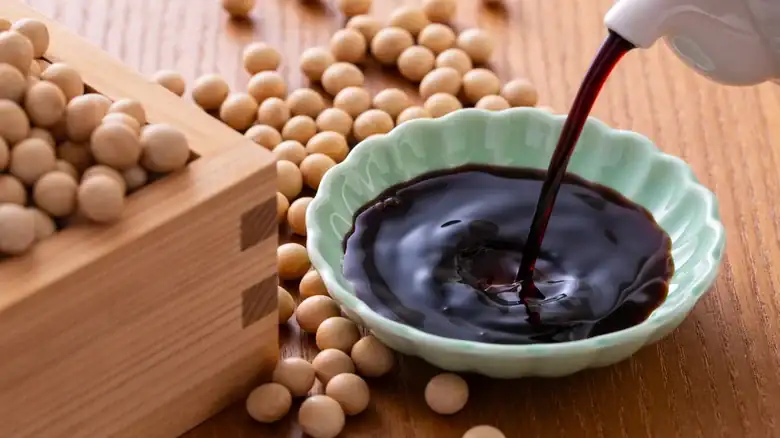
Substitute Classic Soy Sauce For This Pungent Alternative, Plus A Squeeze Of Lemon
Halfway through a new stir-fry recipe, you tip the soy sauce bottle over the wok, expecting a splash of flavor on the veggies and a noseful of umami aroma... but you get nothing — the bottle's empty. Before you start panicking and sub in tablespoons of salt, check whether you've got fish sauce in the fridge.
Fish and soy sauce are made the same way with different ingredients: soybeans and wheat in salt brine for one, salted anchovies for the other. In both cases, the proteins break down into free glutamates — the source of the rich, umami-filled taste of these condiments. That puts their flavor profiles in the same neighborhood, but not quite identical. Fish sauce is a lot saltier, with about 1,400 milligrams of sodium per tablespoon versus soy sauce's 1,000 milligrams.
Knowing that, a 1:1 swap will likely make you cringe from the salt-packed assault on your palate. Instead, cut the fish sauce with a squeeze of lemon or lime juice to round off the fish sauce's funkier edge. Add water or a bit of sugar for sweetness if it's still too pungent. It'll take some experimentation with the ratios, but once you get it, the mixed condiment should taste like soy sauce.
How to make the fish sauce swap work in any dish
The key to swapping soy sauce for fish sauce is control. Even after you've dulled the briny edge of fish sauce with lemon juice, it's pungent stuff. So start with a small amount and build up — you can always save an under-seasoned pan, but it'll take some mighty effort to save one that's already over-seasoned. Once the portioning is sorted, though, fish sauce isn't too fussy about where it ends up.
Fish sauce goes into almost anything — from a splash into the pan with your aromatics for a stir-fry to a spoonful to season a braise or a quick pour into a simmering sauce — the pungency mellows out fast once it meets heat, and most dishes will take the swap without complaint. If you're planning to use soy sauce to make an uncooked dipping sauce, however, it can be a bit more difficult.