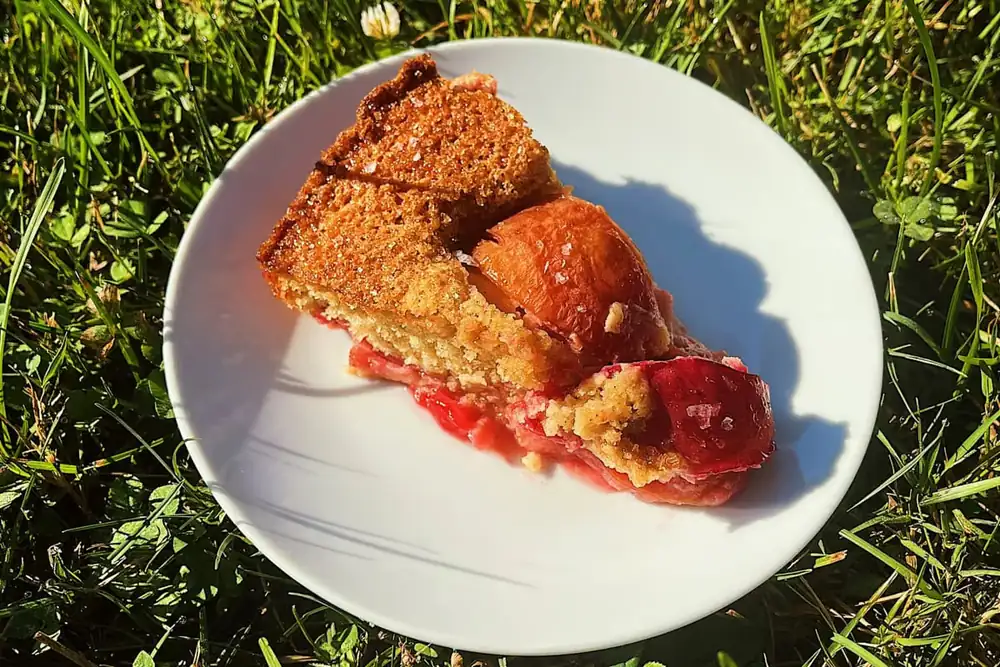
Sourdough Discard Plum Cake
From 1983 to 1989, The New York Times reprinted columnist Marian Burros’s Plum Torte recipe every September. It’s a simple butter-based batter studded with so many small, soft plums that the texture of the finished product is something between a cake and a cobbler.
- Nonstick cooking spray, softened butter, or parchment paper, for the pan
- 113 grams (1 stick, ½ cup) unsalted butter
- 78 grams (10 tablespoons) all-purpose flour
- 6 grams (1 ¼ teaspoon) baking powder
- 2 grams (½ teaspoon) Diamond Crystal kosher salt
- 2 grams (½ teaspoon) ground cinnamon or cardamom
- 150 grams (¾ cup) granulated sugar, plus more for sprinkling (or use Demerara sugar for sprinkling if you have it)
- 110 grams (about ½ cup) sourdough starter discard (100% hydration)
- 50 grams (1 large) egg
- 14 grams (1 large) egg yolk
- 9 grams (2 teaspoons) vanilla
- 1 gram (¼ teaspoon) almond extract (optional)
- 575g (about 1 ¼ pounds, 10 small or 4-5 large) plums
- Couple pinches flaky sea salt, for sprinkling (optional)
- Place the butter in a small saucepan or skillet over medium heat. Melt the butter until it starts to foam and sputter, about 2 minutes. Whisking often, continue to cook the butter until it starts to quiet down, smells nutty, and turns deeply golden brown, 3-5 minutes. As you whisk, try to lift any browning milk solids that are stuck to the pot. Remove from the heat and immediately pour into a shallow heat-safe bowl placed over a digital scale, making sure to scrape in as many browned bits stuck to the pan as possible. You should have about 90 grams of butter remaining.
- Refrigerate the butter for about 35 minutes to solidify slightly (it should be the consistency of softened butter).
- While the butter chills, heat the oven to 350ºF/177ºC. Grease an 8-, 9, or 10-inch springform cake pan with nonstick cooking spray or softened butter. Whisk together the flour, baking powder, salt, and cinnamon. If using small (3 inches wide or smaller) plums, halve them; if larger, cut into quarters.
- In a large bowl, use an electric mixer on medium-high speed to cream the butter and sugar for 3 minutes, scraping down the bowl every minute or so. Beat in starter, egg, vanilla, and almond extract (if using) on medium speed for 1-2 minutes. Beat in the dry ingredients on low speed until just combined.
- Scrape the batter into the prepared pan. Top with the plums, skin-side up. Sprinkle with more granulated or Demerara sugar.
- Bake for 40-50 minutes, until the cake is deeply golden, starts to pull away from the edges of the pan, and a cake tester inserted into the center comes out with just a few moist crumbs (err on the higher side for smaller pans, lower side for bigger pans). As soon as the cake comes out of the oven, sprinkle the surface with flaky salt. Let it cool in the pan for 10 minutes, then release the outer spring and let cool for at least another 30 minutes, but ideally completely, before removing from the pan and slicing.
“we pledge that every year, as summer gives way to fall, we will make sure that the recipe is easily available to one and all.”
Deb Perelman of Smitten Kitchen notes that the beloved recipe was actually given to Burros by Lois Levine, her co-author on Elegant but Easy. Though I made some adjustments to the original recipe’s ratios for both accommodating the extra liquid in starter discard, as well as some flavor preferences, it is still very much an homage to the classic. And for good reason: This cake was so popular that when the Times decided to stop running the recipe annually, readers were outraged. Today, the torte lives on NYT Cooking, noting, “we pledge that every year, as summer gives way to fall, we will make sure that the recipe is easily available to one and all.”
Remove Excess Water (and Add Flavor) by Browning Butter
While many cake batters will call for a liquid component like milk or coffee, the plum torte doesn’t. So in order to accommodate the liquid in starter discard, I had to remove water from other areas of the recipe. As is the case with many of my sourdough starter discard recipes, one of the simplest ways to remove water is by browning butter. This recipe calls for 113 grams (½ cup) of butter, browned slowly to evaporate about 20% of its water (and adds a toasty flavor to boot).
Use 1 Egg Yolk and 1 Whole Egg
Removing egg whites is another way to remove water from batters like this. While the original recipe calls for two whole eggs, I pulled back to one whole egg (the white is nice to have for additional structure) and one egg yolk, the white of which I’ve omitted to make way for another 35 grams of liquid. (I save the whites in the freezer and defrost them as needed for other recipes.)
In total, the recipe uses 110 grams (about 1/2 cups) sourdough starter discard. It adds just enough tang to make the flavor a little more interesting than a standard butter cake, without overpowering the rest of the batter.
Use Smaller Plums If You Can Find Them
Small plums, like Italian prune plums, are the ideal choice for this cake. They’re small enough that when halved they stay afloat on top of the batter, but still hold their shape. If using larger plums, even quartered or sliced, they can sink into the batter while it bakes, especially if using a smaller cake pan. If you want to guarantee seeing fruit on top, arrange half of the plums on the surface before baking, then add the rest halfway through baking.
Seasoning Is Important
The original plum torte recipe calls for an optional pinch of salt and 1 cup of sugar (quite a lot of sweetness for such a small cake, especially one with fruit). In later printings of the recipe, the sugar was reduced to ¾ cup; many republished now include a range. Personally I think every baked good needs salt and sugar to be properly balanced. Sourdough-based baked goods naturally tend to be tangier than those without, so sugar is important for offsetting the tang.
Still, I don’t like when cake is too sweet, so in my first test I used ¾ cup sugar, and just a pinch of salt—while sourdough isn’t salty, it can provide a similar counterpoint to sweetness. Not good enough! The resulting cake was lovely, but I (and my taste-testers, all of whom have much less of a “salty tooth” than me) still found it a smidge too sweet. 2 grams (½ teaspoon Diamond Crystal or ¼ teaspoon Morton) kosher salt in the batter, plus a sprinkle of flaky sea salt on top, is perfect.
But Feel Free To Experiment With Other Fruit
I use just about 1 ¼ pounds (about 567 grams) plums in this cake. You could use the same weight of any stone fruit, such as peaches, nectarines, apricots, even cherries. Or try berries (tart blackberries sound especially lovely). For a deep autumnal twist later in the year, consider using cranberries, apples, or pears. Fig and grapes are lovely too! And if any of the fruit sinks to the bottom, don’t worry. Your cake will still taste great.
It’s Forgiving From a Pan Perspective
For the easiest removal, the delicate cake should be baked in a springform pan, so it can easily be unmolded without needing to be flipped over. Ideally that springform pan is between 8 and 10 inches. Personally I prefer the height of a cake baked in an 8-inch pan, though this can encourage the fruit to sink into the batter (it makes the cake no less tasty.). If you’re concerned about this, as noted above you can stud the top with half the plums before baking and save the second half for adding halfway through.
You can, of course, use a standard 8- to 10-inch cake pan here, or even a cast iron skillet. Fluted tart pans also make for a very cute cake (preferably use a metal one with a removable bottom for similar removing-ease of springform pans, though ceramic pans work too). I recommend a 9- or 10-inch tart pan, which are more shallow than cake pans and cast iron skillets, to prevent any overflow.
If baking in a standard cake pan, skillet, or anything without a removable bottom, grease the bottom and sides, then neatly line the base with a round of parchment. Once the cake has cooled, gently flip it out onto a rack, and then over again (onto a serving plate) so the top side is facing up. Alternatively, consider just scrunching a big sheet of parchment right into the pan, like I did here —once the cake has cooled, you can simply pull it out by the exposed parchment edges. The cake may have some divots on the side, but who cares! (Of course, some serious bakers may own parchment rounds with lift tabs, which offers the best of both worlds, and I salute those who do.)
For The Most Tender Cake, Don’t Overbake
The original recipe is less precise than I prefer when it comes to baking time: “bake 1 hour, approximately.” I think this is far too long, especially for a 9- or 10-inch pan, and even when baking in an 8-inch, which needs about 50 minutes. It could be that home ovens are more powerful now than they were when Burros was developing the recipe, or it could simply be a matter of preference.
Cakes baked in an 8-inch pan need about 50 minutes, and those baked in a 9- or 10-inch pan turned out best after about 40 minutes (if your oven is very powerful, start checking a 10-inch cake for doneness at 35 minutes). Regardless, just like sourdough granola, don’t overbake it!
Description
A tender, flaky, and sweet cake with a twist—use your sourdough starter discard to bring added flavor to this classic cake.
Recipe adapted from Marian Burros.