Commercial pestos do not contain olive oil: brands replace it with a cheaper ingredient
Whether you're a student, short on time, or simply looking for a comforting meal, a plate of pasta with pesto is always tempting. For several years now, the French have been increasingly fond of it.
Olive oil isn't the only expensive ingredient to disappear from the recipe. A factory manager explains in the report that pine nuts are replaced by cashews, a nut that's "eight times cheaper" and available in larger quantities. Its low price and mild flavor make it the perfect ally for manufacturers seeking crowd-pleasing recipes... and higher profit margins! Basil and Parmesan are unavoidable: despite their cost, they're essential to the recipe, even for food industry giants. However, the basil is ground from leaf to stem to increase the volume of product in the jar at minimal cost. To further sweeten the pesto, manufacturers also add sugar and powdered milk.
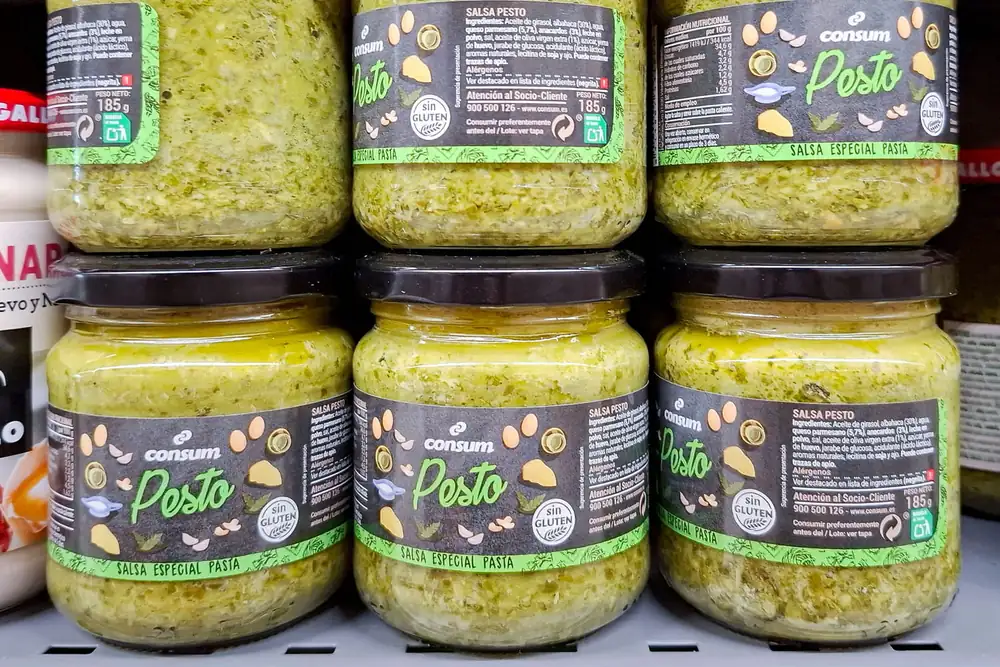
And what about olive oil? Of the 12 jars analyzed by Raphaël Haumont, a food chemistry expert, only one actually contains it. In the other pestos, it's replaced by sunflower oil, which is "four times cheaper." It's usually found at the bottom of the ingredients list, in minute quantities. To boost the flavor of their sauces, manufacturers rely on basil and olive oil flavorings. There's no need to buy the most expensive jars on the shelf, explains Raphaël Haumont: they too are full of sunflower oil and extracts.
As you might have guessed, supermarket pesto recipes primarily benefit manufacturers: cheaper ingredients for higher profits. To rediscover the true taste of Italian pesto, the best option is to make it yourself, with olive oil and pine nuts.