Sagardi: Basques defending Argentine products in Buenos Aires
It's a cliché: Basques are stubborn and cheerful, hospitable and proud, direct and sincere. Iñaki López Viñaspre, a true Basque, fits the stereotype.
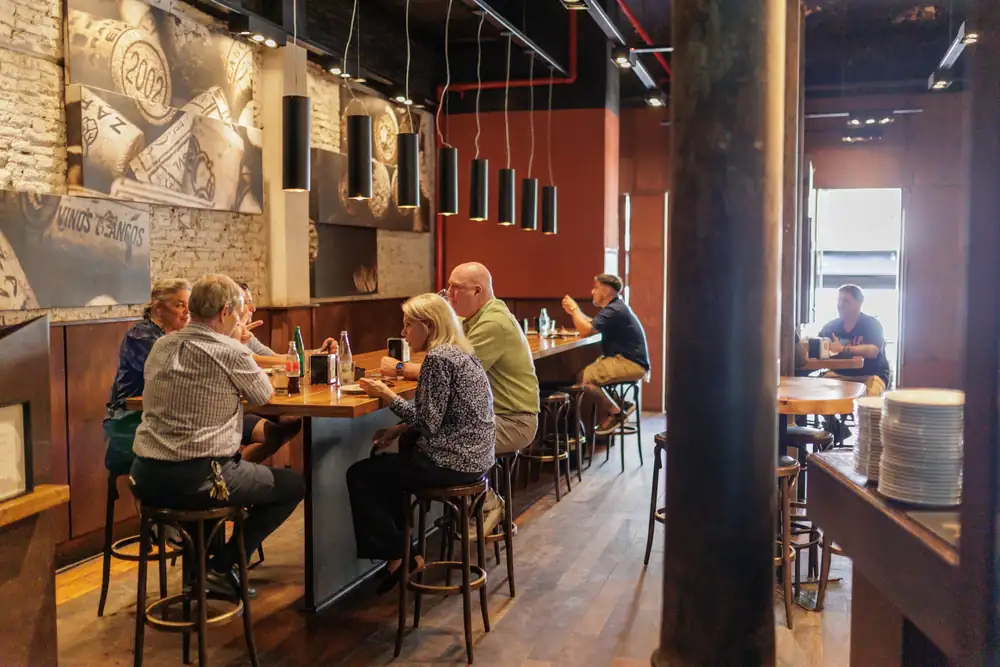
“Buenos Aires was our first location outside of Spain. We found this wonderful place in the heart of the old city, a house that, we later learned, had belonged to Martina de Céspedes, a heroine who defended Buenos Aires during the British invasions in the 19th century,” he explains. “But global expansion was already in our DNA: we always envisioned bringing Basque cuisine beyond the Basque Country. We started in Barcelona, then Madrid, then Valencia. Almost by chance, we arrived in this beautiful city. Today we are also in Portugal, the Netherlands, and England,” he continues.
Sagardi first arrived in Argentina through José Luis Fuoco, a local partner and liaison. Soon, their friendship and collaboration extended to Juan Ignacio, José Luis's son, who now manages operations in the country. Together, they not only survived these nearly two decades but just a few months ago doubled their investment, opening a second, highly ambitious location in Colegiales, one of the city's newest gastronomic hotspots, under the name Berria by Sagardi. "In Basque, berria means new. A contemporary take on Basque cuisine," they explain.
Basque arrogance
The original concept, the one that began 18 years ago, was demanding. Even, one might say, somewhat arrogant. Was it really necessary for a Basque restaurant to come and teach us how to grill an old cow's ribeye steak over charcoal, in a country where grilled meat is practically a religion? A restaurant from colonial Europe, arguing with local grillers about the ideal size of a cut, aging times, and the proper way to prepare the meat? Yes, that, and more: Sagardi defined itself from the very beginning as a cuisine of strict traditions, thus disregarding the image that most Argentinians had—and many still have—of so-called Spanish cuisine in the country: a mix without any regional identity, where tortillas are combined with chorizo, pork with paprika, garlic shrimp, oxtail with red wine, and supposed paellas piled high with seafood.
“Argentina has one of the largest Basque communities in the world. Many of the founders of this city have Basque surnames. And several customers come to Sagardi and Berria and proudly tell us: my great-grandfather was Basque. Over the generations, the original recipes brought by the immigrants gradually became diluted, blending first with other Spanish cuisines, then with local ones. That's how the traditional Basque restaurant, known as a bodegón, emerged, adding pasta and breaded cutlets to the menu. For us, respecting our tradition is a commandment. There's a consensus that Basque cuisine is one of the most important in the world, a popular gastronomy born in a territory with scarce resources, where an exceptional cuisine was developed with great love and care. Our mission is to showcase it. We arrived in Argentina with a certain degree of recklessness, which ends up being a virtue: if you overthink everything, you end up doing nothing.”
Local pride
So far, this is the story of a Basque restaurant opening in Argentina. A restaurant of exceptional quality and consistency, which gained a loyal clientele thanks to its pintxo bar, and even more so, its golden-brown, deep red ribeye steaks, its hake cheeks, its whole fish bathed in pil-pil sauce, its traditional Basque dishes like meatballs and tripe in Biscay sauce, its cod omelet, its excellent dry rice dishes cooked over a wood fire (a recent addition to Berria's menu), and its creamy ham croquettes. It's a story that could be compared to that of so many other restaurants in Buenos Aires that respect diverse origins, each with a greater or lesser commitment to authenticity.
But what makes Sagardi and Berria truly special, what sets them apart from the majority, is something else entirely. Something that goes beyond simply championing a cause, even beyond the welcome discussion this group sparked within the meat industry by advocating for dry-aged beef from large, grass-fed animals at a time when the prevailing preference seemed to favor tender, fresh meat from lean steers with white fat. What defines Sagardi and Berria in Argentina is their championing of a truly remarkable Argentine product. And it is precisely in this defense of Argentine culture—however paradoxical it may sound—that the group reinforces its Basque identity. It is the respect and passion for the products of the land where they are raised.
It was Juan Fuoco who one day discovered EJM Chuletería and fell in love with its impressive half-carcasses, with that marbling developed over the years. He was the one who took Iñaki to this butcher shop, and after seeing his work, they decided to give him carte blanche to work as he pleased: “Anything you have that's this quality, we'll buy it,” they promised. They were the ones who brought tomato seeds from Spain to the city of La Plata for Don Pacho to cultivate, so they could offer—only during the best summer months—a ripe and delicious tomato as a minimalist appetizer, simply dressed with olive oil (Genovesa, from Familia Zuccardi) and Patagonian flaked salt (from Sal de Aquí) on top. They were also the ones who bring piparra pepper seeds in their suitcases every year; And as proof, there it is, on the pintxo bar, the best gilda in the city, combining the typical guindilla pepper with Mendoza olives and Mar del Plata anchovies. They convinced La Tandilera—from whom they buy suckling pigs and free-range eggs—to start raising ducks, in search of a quality they couldn't find in the country. They placed a barrel in the dining room from which they pour the fantastic Txapela cider, one of the few in the country made in the natural Basque style, without any added carbonation beyond that produced during the fermentation of the Río Negro apples. And they also have their own wine project in Mendoza, under the winemaking direction of Karim Mussi. Everything is done transparently, without exclusivity or secrecy: “The better the product, the better it is for gastronomy. We want these producers to succeed beyond Sagardi and Berria. We want them to sell a lot, to grow; that will give them stability, and that way we can continue to grow as well. In Argentina, there are very conscientious producers, very passionate about their product. The important thing is that the virus is present, that there is a desire and the opportunity to improve. Today, it's still difficult to find really good fish, fish that is carefully handled throughout the entire process. For me, it's incredible that you can't get fresh Patagonian toothfish in Argentina that day. But it's just a matter of time,” says Iñaki.
Anyone visiting Berria or Sagardi today should definitely try certain dishes. Both offer the txuletón, a fantastic steak with a deep flavor, offering a fresh take on Argentine beef. The aged beef tartare, topped with grated cured bluefin tuna heart (this one brought from the Barbate almadraba), is among the best in Argentina—and that's saying something, considering how ubiquitous tartare is in Argentine cuisine. The dry rice cooked in a wood-fired paella pan at Berria is excellent; they call it Brut de Calamar y Langostinos (Squid and Prawn Brut), stained with squid ink. They don't strive for a crispy socarrat (the bottom layer of rice at the bottom of the pan) but respect the cooking times, the long sofritos, and the rich broths. Sagardi serves hake kokotxas (hake cheeks) with green sauce; and Berria prepares the same dish in pil-pil sauce. At the historic San Telmo, they stick to tradition, with croquettes, tortillas, and piquillo peppers stuffed with oxtail. At the glamorous Colegiales, modern touches are allowed: the corn tortilla toasts topped with bluefin tuna are delicious.
The López Viñaspre brothers, along with Juani Fuoco, proved that a place that is 100% Basque can also be profoundly Argentinian. And that's what this story is about.