Venezuelan Bienmesabe
This beloved Venezuelan dessert, whose name loosely translates to “it tastes good to me,” is a delightful fusion of European pastry techniques and tropical ingredients.
- 1 cup all-purpose flour
- ¾ cup sugar
- 4 eggs (separated)
- 15 oz coconut cream ((1 can))
- ½ cup sugar
- 2 tbsp cornstarch
- 4 egg yolks
- 3 tbsp coconut rum
- 4 egg whites
- 1 cup sugar
- Preheat the oven to 350°F (175°C). Grease and flour a round cake pan.
- In a mixing bowl, beat the egg yolks with half of the sugar until pale and thick.
- In a separate bowl, beat the egg whites until stiff peaks form, gradually adding the remaining sugar.
- Gently fold the flour into the egg yolk mixture until just combined.
- Carefully fold in the beaten egg whites until fully incorporated.
- Pour the batter into the prepared cake pan and bake for 25-30 minutes, or until a toothpick inserted into the center comes out clean.
- Allow the cake to cool completely before removing it from the pan.
- In a saucepan, combine the coconut cream, sugar, and cornstarch. Cook over medium heat, stirring constantly, until thickened.
- In a separate bowl, whisk the egg yolks. Gradually add a spoonful of the hot coconut mixture to the yolks, stirring constantly to temper them.
- Pour the tempered egg yolks into the saucepan with the coconut mixture, stirring continuously.
- Cook for another few minutes until the mixture thickens further.
- Remove from heat and stir in the coconut rum to taste. Allow the coconut cream to cool completely.
- In a heatproof bowl, combine the egg whites and sugar.
- Place the bowl over a pot of simmering water, making sure the bottom of the bowl doesn't touch the water.
- Whisk constantly until the sugar has dissolved and the mixture reaches 160°F (71°C).
- Remove the bowl from the heat and beat the mixture with a hand mixer or stand mixer until stiff, glossy peaks form.
- Once the genoise sponge cake has cooled, slice it horizontally into two layers.
- Place one layer of the cake on a serving platter and spread a generous amount of coconut cream on top.
- Place the second layer of cake on top and cover the entire cake with the Swiss meringue.
- Refrigerate the bienmesabe for at least 8 hours before serving to allow the flavors to meld.
There are a couple of stories about the origin of this dessert, both dating back to the colonial era. The first says it was Franciscan nuns who added coconut to the traditional Spanish recipe of Bienmesabe Antequero to give it more flavor. This recipe spread among the ladies of Caracas’s high society thanks to the Franciscan sisters teaching confectionery courses in the convent to get the money to help the needy.
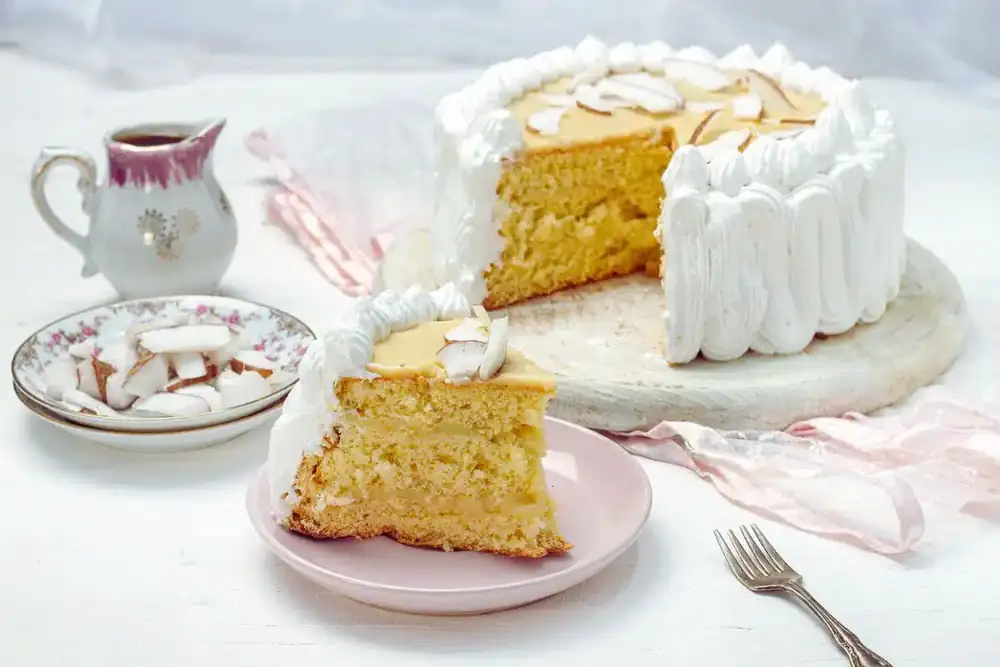
At its heart, bienmesabe features delicate contrasting layers. The foundation is a light and airy genoise sponge cake, devoid of baking powder and butter. Instead, its lofty rise comes from whipped egg whites, resulting in a texture that is simultaneously sponge-like and slightly dry, perfect for soaking up the luscious coconut cream filling. Speaking of which, the star of the show is undoubtedly the coconut cream.
Made with coconut milk, sugar, and a hint of coconut rum, this velvety concoction adds a tropical twist to the dessert. While traditional recipes call for coconut rum, regular rum can be a suitable substitute if coconut rum is unavailable.
No bienmesabe is complete without a billowy layer of Swiss meringue. Known for its stability and silky texture, Swiss meringue provides the perfect balance to the sweetness of the coconut cream. Once assembled, the dessert is left to rest for at least 8 hours, allowing the flavors to meld and the sponge cake to absorb the cream.
Enjoy this traditional Bienmesabe Venezolano recipe below!