Awa, Amazonian delicacies in Lima
For decades, the Peruvian Amazon has been a largely unexplored culinary territory. In Lima, we've grown accustomed to its exotic, almost superficial appeal, to seeing ingredients like paiche and charapita chili peppers paraded across the menus of upscale restaurants, but the Amazon is more than that.
For decades, the Peruvian Amazon has been a largely unexplored culinary territory. In Lima, we've grown accustomed to its exotic, almost superficial appeal, to seeing ingredients like paiche and charapita chili peppers paraded across the menus of upscale restaurants, but the Amazon is more than that. It's a living culture, a body of knowledge transmitted through every dish, a story we're only just beginning to hear.
After a career that took him through Lima's finest restaurants, and then to the most prestigious kitchens in the Americas and Europe, Aldo Yaranga decided to return to Peru and run a regional restaurant in the Peruvian Amazon. While navigating the tranquil waters of the Mayo River, he found the name for his first restaurant: Awa. A short word, with a sound very similar to "water." Awa is also the beginning of the word Awajún, one of the indigenous peoples who safeguard the secrets of the Amazon. A brief, evocative, and direct name, just like his cuisine.
Ninety percent of the ingredients used at Awa come from the Amazon, from small-scale producers, artisanal fishers, and families. Behind every ingredient, there's a story to tell. Take tucupi, for example, one of the most unusual ingredients from the rainforest. With its high umami content, its flavor enriches any dish. It's extracted from bitter cassava, a poisonous root. First, it's grated, and then the starch is separated through decantation. The liquid left from this process is fermented for a few days and then cooked until it becomes a rich, flavorful sauce. This process completely eliminates the cyanide it contains, leaving a dark, salty, and slightly acidic liquid. This method of preparing bitter cassava has been passed down through generations among the various peoples who inhabit this part of the world, such as the Awajún, Huitoto, Ocaina, and Bora.
Another interesting ingredient is paiche, a freshwater fish found only in the Amazon. Large in size, it has white flesh, a firm texture, and a mild, delicate flavor. The paiche served at Awa is wild-caught. It is fished only during one season a year in the Pacaya Samiria National Reserve by a small community of twenty fishermen who now supply Awa with this sought-after ingredient.
But it's not just about showcasing a vast and unexplored pantry. What Yaranga does at Awa goes much further. It's about presenting a concept that not only pays homage to Amazonian biodiversity but translates it into an accessible and relatable experience. Her training at the Basque Culinary Center, her time at Malabar with Pedro Miguel Schiaffino, and her exploration of Brazilian, Italian, and Spanish cuisines have given her the tools to interpret these flavors without betraying their essence. She recreates sauces, reuses techniques and applies them to different ingredients, prepares charcuterie using the knowledge acquired on her exploratory travels, and composes balanced and sophisticated dishes.
The kitchen that reveals the jungle
At Awa, each dish builds a map of textures and contrasts. The evening begins with sourdough bread with aguaje butter and pilluana salt. An element like the bread that greets us can hint at what's to come. The bread is familiar, while the butter is a revelation. The aguaje gives the butter a slight sweetness and acidity, with notes of passion fruit and carrot. The charcuterie board invites us to discover the delights of paiche, with ham, chorizo, and spiced belly of this fish. It comes with a regional chorizo and chicharrón pâté. The plantain tostone with paiche ham and avocado is a bite that encapsulates Yaranga's cuisine: precision, simplicity, and a deep understanding of the ingredients.
We continued with tapioca cubes with a cheese crust and regional tomato jelly, a dish with Brazilian influences. The smoked rib coxinha was a flavorful and light croquette. Meanwhile, the octopus with cocona chutney and macambo farofa showcased the array of flavors and textures that Aldo is capable of. Each dish is a blend of technique and ancestral wisdom, applied to ingredients that, for some cultural or geographical reason, or perhaps a combination of both, haven't been widely adopted in the rest of the country. For example, the use of fruits like cashew and macambo, which have historically been overlooked outside of Brazil.
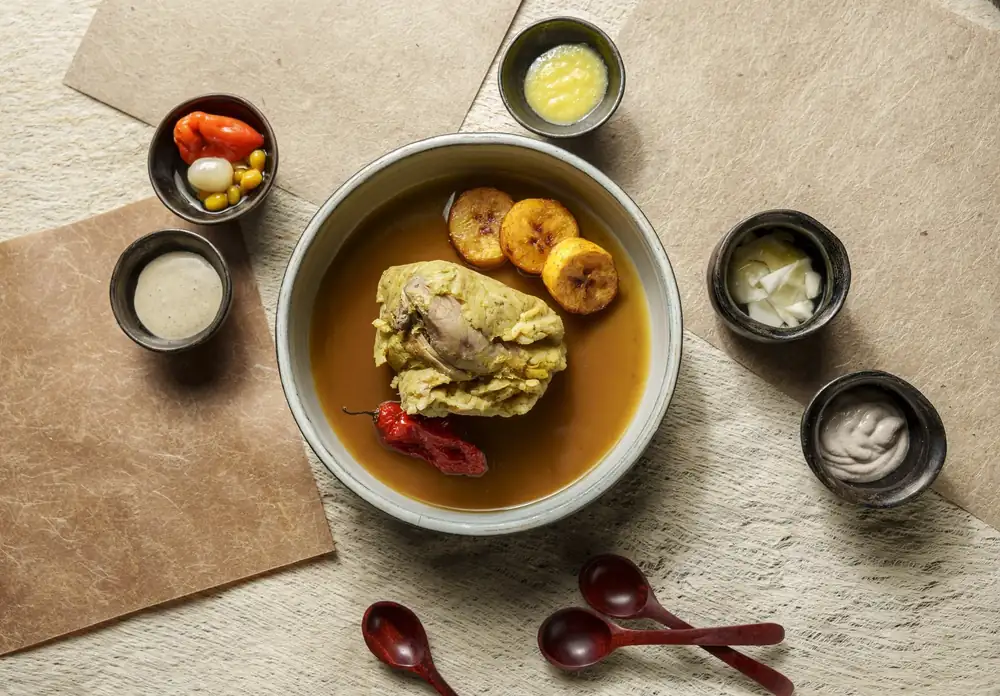
One of their signature dishes is an ode to cassava: grilled paiche with cassava purée, tangy tapioca, casabe bread, and the intense tucupi sauce. A reminder that the jungle is complex and powerful, and that its apparent simplicity holds centuries of wisdom. Another robust dish is the duck juane, a kind of large tamale wrapped in bijao leaves, which impart aroma and flavor. Inside, the rice is compacted, yet remains juicy and flavorful. In true Amazonian style, it's served with roasted plantain and spicy sauces of varying intensity.
The duck breast also invites us to discover new flavors, as it comes with a regional pumpkin purée, an Awajún vanilla sauce, and rice mixed with puspino beans. The desserts are delicate and light, ranging from ice creams made with jungle fruits like cashew and macambo, to their flourless chocolate cake.
Amazonian cuisine still owes a debt to its own history. We are only just beginning to discover its true depth, its fermentations, its curing techniques, its way of taming the environment without subjugating it. We need more places like Awa, which not only bring us closer to these flavors but also remind us that the rainforest is not a resource, but a living culture.