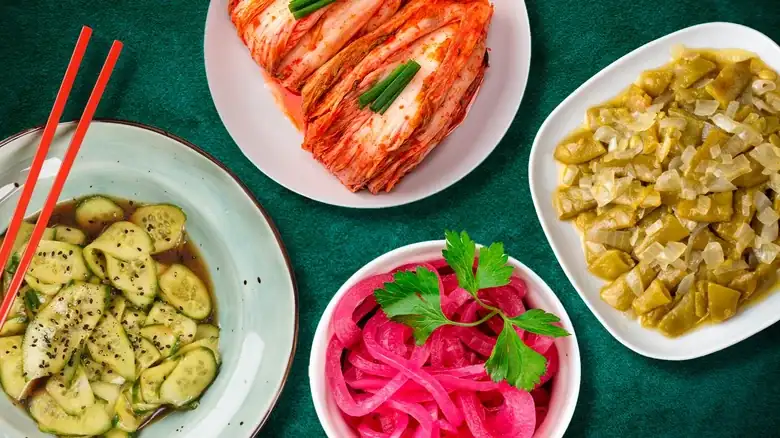
12 Traditional Pickled Foods From Around The World
Sauerkraut is basically the kimchi of Eastern Europe. Though there are several major differences between sauerkraut and kimchi . Firstly, you won't find any ginger or chili flakes in your sauerkraut (but you may find some caraway seeds), and it won't be red, unless it's made with purple cabbage.
“pickled herrings are plump, firm and rich, suffused with the sweetness of the sugar and the contrasting tartness of the vinegar in their brine.”
Some recipes incorporate additional spices, or use homemade chicken broth, but it's a pretty simple recipe overall. Warm, hearty, and quick and easy to make, pickle soup is often served with a hunk of bread. This is a classic Polish dish, but you'll find versions of it in neighboring countries like Ukraine, Lithuania, and Russia.
A traditional German snack food, pickled eggs made their way to the United States when folks immigrated to North America. The Pennsylvania Dutch still commonly make them, and pickled eggs have since made their way into the American scene. But you can also find them in the U.K. and other places. If you're curious, you can try this ingredient to upgrade homemade pickled eggs. And if you're not convinced, you can start by adding a little chopped pickles to your next batch of egg salad, or a splash of vinegar to your deviled eggs .
Filipino atsara and dilis
According to chef and culinary educator Maricel Gentile, Filipino pickling "emphasizes a balance of sweet, tangy, and refreshing flavors." As such, most pickles from this region involve some amount of sugar as well as salt. The most common and essential Filipino pickled dish is atsara. Atsara (or achara) is traditionally made from a mixture of grated green papaya, carrots, bell peppers, ginger, and onions. The pickling solution is a blend of vinegar, sugar, and spices, "resulting in a pickle that is crisp, lightly sweet, and vibrantly tangy," says Gentile. The vinegar used is typically cane or coconut vinegar, which lends a specific flavor. Unlike some pickles which are left to pickle for days or even weeks before consuming, Gentile says atsara is a quick-pickle dish, that means you don't have to leave it for days before eating. Its fresh vibrant flavors are "
Scandinavian pickled herring
Filipinos aren't the only ones pickling fish. Europeans have been pickling herring for centuries. Herring is a type of small, oily fish found in the temperate waters of the North Atlantic and North Pacific. Herring were incredibly important in the history of European fisheries, and particularly in England, Sweden, The Netherlands, and Denmark where fishing was a major staple of the economy. They are eaten across Europe grilled, raw, smoked, and of course, pickled. If oily little pickled fish doesn't sound appetizing to you, R.W. Apple Jr. did a deep dive on herring for the New York Times and assures that in the right hands, "pickled herrings are plump, firm and rich, suffused with the sweetness of the sugar and the contrasting tartness of the vinegar in their brine." And there are myriad ways to season and pickle the herring, with additional flavors like mustard a
Japanese tsukemono
If you prefer your fish fresh, not pickled, and you've ever dined at a sushi restaurant, then you've probably encountered at least some pickled ginger. Often consumed as a kind of palette cleanser between bites of subtle fresh fish flavors, pickled ginger can also be a secret weapon to upgrade old favorites like the tuna sandwich. You may also have tasted Japanese quick-pickled cucumbers or seaweed salad. But Japanese pickling goes way beyond these sushi bar staples. Tsukemono, as Japanese pickling is called, is an integral part of Japanese cuisine and culture, Chef Maricel Gentile explains, "it's not just about preserving food, but about enhancing flavors and bringing harmony to a meal." That harmony is evident in the subtle flavors of Japanese pickles. The simplest form, she says, is called shiozuke, "where vegetables are salted for a light and crisp taste." A more
Korean Kimichi
At any Korean restaurant, you've probably encountered kimchi. Served on the side, kimchi is also cooked into many dishes. Kimchi is commonly made with napa cabbage and a blend of salt, garlic, ginger, scallions, fish sauce and Korean chili flakes. But kimchi is really an umbrella term that refers to this style of preserving vegetables and there are many varieties like radish, cucumber, and carrots. There are even some styles that don't include the signature red chili. Kimchi is a food that best exemplifies the combination of pickling and fermentation. The vegetable ingredients are first salted to prepare them, and then left to ferment, so that "the bacteria work their magic to create those bold, tangy, bubbly flavors." Maricel Gentile recently had the chance to visit the Kimchi Museum in Seoul, and was inspired to see how central kimchi making is to Korean cult
Turkish turşu
Working our way west a little, there's no shortage of pickles across the Middle East and Europe. Turşu is the Turkish word for pickle, and turşu can have a slightly different flavor profile than the pickles you might be used to grabbing at the grocery store in North America or even the parts of Asia already discussed. For one thing, they don't tend to be very sweet at all. Although there could be a little sugar in the brine, the typical turşu has an overall very tangy flavor. And they can be made in a spicy brine with garlic and herbs, using a base of salt and either a vinegar or lemon. Cucumbers, cauliflower, bell peppers, carrots, green tomatoes, cabbage, and beets are all commonly pickled in Turkey. They can be sold separately or as a colorful mix. You'll find pickled cucumbers and hot peppers served along with kebabs and döner. The briny pickles help bri
Greek pickled onions and Kalamata olives
On the western border of Turkey you'll find Greece, these neighbors share many ingredients, especially around the Mediterranean. In fact, though the winters are much milder, you'll find loads of pickles across the Mediterranean region. Chef Owen Klein heads up the kitchen at CAVA and assures there is a rich history of pickling, brining, and preserving in the region. Brine is another word you'll often hear in the world of pickling. A brine is a solution of water and salt, though other seasonings can be incorporated, and Klein explains, "brining over time causes fermentation and lots of flavor changes within the vegetables." In the Mediterranean and Levant region, he says, "it is the flavors and base vegetables that set it apart from other cuisines." Flavorful cucumbers, carrots, cauliflower, bell peppers, pepperoncini, capers, olives, and onions all get the
French cornichons
Dimitrie Ragar / 500px/Getty Images Cornichons are the famous little French pickles that pack a serious punch! Resembling gherkins, cornichons are extra tart, bumpy little pickles that you'll almost certainly find on any proper charcuterie board. In France, cured meats and cheeses are often served with some pickles, mustard, and even a bit of jam or honey. The combination of sweet, sour, and fatty flavors is super satisfying. They're not dissimilar to other gherkins, but the typical cornichons are pickled with mustard seeds and tarragon, and are often jarred along with little pearl onions. They're certainly less sweet than their German counterparts, but offer a more complex flavor compared to other pickles. You can chomp on one straight up, but cornichons are an excellent alternative to larger pickles when chopped up in an egg salad or tuna salad. They're also a fun garnish to add in yo
Italian pickled peppers
Italians are pickling all kinds of veg like their neighbors in the region, but when you think of Italian pickles, peppers are at the top of the list. Some sweet, some spicy, some salty, these little pickled peppers are often found at the olive bar in your local grocery store or deli. Pepperoncini, banana peppers, cherry peppers, and chopped hot peppers all add a pop of color and flavor to the table. And yes, there are differences between banana peppers and pepperoncini, starting with their color! Peppers can be pickled sliced into rounds, whole with their stems intact, or stuffed with cheeses, fish, or cured meats. Along with other pickled foods like olives, they make a powerful appearance in the Italian antipasto course. They might also be toppings you've experimented with adding to your sub sandwiches. And for a twist on a classic, try garnishing your next dir
Mexican escabeche
The Italians aren't the only ones pickling peppers. Pickled jalapeños have become somewhat of a staple ingredient, and you'll probably find them in your grocery store. They're perfect to add a kick to your nachos and tacos. In fact, you might find a number of pickled foods amongst the typical taco toppings. Quick pickled red onions are a go-to. A lightly pickled cabbage slaw is another great topping that brings some zest and crunch to every bite. And back to those jalapeños, escabeche is a quintessential side made with marinated pickled peppers, carrots, and sometimes onion. There are different types of escabeche found around Latin America and beyond. Escabeche probably originated in Spain, but even then the term was drawn from Arabic. In the Mexican context, it does tend to refer to that mix of peppers and carrots, but there are other vegetables (like cauliflow
Eastern European sauerkraut
Sauerkraut is pretty ubiquitous. A common sausage topping and pierogi stuffing, it is made from shredded cabbage. The name we use comes from the German, sour cabbage, however, Sauerkraut is commonly eaten across Eastern Europe and beyond. The history of sauerkraut is global. Polish, Russian, Ukrainian, Germany, and other neighboring cuisines feature cabbage and its pickled incarnation, sauerkraut, heavily. Sauerkraut is basically the kimchi of Eastern Europe. Though there are several major differences between sauerkraut and kimchi. Firstly, you won't find any ginger or chili flakes in your sauerkraut (but you may find some caraway seeds), and it won't be red, unless it's made with purple cabbage. The key thing the two have in common, though, is that they are fermented. Many espouse the probiotic benefits of these fermented foods to your gut health, but be advi
Polish Pickle Soup
If you already love them and just wish you could eat pickles for dinner, then you definitely have to try Polish pickle soup. It's pretty much exactly what it sounds like, but even better. Made with a soup base of onion, carrots, and potatoes, with pickles (and some of their brine), and added fresh dill and sour cream or regular cream. The typical pickle soup has that creaminess that really elevates the dish, but if you're making some for vegan friends it's not hard to skip the dairy. You can thicken the soup with a little flour if you like, or leave it brothy. Some recipes incorporate additional spices, or use homemade chicken broth, but it's a pretty simple recipe overall. Warm, hearty, and quick and easy to make, pickle soup is often served with a hunk of bread. This is a classic Polish dish, but you'll find versions of it in neighboring countries like Ukraine,
American fast food pickles
Of course you've heard of pickles long before reading this, we've got loads of them right here in the U.S. Not only is this country a composite of immigrant cultures and their respective cuisines (ensuring you can find all of the above mentioned pickles somewhere stateside), but also we've produced a few home grown techniques and specialty pickles. Many regional favorites incorporate pickles. Down South, you might encounter deep fried pickles, and dill pickle spears and relish are among the traditional toppings of the famed Chicago-style hot dog. A traditional German snack food, pickled eggs made their way to the United States when folks immigrated to North America. The Pennsylvania Dutch still commonly make them, and pickled eggs have since made their way into the American scene. But you can also find them in the U.K. and other places. If you're curious, you