What makes finger limes the caviar of citrus fruits?
Citrus fruits are a fundamental ingredient in cooking, and the finger lime, with its pearls of juice, is one of the most expensive and prized.
Citrus fruits aren't just for adding acidity. According to SFGate, citing Jean Pare, author of a book on beef, the acid in lemon juice can tenderize the fibrous tissue of meat, making it useful in marinades. They're also essential in desserts like key lime pie, made with lime juice, egg yolks, and sweetened condensed milk.
Among the lesser-known citrus fruits is the finger lime, highly prized by chefs and consumers worldwide. As its scientific name, Citrus australasica, suggests, it grows in certain tropical regions of Australia, according to Martha Stewart, where one must wade through dense vegetation and thorns.
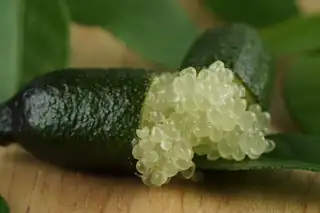
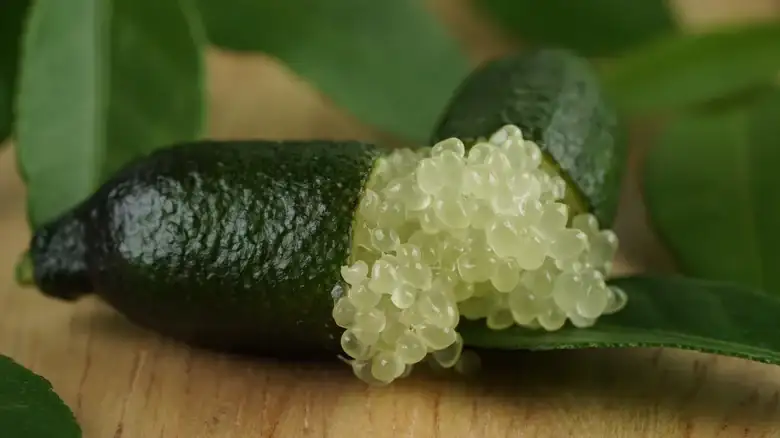
Today it can be found in North America, but it's only cultivated in a few places and has a limited season, according to Specialty Produce. Deforestation has led to the near extinction of wild citrus trees. Its hard, multicolored exterior hides pearls of juice that resemble the tapioca pearls in bubble tea. Unlike caviar, they have an aromatic citrus flavor, and their name likely derives from that texture.
According to Bloomberg, shipping finger limes can cost $150 per pound, so they can also be considered a citrus caviar.
Curtis Stone, originally from Australia, told Bloomberg that Australian limes burst in your mouth like caviar pearls. At his Los Angeles restaurant, Maude, he pairs them with raw fish, and the gelatinous membrane that coats each pearl prevents the juice from seeping out and damaging the fish. He also uses them in his duck ravioli, where they add acidity to a rich dish. In New York, Gem and Atomix combine this fruit with fish, and at Acorn in Denver, it accompanies oysters.
Anyone wanting to avoid an exorbitant supermarket bill can grow them at home. According to Martha Stewart, they require little maintenance, although they take some time to bear fruit.