The chefs are categorical: “For a successful vinaigrette, always add the olive oil at this point” and no other.
Vinaigrette is a simple yet incredibly versatile dressing that can be adapted to any taste or need. It's a classic way to flavor salads, so mastering the basics is essential. To do this, it's important to follow the correct order when adding the ingredients. Let us explain.
Vinaigrette is a simple yet incredibly versatile dressing that can be adapted to any taste or need. It's a classic way to flavor salads, so mastering the basics is essential. To do this, it's important to follow the correct order when adding the ingredients. Let us explain.
Vinaigrette is an essential accompaniment to many salads. It adds a touch of flavor and vibrancy that makes them even more delicious and appealing. Everyone has their own preferences when it comes to vinaigrette. This one offers the enormous advantage of being easily adaptable and customizable in just a few simple steps.
However, it's essential to follow a basic structure to ensure a sauce with optimal consistency and balanced flavors. The addition of ingredients, however few, should not be done randomly. Olive oil, as confirmed by an article in UNL Food, should be added last.
Oil and vinegar, or more specifically the water contained in vinegar, do not mix spontaneously. Therefore, it is necessary to create an emulsion to finalize a vinaigrette and ensure that all its components produce a harmonious sauce.
A specific order to follow to prepare a successful vinaigrette
Originally, and as its name suggests, vinaigrette consisted solely of vinegar, oil, salt, and pepper. Mustard was added later, although its use is now almost universal.
However, it's unthinkable to simply add all the ingredients to a bowl at once. The physicochemical properties of each ingredient would result in a heterogeneous mixture, unsuitable for providing a balanced seasoning to the dish for which it was prepared.
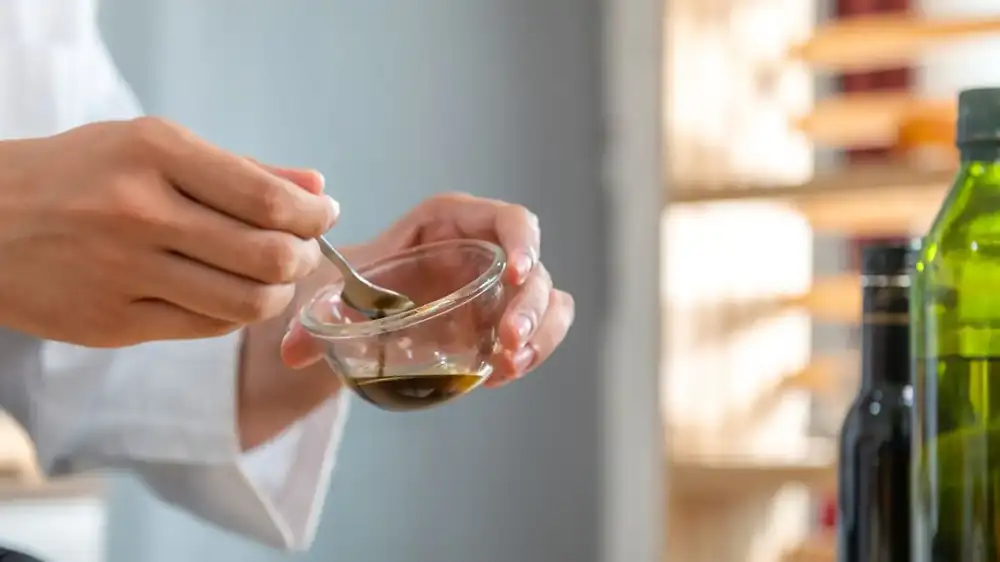
Therefore, it's essential to start with vinegar, salt, pepper (and any other spices), and mustard. This initial mixture ensures that the salt crystals dissolve completely in the sauce. Furthermore, the seasonings release their aromas during the acidic phase.
An essential emulsion
The oil should be added last and gradually. If all the oil is poured in at once, more vigorous stirring is usually required to ensure a homogeneous mixture. If emulsifying the vinaigrette by hand, it's best to pour the oil slowly over the seasoned vinegar.
When whisked, the oil breaks down into microdroplets that become trapped in the vinegar. The mustard helps stabilize this state, as its molecules bind to both the water (from the vinegar) and the fat (from the oil).
This results in a smooth and flavorful vinaigrette, perfectly blended and able to coat salad leaves (or other vegetables). The leaves must be completely dry, with no trace of water, for the vinaigrette to adhere optimally.