Sikhye for the Holidays: Sweet Korean Rice Punch Tradition
Homemade Sikhye (Sweet Korean Rice Drink)
- 3 cup (360 g) barley malt
- 12 cups (2.8 L) warm water
- 2 cups (320 g) cooked rice (short grain white rice)
- 3-4 slices (about 8–10 g, 0.5 cm thick) ginger (optional)
- 1 1/2 - 2 cups (300–400 g) sugar
- a few dried jujube (to garnish, optional)
- a few pine nuts (to garnish, optional)
- If using a clean fabric pouch, either cotton or linen, put malt barley in a pouch and tie up with a string and secure very tightly. Put the pouch in a bowl of warm water. See note #1 if you don't use a fabric pouch.
- While the pouch is in the water, manually press and squeeze the pouch multiple times to squeeze out the malt powder from the barley so it can mix with the water. Do this for about 1-2 minutes. Squeeze out the pouch tightly to get all the good juices out. Discard the malt barley left inside the pouch.
- Let the malt barley water sit for at least 30 minutes. The starch will sink to the bottom. Then carefully, without shaking the bowl, pour the malt liquid into another bowl leaving the sunken starch behind. Be careful not to let the sediment fall in. (A little bit going in is okay.) Discard the starch.
- Add the cooked rice to the Instant Pot or rice cooker and gently break up any clumps with a rice paddle. Pour in the strained barley malt liquid and stir.Cover and use the Keep Warm setting. Let the mixture steep for 4–8 hours, depending on your appliance. Check after about 4 hours. When several rice grains rise to the surface, the sikhye is ready for the next step.The mixture should stay gently warm without simmering. Appliance temperatures vary, so avoid settings that bring the liquid to a boil during this stage.
- Add sugar to your liking, along with ginger slices if using. Bring the sikhye to a boil and cook for about 5 minutes. This deactivates the malt enzymes and prevents further starch conversion. Skim off any foam for a cleaner-looking drink.
- Divide the sikhye into smaller, shallow containers to cool quickly, then refrigerate promptly. Keep refrigerated for up to 3–4 days. For longer storage, freeze in freezer-safe containers for up to 3 months, leaving room for expansion.
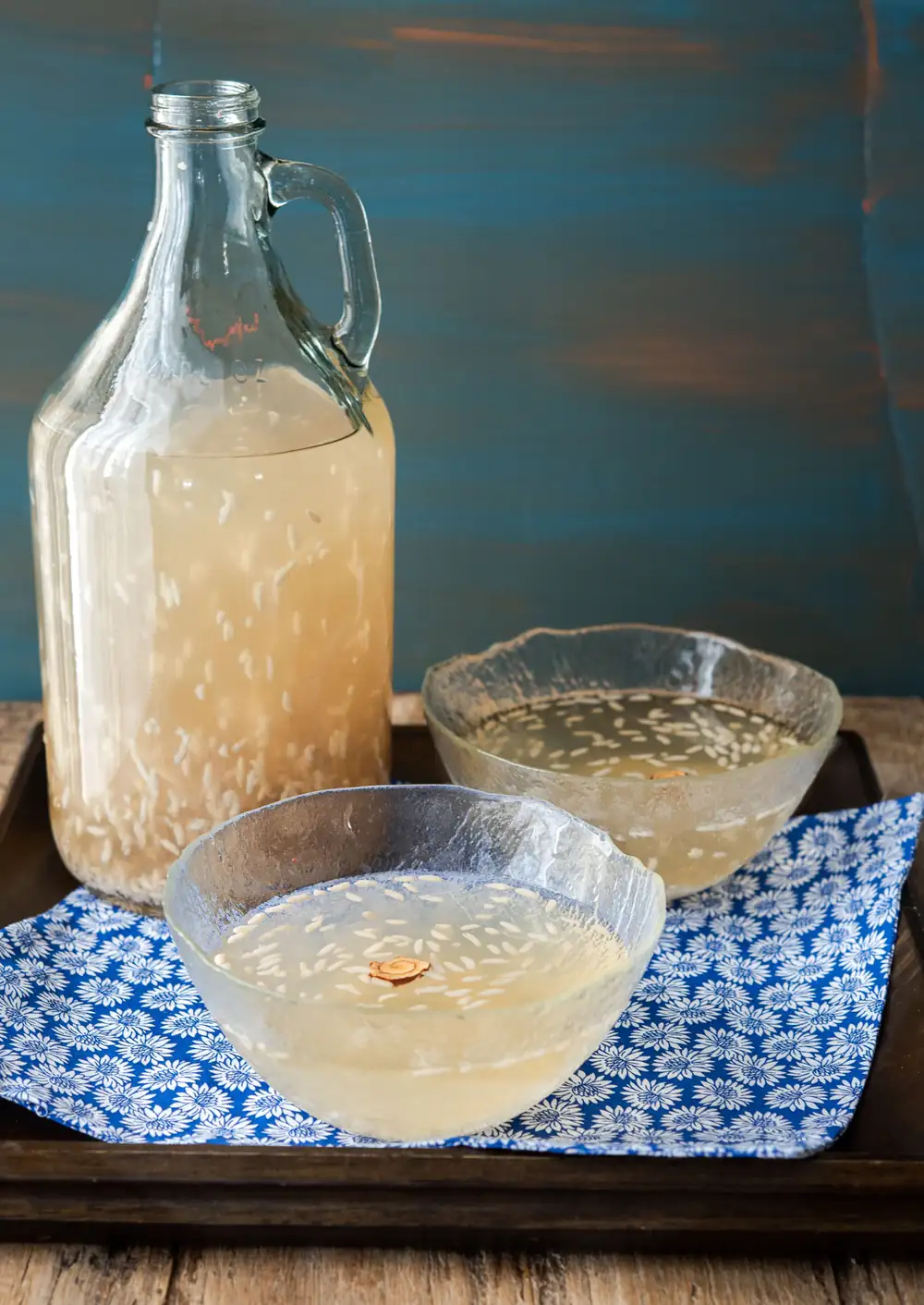
- Sikhye is usually served in a small bowl, often with rice grains floating on top and sometimes garnished with pine nuts and jujube slices.To get the rice grains to float, rinse them in water and set them aside until serving. This step is mainly for visual appeal and is optional in the recipe.For a fun twist, partially freeze the sikhye and then break it into a slushy texture using a spoon or fork. Enjoy your sikhye slush!
Sikhye (식혜) is a traditional Korean sweet rice punch made with barley malt, cooked rice, and sugar. This homemade recipe uses an Instant Pot or rice cooker for easy, hands-off preparation. Naturally dairy-free and served chilled, it’s a refreshing dessert drink for Chuseok, Korean New Year, or any time you crave a little sweetness after a meal.
Sikhye was always part of our holiday table when I was growing up in Korea. Made from barley malt and cooked rice, this lightly sweet rice drink was a tradition I looked forward to every year.
My mother made it the old way, setting a pot on the warm ondol, Korea’s traditional heated floor, and covering it with heavy blankets for hours. My siblings and I weren’t allowed to touch it, though with five kids in the house, she knew someone would sneak a peek. It always led to disaster when it happened—LOL!
After I got married and moved overseas, I no longer had the luxury of an ondol floor (though I still dream of having one someday). To keep sikhye in my life, I had to find a modern way to make it.
Using an Instant Pot or rice cooker gives me that same malty sweetness with far less effort—and still brings back the comfort of home. Sikhye is a holiday tradition I carry on in my kitchen, and I promise this homemade version tastes fresher and more satisfying than the canned drinks you’ll find in stores.
Sikhye is one of the drinks I love serving after a holiday meal. If you’re planning the rest of the table, take a look at my traditional Korean Chuseok recipes, too.
Key Ingredients
Malted Barley (yeotgireum, 엿기름): This is the soul of sikhye. In Korea, you’ll find barley malt in every market—sold crushed, powdered, or in small pouches. I recommend the crushed or pouched kind, since they release malt flavor more evenly. If you only see the brown variety, know that it has less malt and produces a weaker drink. I’ve tested wheat malt as a substitute—it works in a pinch, but the flavor is noticeably different from the authentic Korean taste.
Cooked Short-Grain White Rice: Always use short-grain rice (the same kind used for sushi or Korean steamed rice). Long-grain or brown rice won’t give you the same texture or flavor. I often use freshly cooked rice, but I’ve also made sikhye with microwavable Hetbahn (햇반) packs when pressed for time, and it works beautifully.
Sugar: Added after the rice has steeped to balance the natural malt sweetness. Start with less, then adjust to your taste—I find 1½ to 2 cups is enough for a balanced flavor that isn’t cloying.
Optional Ginger: Some Koreans add a few slices of ginger for a light spice note. My mother never did, but I sometimes include it when I want more warmth in the flavor.
Garnishes: Traditionally, a few pine nuts or dried jujube slices float on top. In my family, these were always saved for special holidays. Day to day, I often just serve it with the rice grains.
How to Make Sikhye
Making sikhye looks a little mysterious at first, but once you see the process, it’s really about patience and keeping a steady, gentle warmth. Here’s a peek into how it comes together in my kitchen.
Extract the malt flavor. I tuck crushed barley malt inside a small linen (or cotton) pouch and soak it in warm water, squeezing and pressing until the liquid turns cloudy. This cloudy water is full of natural enzymes that will later break down the rice starch into sweetness.
Don’t have a fabric pouch? You can soak the barley malt directly in the water, and rub the barley between your hands to release the malt into the water. Remove the barley with a fine strainer. Make sure you strain the liquid and remove all the small barley pieces.
Let it settle, then decant. Set the malt water aside until a fine layer of starch sinks to the bottom (about 30 minutes). Without disturbing the bowl, gently pour the clear malt liquid into a clean bowl, leaving the sediment behind. A little sediment is okay—discard the rest.
Steep the rice in malt water. Add cooked short-grain rice to your pot and pour the strained malt liquid over it. Set the Instant Pot (6 qt or larger) or rice cooker to low or Keep Warm and let the mixture rest for several hours.
The key visual cue: A few rice grains will rise to the surface when the starch has converted into sugars. Depending on your appliance, this takes 4–8 hours.
Sweeten and finish. Stir in sugar to taste, adding ginger if desired. Bring to a boil and cook for about 5 minutes to deactivate the malt enzymes. Skim off any foam for a clearer drink.
In Korea, sikhye is usually poured into small bowls with rice grains floating on top (I like to rinse a spoonful of rice so it looks clean and floats well in the bowl), sometimes garnished with pine nuts or jujube slices.
On hot days, I freeze the drink until slushy—it’s my family’s favorite summer version. If you’re looking for other festive Korean drinks, try subak hwachae for a refreshing summer watermelon punch or sujeonggwa, a cinnamon-ginger punch often served at New Year’s.
For more homemade beverages, browse my Korean drinks and traditional refreshments.