The Worst Mistake You're Making When Cutting Cake
When it comes to creative ways to cut a cake, you have an array of options. There are those (likely dentists) who swear by dental floss. Simply cut a length of floss, pull it taut, and use it to slice through a cake as you would a knife. Then, there's the viral "tongs" method.
But let's assume you're sticking to that classic cake-cutting implement: the knife. There's nothing wrong with this, of course — assuming you're using the correct knife. But there are so many types of kitchen knives that using the wrong one can be detrimental to your cake-cutting efforts.
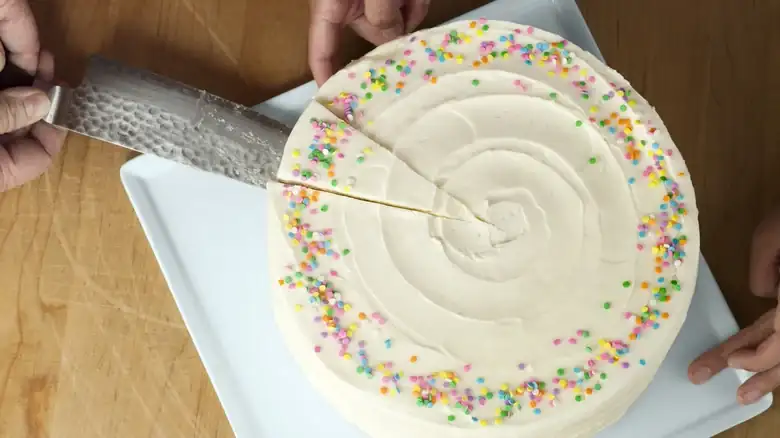
For most sponges, the right knife is going to be a thin, serrated knife. Not, as you might have assumed, a straight-edged knife such as a chef's knife or carving knife. And certainly not a plastic or butter knife! Each of these may "smoosh" the cake down when cutting it, hindering you from getting a perfectly sharp-edged slice. The serrated edge, on the other hand, should pass through the cake cleanly. When should you opt for a straight edge instead? When you're cutting a denser dessert such as cheesecake or something similar in texture to banana or zucchini bread.
Have your cake and cut it, too: additional tips
Even if you've selected the best knife for the job, cutting cake may prove messier than anticipated, particularly if you're dealing with a lot of frosting. This may be fine for informal gatherings, but if you're serving at a wedding — or trying to get slices to a group of ravenous young party guests STAT — you'll want any extra help you can get.
One of the best techniques for perfectly cut cake every time, in addition to using a serrated knife, is to rinse the knife in hot water in between cuts, making sure to dry it before diving back in. The heated metal glides that much smoother through a crumbly frosted cake, and this technique will help whether you're using a serrated or straight edge.
An alternative would be to forego the hot water and heat the knife with a kitchen torch. If you go this route, use a damp paper towel to slightly moisten the hot knife before using it, rather than drying it off. In this case, the moisture helps keep the knife a little cleaner. So, whether you're serving a traditional chocolate or vanilla cake, or reviving a long-forgotten nostalgic cake recipe you forgot existed, reach for the correct knife, and heat it between servings.