

Aji Akokomi reflexiona sobre la cocina de África Occidental en Akoko, Londres
Akokomi explica cómo se gestó Akoko, el restaurante con estrella Michelin que fundó en Londres, y la filosofía que une a este con Akara, su concepto más informal.
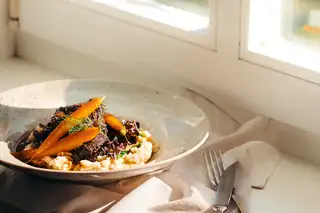
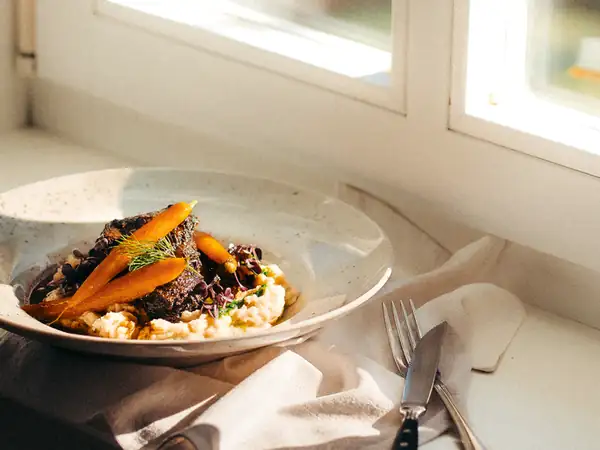
Few restaurateurs have contributed as much to transforming the global perception of West African cuisine as Akokomi. Through Akoko, the Michelin-starred restaurant he founded in London, he has helped solidify the depth, sophistication, and regional diversity of this cuisine within the realm of haute cuisine. He combines traditional techniques such as fermentation, slow cooking, and the layering of spices with modern precision and presentation.
Observing London's food scene, Akokomi noticed that West African cuisine remained largely underrepresented, despite the richness of its culinary culture. While excellent home-cooked meals and community restaurants existed, few establishments presented these flavors from a contemporary haute cuisine perspective. Akokomi doesn't aim to reinvent gastronomy, but rather to offer a platform where these stories, ingredients, and techniques can be experienced and understood within a broader context.
Among the most widespread misconceptions, Akokomi cites that this cuisine is one-dimensional or too informal, when in reality it is complex, regional, and relies on elaborate techniques. For him, refinement lies in attending to the details without straying from authenticity. Before opening the restaurant, he traveled throughout West Africa, spending time in kitchens, bakeries, markets, and local communities, and learned that food is never just about the plate.
According to Akokomi, authenticity isn't about an exact replica, but about integrity. Traditional dishes coexist with others inspired by a memory or an ingredient, and flavor always comes first. Each dish is designed to tell a story through spices, a technique, or the history of a region. The key, he explains, is honesty.
Sourcing authentic West African ingredients in the UK remains challenging, although some products are now easier to find. The restaurant prioritizes local produce whenever possible, striving to keep flavors and techniques true to their origins.
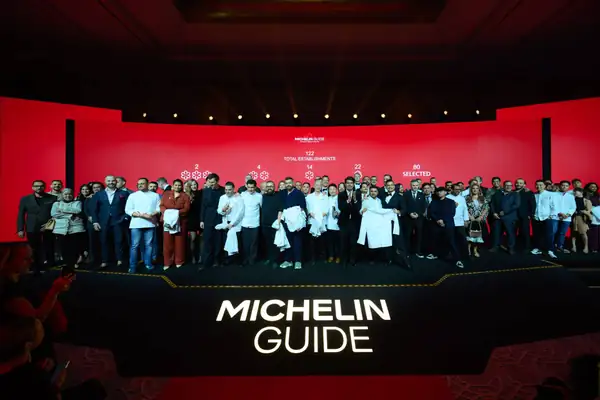
For Akokomi, fermentation is the technique that best defines his cuisine, due to its patience and transformative power. It has always played a fundamental role in West Africa, with ingredients like iru, ogi, and fermented cassava. The Michelin star was a pivotal moment, as it recognized the team's work and West African cuisine on one of the world's most prestigious culinary stages.
One of the biggest challenges was convincing people that there was a place for West African cuisine in fine dining, and it required patience and faith. Akara, on the other hand, focuses on the region's everyday cuisine and the importance of eating together, with a more relaxed approach that fits seamlessly into the rhythm of Borough Market and Borough Yards. While Akoko offers an immersive experience with tasting menus, Akara prioritizes accessibility and energy.
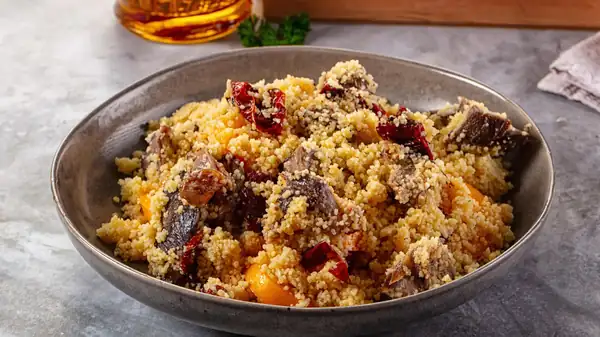
For those unfamiliar with this cuisine, jollof rice is the most recognizable starting point. It's also worth trying dishes that highlight smoking, fermentation, and pepper, as well as seafood from the Senegambia region. Looking to the future, Akokomi prefers to continue evolving strategically rather than simply expanding for the sake of expansion.