Prickly pears from September to December: all the secrets of the “Bastardone”, which produces large, sweet fruits
Belonging to the Cactaceae family, the prickly pear is a succulent plant with ancient Mexican origins, but now widespread in various parts of the world with hot, dry climates, such as the Mediterranean basin, becoming a distinctive feature of the landscapes of the Middle East, North Africa, and Southern Italy, particularly Sicily, Sardinia, Puglia, and Calabria.
However, there is a special type of prickly pear that is even juicier and more flavorful, a typically Sicilian delicacy. It's called the Bastardone prickly pear, a special and precious product, distinguished by its late production and unique and sought-after organoleptic characteristics. Let's learn more about this type of prickly pear, its characteristics, and why its second flowering makes it so different from other fruits.
What is the "Bastardone" prickly pear? Here's why it's different from early-blooming prickly pears.
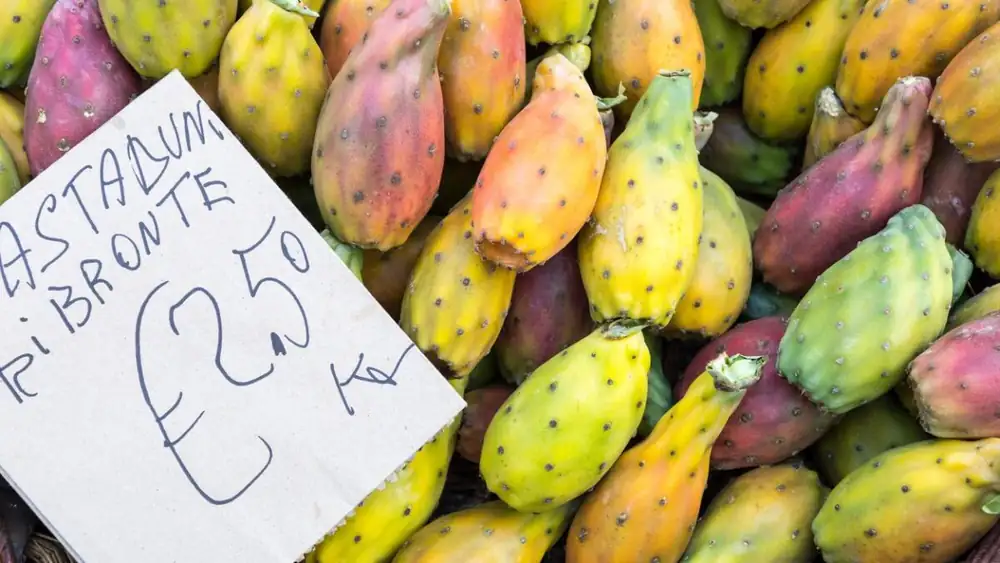
The "Bastardone" prickly pear is the fruit that develops from the plant's so-called second flowering, a unique phenomenon achieved by inducing the prickly pear to flower again after eliminating the first flowers and newly formed fruits. Unlike first-flowering prickly pears (which ripen naturally during the summer), Bastardoni prickly pears ripen later, between late summer and autumn, and have distinctive organoleptic and productive characteristics. The term "Bastardone," common especially in Sicily, therefore does not indicate an independent botanical variety, but rather identifies the fruit of the second flowering, the result of a particular traditional cultivation technique known as scozzolatura.
Once stripped of its first fruits, the plant focuses its energy on the new flowering period and produces prickly pears that are generally larger, fleshier, and richer in pulp. The peel also tends to be thicker and tougher, while the pulp is characterized by a firmer, juicier consistency and a particularly sweet and aromatic flavor. Their later ripening also contributes to making them a typically autumnal product, highly prized both for fresh consumption and for making jams, desserts, and other recipes. It is precisely this combination of factors that distinguishes the Bastardone from common early-flowering prickly pears, making it one of the most characteristic expressions of traditional prickly pear cultivation.
Scozzolatura: what it consists of and how it causes a second flowering
The key process in producing the Bastardone prickly pear is "scozzolatura," a cultivation technique traditionally used to obtain the prickly pear's second flowering and, consequently, the fruits known as Bastardoni. The process involves removing the first flowers and young fruits that formed during the spring flowering period, generally between May and June, when the plant has already begun to dedicate its resources to summer production. This operation interrupts the first phase of the production cycle and stimulates the plant to produce a new flowering, which generally occurs a few weeks later. The new flowering produces fruits that ripen more slowly and later than prickly pears from the first flowering period, generally between late summer and autumn.
The term "scozzolatura" derives from the practice of removing, at a certain stage of development, the floral structures and first fruits to redirect the plant's energy toward a second crop. This is therefore not simply a "second harvest," but a genuine modification of the prickly pear's normal production cycle. After the first fruits are removed, the plant, still in a phase of intense vegetative activity and supported by accumulated reserves, can develop new flowers and subsequently new fruits. The latter benefit from a different ripening period and, thanks to the climatic conditions of late summer and early autumn, can achieve different characteristics than summer fruits.
It is precisely this process of pruning that is the basis of Bastardone prickly pear production: without this technique, the characteristic second flowering, which produces late-ripening fruit, would not occur. This process, therefore, represents a significant example of how a traditional agricultural practice can influence the plant's natural cycle without being invasive or damaging it, but rather by modifying the production period to produce a fruit with its own unique characteristics.
Late fruits: why they are larger, juicier and more valuable
Generally speaking, late-ripening prickly pears aren't necessarily better than early-blooming ones. However, in the case of the Bastardone prickly pear, the fruits from the second flowering stage are often considered more valuable due to a combination of agronomic, organoleptic, and commercial characteristics. The main quality of the Bastardone prickly pear is its texture and flavor, which are superior to those of early-blooming prickly pears. But why are Bastardoni prickly pears even juicier, sweeter, and larger than the classic prickly pear? It depends on the plant's unique approach to the second flowering stage: after being pruned, the prickly pear resumes its vegetative cycle and focuses its available resources on the new flowering stage and subsequent fruit formation. Bastardoni prickly pears therefore have a plant that has already accumulated reserves and, once the first productive stage is over, can once again allocate water and nutrients to the development of the new fruits. The result is a prickly pear that can reach considerable size, with a generally thicker skin and particularly abundant pulp.
Juiciness is also primarily linked to the plant's physiology and the conditions in which the second fruiting occurs. Prickly pears are extremely efficient at managing water, and the fruit, as it ripens, accumulates a considerable amount of juice in its pulp. In the case of Bastardoni pears, the development and ripening period shifts toward late summer and autumn, when climatic conditions favor a more gradual development of the fruit. The pulp thus becomes soft, juicy, and rich in sugars, characteristics that contribute to the perception of greater sweetness and fullness on the palate, and the fruits are generally larger. It should be noted, however, that "larger" does not automatically mean "better": the quality and characteristics of the fruit also depend on the variety, soil and climate conditions, water availability, and cultivation practices.
The Bastardone's value also stems from its seasonal availability and the labor required to obtain it. Scrubbing requires careful manual intervention: eliminating the first flowering means sacrificing part of the summer production for a later fruiting. It's an agronomic choice that requires more processing time and attention, but it yields a product different from that obtained through regular harvesting. Added to this is the traditional autumn harvest, which has helped build the Bastardone's reputation as a particularly prized fruit.
Season and culinary uses of the "Bastardone" prickly pear
The "Bastardone" prickly pear is one of the most characteristic fruits of the autumn prickly pear production. Harvest generally occurs between late summer and autumn, with the exact period varying depending on the growing area, climate, and variety. This seasonal timing is one of the factors that contribute to their appeal: when the first prickly pears have finished their season, the Bastardoni allow the fruit to be found in the following months, bringing a product with a strong seasonal character to the table.
Its primary purpose remains fresh consumption. Once properly peeled, the fruit can be served simply, perhaps chilled, or used to enhance fruit salads. Its sweetness and juicy texture also make it attractive when paired with contrasting ingredients, such as aged cheeses, ricotta, dried fruit, and certain cured meats. It is even used in some original first courses, such as prickly pear risotto or prickly pear spaghetti, or to prepare sweet and sour sauces, vinaigrettes, chutneys, or reductions, playing on the balance between the fruit's sweetness and a tart, spicy, or savory component.
In desserts, Bastardone is suitable for numerous preparations, just like the classic prickly pear. The pulp can be used to make excellent jams, ideal for filling cakes and tarts, or simply spread on a slice of bread. It can also be used to flavor creams, mousses, semifreddos, sorbets, and ice creams. Also worth trying is the delicious prickly pear liqueur, which, when made with Bastardone, is even sweeter thanks to the distinct sweetness of this late-ripening variety.