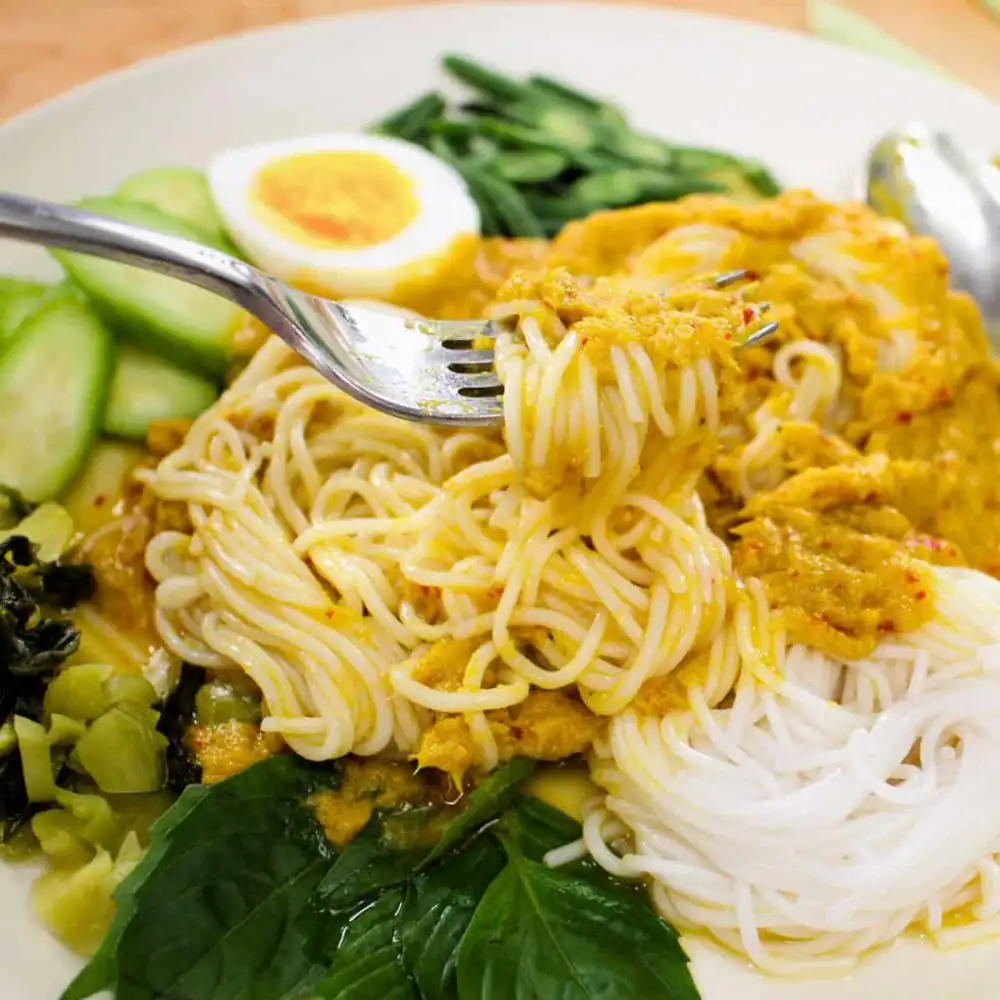
Easy Noodles with Southern Tumeric Fish Curry
Una versión más fácil y rápida de kanom jeen namya: ¡fideos con curry de pescado y cúrcuma!
- 20 g grachai (fingerroot) (fresh or brined, chopped)
- 50 g red curry paste (see note 1)
- 1 teaspoon turmeric powder (or 1-inch fresh turmeric root)
- 1 teaspoon fermented shrimp paste (optional)
- 100 g white fish filet (see note 2)
- 1 ½ cup coconut milk
- 1-2 tablespoons palm sugar (finely chopped, packed)
- 2-3 tablespoons fish sauce
- 1-2 tablespoons tamarind paste (store bought or homemade)
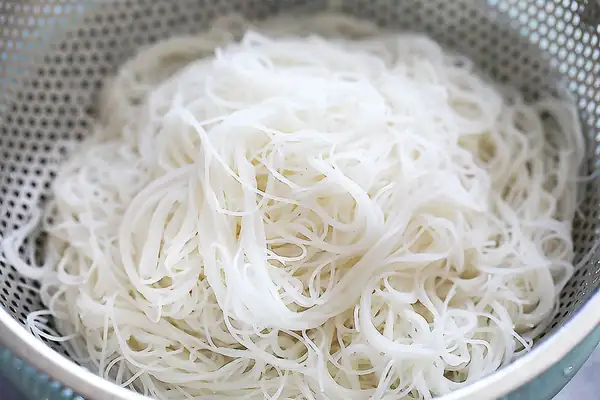
- 200 g dry Vietnamese rice vermicelli (or another noodle of your choice (see note 3))
- Fresh crunchy vegetables (such as bean sprouts, long beans, or cucumber)
- Pickled mustard greens (or another type of pickled vegetables)
- Medium boiled eggs (boil for 7-8 minutes)
- Thai basil
- Add about 1 inch of water to a medium sized pot (if you have some chicken stock or pork stock, you can use it instead of water for extra flavour). Bring the water to a boil. Add the fish and simmer just until the fish is cooked through (timing depends on the thickness of your fish). Turn off the heat and remove the fish from the water but keep the water in the pot on the stove.
- In a mortar and pestle, pound the grachai into a fine paste. If using fresh turmeric, pound it into a paste along with the grachai. Then add the red curry paste, turmeric powder, and shrimp paste; pound to mix. Remove from the mortar, but don’t wash the mortar yet. If you don't have a mortar and pestle, you can use a blender or an immersion blender and blend all curry paste ingredients, adding just enough of the fish cooking water so it can blend until smooth.
- Break the fish into smaller chunks and transfer it into the mortar and pound until fine and fluffy. If using a blender, you can blitz the fish on low speed in short bursts, just until there are no more big chunks, but do not turn it into a complete puree. Add more of the fish cooking water as needed to blend.
- Bring the fish cooking water in the pot to a boil, then add the curry paste and the pounded fish and stir to dissolve. Is you used a blender, pour all the blended ingredients into the pot and bring to a boil.
- Add the coconut milk and season with 1 tablespoon of the palm sugar, 1 tablespoon of the fish sauce, and 1 tablespoon of the tamarind paste (you will add the rest of the seasoning later). Simmer on LOW heat for 20 minutes, stirring frequently, until the sauce is thickened.
- Meanwhile, cook the noodles however your particular noodles need to be cooked. (The noodles are typically served room temp, but if you like things hot, you can wait to cook the noodles after the sauce is done.) If using rice noodles, I recommend separating the noodles into their own serving bowls as soon as you drain them as rice noodles are harder to separate once they are cooled.
- Once the curry sauce is done, it should have a consistency of a thick soup that can hold onto noodles well. if the consistency is very runny, reduce it a bit longer. If it is too thick and gloppy, add a little more water. Once you've adjusted the consistency, taste and adjust seasoning with more of the sugar, fish sauce and tamarind paste as needed. It should taste primarily salty, with the sweetness just there to balance, and the acidity should barely be detectable but it’s there to brighten the overall flavour.*We leave final seasoning at the end because the sauce will be reduced to slightly different degrees for everyone. Also, different brands of curry pastes vary significantly in saltiness.
- Ladle the sauce over the noodles and serve with all the garnishes. Enjoy
An easier, quicker version of kanom jeen namya - noodles with turmeric fish curry!
It's flavourful, easy, and healthy, and works with a variety of noodles. Add the fish and simmer just until the fish is cooked through (timing depends on the thickness of your fish).
Turn off the heat and remove the fish from the water but keep the water in the pot on the stove. In a mortar and pestle, pound the grachai into a fine paste.
If using fresh turmeric, pound it into a paste along with the grachai. Then add the red curry paste, turmeric powder, and shrimp paste; pound to mix. Remove from the mortar, but don’t wash the mortar yet.
If you don't have a mortar and pestle, you can use a blender or an immersion blender and blend all curry paste components, adding just enough of the fish cookery water so it can blend until smooth. Break the fish into smaller chunks and transfer it into the mortar and pound until fine and fluffy. If using a blender, you can blitz the fish on low speed in short bursts, just until there are no more big chunks, but do not turn it into a complete puree.
Add more of the fish cookery water as needed to blend. Bring the fish cooking water in the pot to a boil, then add the curry paste and the pounded fish and stir to dissolve. Is you used a blender, pour all the blended elements into the pot and bring to a boil.
Meanwhile, cook the noodles that said your particular noodles need to be cooked. (The noodles are typically served room temp, but if you like things hot, you can wait to cook the noodles after the sauce is done.) If using rice noodles, I recommend separating the noodles into their own serving bowls as soon as you drain them as rice noodles are harder to separate once they are cooled. Once the curry sauce is done, it should have a consistency of a thick soup that can hold onto noodles well. if the consistency is very runny, reduce it a bit longer.
If it is too thick and gloppy, add a little more water. Once you've adjusted the consistency, taste and adjust seasoning with more of the sugar, fish sauce and tamarind paste as needed. It should taste primarily salty, with the sweetness just there to balance, and the acidity should barely be detectable but it’s there to brighten the overall savour.*We leave final seasoning at the end since the sauce will be reduced to slightly different degrees for everyone.
Ladle the sauce over the noodles and serve with all the garnishes.