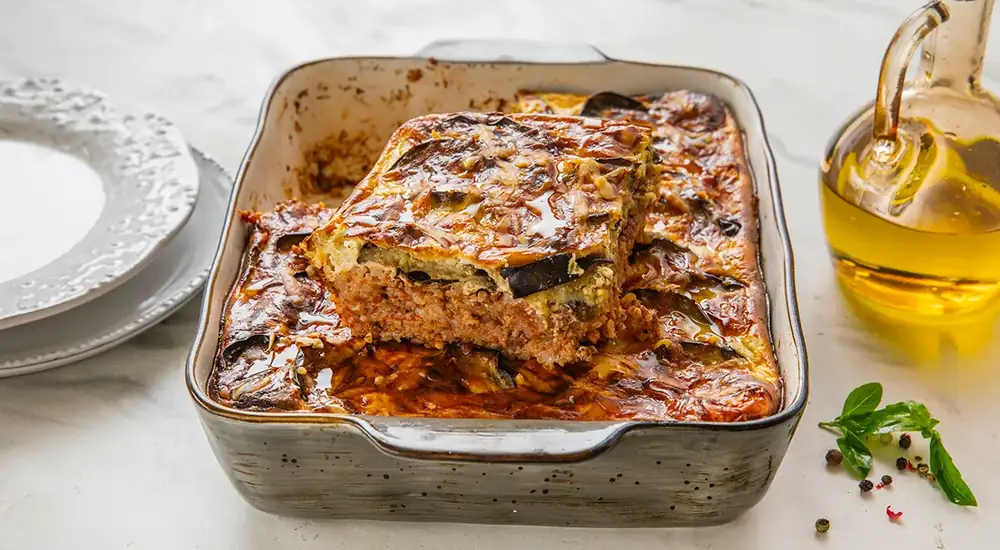
Moussaka with rice and eggplant
Slice the eggplants into 6-7 mm thick slices.
Step 1
Slice the eggplants into 6-7 mm thick slices. Sprinkle them with salt, place them in a sieve or colander, and let them sit for half an hour. Then rinse the eggplants under running water and pat dry with paper towels. Peel and finely chop the onion and garlic. Wash the rice and drain it in a sieve.
Step 2
Heat half the olive oil in a large nonstick skillet over medium heat. Fry the eggplant slices in batches on both sides until lightly browned. Add more oil to the pan if needed. Drain the eggplants on paper towels.
Step 3
Add the remaining olive oil to the same pan and sauté the onion for 5 minutes, until translucent and lightly golden. Add the garlic and cook for another minute.
Step 4
Add the ground beef to the pan with the onion and garlic and cook, breaking up any lumps with a spatula, until the ground beef changes color and is browned. Drain off any excess fat if necessary.
Step 5
Season the ground meat with cinnamon, oregano, salt, and black pepper to taste. Add the tomato paste and sauté for a couple more minutes. Then add the canned tomatoes. Simmer over low heat for 5 minutes or until the mixture thickens.
Step 6
Add the rice and beef broth to the pan. Stir, bring to a boil over high heat, then reduce the heat and simmer the ground beef and rice over low heat, covered, for 15 minutes.
Step 7
Preheat the oven to 190°C (375°F). If the pan is oven-safe, leave the rice mixture in it. If not, transfer the ground beef and rice to a baking dish.
Step 8
Evenly distribute the eggplant slices over the rice and meat mixture. Prepare the dressing: in a bowl, whisk together the Greek yogurt, eggs, nutmeg, and half of the grated Parmesan cheese until smooth.
Step 9
Pour the yogurt mixture over the layered eggplants, spreading it evenly. Sprinkle the surface with the remaining Parmesan cheese. Place the pan in the oven and bake the moussaka with rice and eggplant for about half an hour, or until the top is golden brown. Let the casserole cool slightly before slicing.
Moussaka recipes are undoubtedly a treasure of Balkan and Greek cuisine. This is the legacy of generations of Bulgarians and Greeks who know how to grow eggplants, tomatoes, and potatoes in a way that evokes admiration. Plus, the culinary traditions of these countries have given the world dozens of moussaka recipes. We love moussaka too, and in this article, we've collected the most interesting recipes, along with helpful tips from respected moussaka experts.
Moussaka is similar to both Italian Parmigiana and French gratin, but it has remained a signature dish of Greek cuisine since the Greeks discovered tomatoes. The name itself isn't Greek at all, but Arabic, and moussaka is made not only in Greece, but is especially delicious with Greek cheeses. These days, you can buy halloumi or kefalotyri in Moscow, so there's almost nothing between you and a wonderful moussaka other than a trip to the store and a couple of hours of hands-on time.
Moussaka is a meat and vegetable casserole that has been prepared for centuries in Greece and several Balkan countries, the recipe passed down from generation to generation. But why are there so many variations of moussaka, and why are they all so different? In Greece, you'll never be served the same moussaka in two taverns, even if the menu lists identical ingredients—every chef adds their own signature touch. We suggest making moussaka using our recipe, which is quite authentic in its ingredients. However, you can adjust the spice ratios to suit your taste, just like Greek chefs do.
This hearty dish with aromatic vegetables, juicy pieces of meat, and rich spices and sauce is renowned worldwide. Different national cuisines offer their own moussaka recipes: with eggplant or potatoes, with or without meat. In this article, we'll explain why Greek moussaka has become a culinary classic, how the dish is prepared in Turkey, Romania, Egypt, and other countries, and what subtleties you need to know to ensure a delicious and juicy dish.