How to make homemade fish sauce
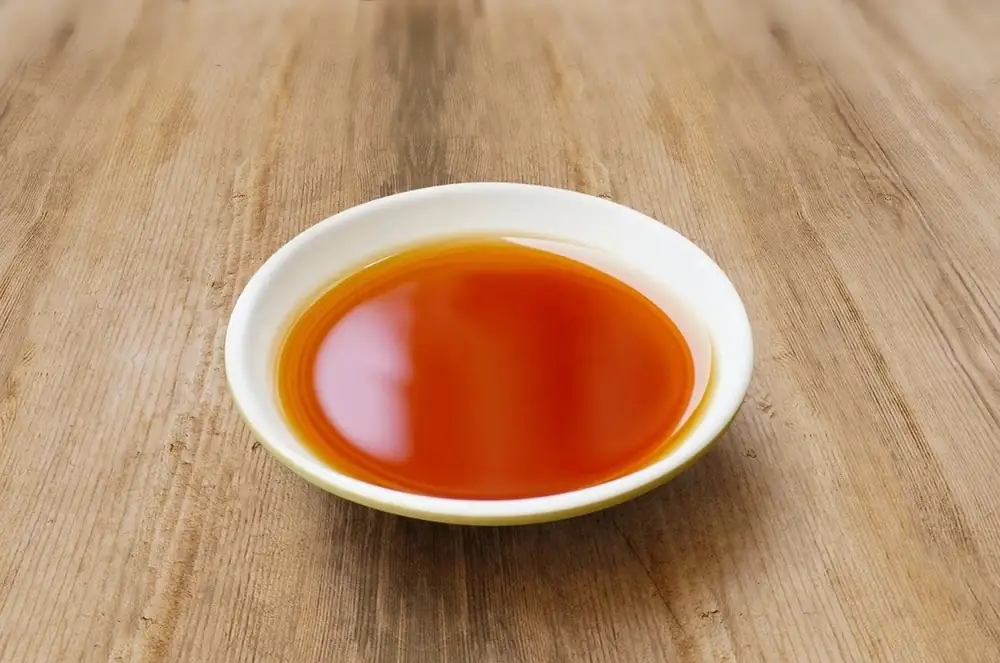
This homemade fish sauce is a great way to add intense umami flavor without too much fuss.
- 100 gr de anchoas en conserva, preferiblemente en aceite
- 250 ml de agua
- 1 cdita de sal
- 1 diente de ajo
- 10 gr de jengibre fresco
- 1 cdita de salsa de soja
- 1 cdita de azúcar
- 1 cdita de vinagre de arroz
- 1 hoja pequeña de laurel
- Escurre ligeramente las anchoas y colócalas en una olla pequeña.
- Añade el agua, el ajo machacado, el jengibre, el laurel y la sal.
- Cocina a fuego bajo durante 20-25 minutos, sin dejar que hierva con demasiada fuerza.
- Retira del fuego y deja reposar la preparación durante 10 minutos.
- Cuela primero con un colador fino y después pásala por una gasa o filtro de café para obtener una salsa más limpia.
- Devuelve el líquido a la olla y agrega el azúcar, la salsa de soja y el vinagre de arroz.
- Cocina durante otros 5 minutos a fuego bajo para concentrar ligeramente el sabor.
- Prueba y ajusta la sal si es necesario.
- Deja enfriar completamente antes de envasar.
- Guarda en un frasco de vidrio limpio y refrigerado.
The key is to cook the ingredients slowly to extract all their flavor and then strain the mixture very well. The result is a concentrated, salty sauce with that characteristic seafood touch, but homemade and without preservatives.
How to make homemade and inexpensive fish sauce
- 13 servings
- 200 Kcal
- 100g of preserved anchovies, preferably in oil
- 250 ml of water
- 1 teaspoon of salt
- 1 clove of garlic
- 10g of fresh ginger
- 1 tsp of soy sauce
- 1 tsp of sugar
- 1 tsp of rice vinegar
- 1 small bay leaf
- Drain the anchovies slightly and place them in a small pot.
- Add the water, crushed garlic, ginger, bay leaf, and salt.
- Cook over low heat for 20-25 minutes, without letting it boil too vigorously.
- Remove from heat and let the preparation rest for 10 minutes.
- First strain through a fine sieve, then pass through cheesecloth or a coffee filter for a cleaner sauce.
- Return the liquid to the pot and add the sugar, soy sauce, and rice vinegar.
- Cook for another 5 minutes over low heat to slightly concentrate the flavor.
- Taste and adjust the salt if necessary.
- Allow to cool completely before packaging.
- Store in a clean, refrigerated glass jar.
Tips for making an excellent fish sauce
- Use good quality anchovies: they are the main source of umami flavor.
- Do not cook over high heat: overly aggressive cooking can produce a bitter taste.
- Don't overdo it with the salt: the anchovies and soy sauce already provide plenty.
- Strain the mixture twice for a cleaner texture.
- Ginger should be used sparingly so as not to overpower the marine flavor.
- The sugar is not meant to sweeten the sauce, but to balance its intensity.
- Add the vinegar at the end to better preserve its acidic touch.
- Let it cool down before definitely tasting it, because the flavor changes slightly when the temperature drops.
- Use a perfectly clean glass jar with an airtight lid.
- Keep the sauce refrigerated and prepare small quantities, as this homemade version does not keep as well as a commercially fermented fish sauce.
How to use homemade fish sauce?
You can use it in small amounts to prepare fried rice, noodles, soups, curries, marinades for chicken or fish, stir-fried vegetables, and dressings. Start with 1 teaspoon and gradually increase until you find your desired level of saltiness and umami flavor.
Can it be made at home without fermenting?
Yes. This recipe uses cooked anchovies to quickly achieve a concentrated, umami flavor. It's a homemade alternative to traditional fermented fish sauce.
What type of fish can be used to make homemade fish sauce?
Anchovies are one of the best options due to their intense flavor and high umami content. Other small, oily fish can also be used, although the result will be different.
Does the sauce taste the same as the commercial one?
Not exactly. Traditional salsa is obtained through prolonged fermentation, which develops more complex flavors. This version aims to reproduce its salty and umami profile much more quickly.
Does this sauce need refrigeration?
Yes. Since this preparation does not undergo a prolonged fermentation process and does not contain commercial preservatives, it must be kept refrigerated.
How long does homemade fish sauce last?
For safety and quality, it's best to prepare small batches, keep refrigerated at all times, and use it within a short period. If it changes in smell, color, texture, or appearance, discard it.