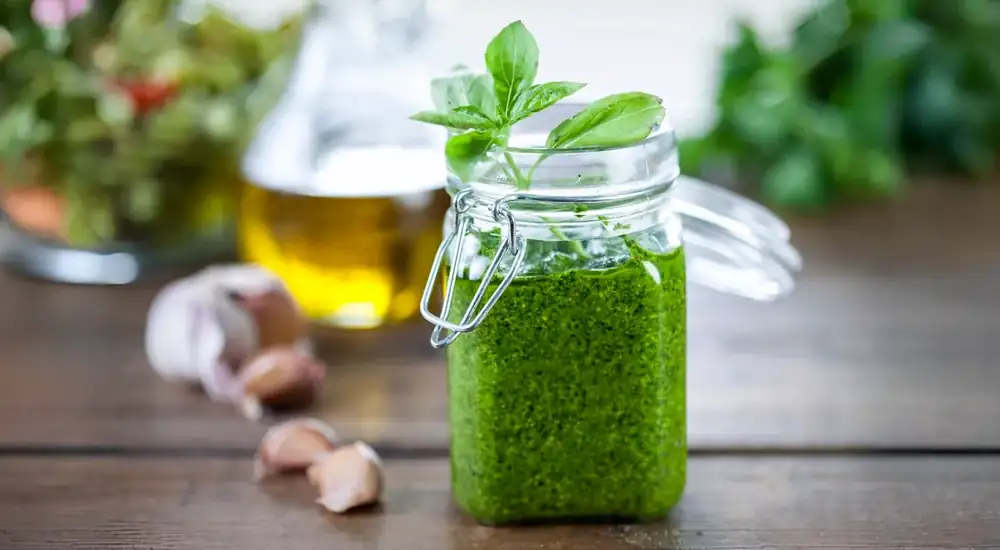
Olive oil sauce with basil and parsley a la pesto
A sauce (from the French "sauce" - gravy) is a liquid condiment for a main dish.
Step 1
Prepare all the herbs. Remove the thin sprigs of parsley, oregano, and basil, along with the leaves. Rinse them under cool running water, then pat dry with paper towels. Coarsely chop and transfer to a blender.
Step 2
Peel the onion and garlic. Coarsely chop the onion. Crush the garlic with a knife to release more of the aromatic juice. Add the prepared onion, garlic, and lime juice to the blender with the parsley, oregano, and basil.
Step 3
Now pour in the oil. Add ground sweet paprika and hot red pepper. Close the blender lid and pulse until the sauce thickens.
Step 4
Season with salt to taste. Blend again. Pour the sauce into a clean jar. Close the lid and refrigerate. Shake several times before using.
A sauce (from the French "sauce" - gravy) is a liquid condiment for a main dish. Sauces are not only served with finished dishes but also used during their preparation (that is, foods are sautéed in sauce or baked in sauce). Sauces have been known since ancient times (for example, the ancient Roman garum, also known as liquamen, made from small fermented fish, is similar to Thai nam pla and Vietnamese nuoc nam). Each sauce consists of a liquid base and additional ingredients - vegetables, fruits, herbs, spices, and seasonings.
Pesto is a sauce loved around the world, and for good reason. It's rich in flavor, versatile in presentation, and surprisingly easy to prepare. We're accustomed to classic pesto made with basil, olive oil, nuts, and hard cheese—but that's just one of many variations. This collection features 10 original recipes that are easy to recreate at home.
Are you familiar with tzatziki sauce? It's easy to miss the mark, as people pronounce it in so many different ways! Tzatziki, satsiki, djadjiki... The essence remains the same: the sauce is made with thick Greek yogurt with grated fresh cucumbers, minced garlic, and lemon juice. Tzatziki is very quick to prepare, provided, of course, you have good-quality yogurt on hand. We're talking about the kind of yogurt that's so thick in Greece that it resembles our soft cottage cheese. If you can't find this product, use regular liquid yogurt and remove excess moisture using the method described in our recipe. Then, using the resulting thick yogurt, you can make a real tzatziki sauce that can be served with meat, poultry, and even fish.