Homemade stew without an autoclave: a few simple recipes
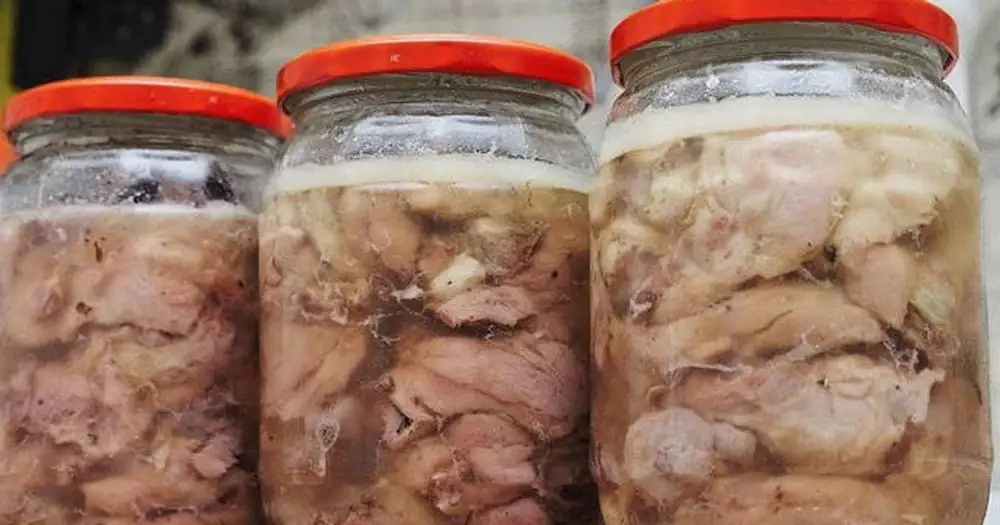
Homemade stew is often prepared for storage and sealed in jars.
The reason is the temperature. The State Food and Consumer Protection Service notes that when canning meat and fish products at home, sterilization at 115–120 °C for at least 40–60 minutes is required, followed by hermetic sealing.
In a regular pot of water, this mode cannot be achieved. At normal atmospheric pressure, water boils at about 100 °C. Even if the jars are kept in boiling water for several hours, their temperature will not rise to the required 115–120 °C. This requires equipment that creates increased pressure, such as an autoclave.
Therefore, without an autoclave, you can prepare a delicious stew at home and put it in jars, but such jars should not be left for long-term storage at room temperature. After cooling, the stew should be placed in the refrigerator, and if you need to keep it longer, freeze it.
The recipes below are designed specifically for this type of homemade stew without an autoclave.
A simple recipe for stew made from any meat
This recipe is suitable for pork, beef, or chicken.
Ingredients for 1 kg of meat
- meat — 1 kg
- salt — 15–20 g
- bay leaf — 2–3 pcs.
- black pepper - 5–7 peas
- lard or fat — 100–150 g, optional, if the meat is lean
Cut the meat into large pieces. If it is lean, you can add a little lard or fat.
Put everything in a heavy-bottomed saucepan, add salt, pepper and bay leaf. Cook, covered, over low heat for about 2–3 hours.
You don't need to add a lot of water, as the meat will release its own juices during slow braising. The finished meat should be very tender and easily separated into fibers.
When the meat is ready, it can be placed in clean, prepared jars, along with the hot juice and fat. After cooling, they should be placed in the refrigerator. For longer storage, it is better to freeze the stew in portions.
Pork stew
For stew, it is best to use a shoulder blade, neck, or thigh.
Ingredients
- pork - 2.5 kg
- lard - 300 g
- salt - 2.5 tbsp.
- black peppercorns — 15–20 pcs.
- bay leaf — 5 pcs.
- allspice - 5–6 peas
The pork should be cut into pieces approximately 3–4 cm in size, and the lard should be cut into smaller pieces.
The meat is mixed with salt and left for about 30 minutes. It is then cooked over low heat in its own juices. After boiling, it is stewed for about 2.5–3 hours, stirring occasionally.
At the end, add pepper and bay leaf and cook for about 10–15 minutes more.
As a result, the pork should become so soft that it can be easily separated with a fork.
Pour the hot stew, along with the juice and rendered fat, into clean jars. Once cooled, place them in the refrigerator.
Pork and chicken stew in the oven
There is a variant that combines two types of meat.
Ingredients
- pork - 2.5 kg
- boneless chicken thigh — 2.5 kg
- salt - 1 tsp without a slide per 0.5 l jar
- bay leaf - 1 pc. per jar
- allspice - 2 peas each
- black pepper - 6 peas
- water - 1–1.5 tbsp. l.
It is recommended to leave the chicken skin on in this recipe - it adds fat.
Pork and chicken are cut into approximately equal pieces. Bay leaves and pepper are placed at the bottom of the jars, after which they are filled with meat, salt and a little water are added.
The jars are placed in a cold oven, after which the temperature is set to 180 ° C. When the jars begin to boil actively, the temperature is reduced to 150 ° C and the meat is cooked for about 3 more hours.
This method can be used to prepare stew as a ready-made meat dish. However, the oven is not a substitute for pressure canning, so such jars should not be considered safe canning for many months at room temperature.
How to store stew cooked without an autoclave
Even if hot meat is placed in sterilized jars and sealed, regular stewing or cooking in the oven does not turn it into canned goods that are guaranteed to be safely stored all winter at room temperature.
Stew cooked without an autoclave should not be considered canned food for long-term storage at room temperature. It is better to keep it in the refrigerator, and if you need to stock up for a longer period of time, freeze it in portions.
The State Food and Consumer Protection Service of Ukraine warns that homemade canned meat prepared or stored in violation of the rules can cause botulism. The Ministry of Health of Ukraine also reminds about the risk associated with homemade meat canning.