Piadina Bread Recipe: Soft Italian Flatbread
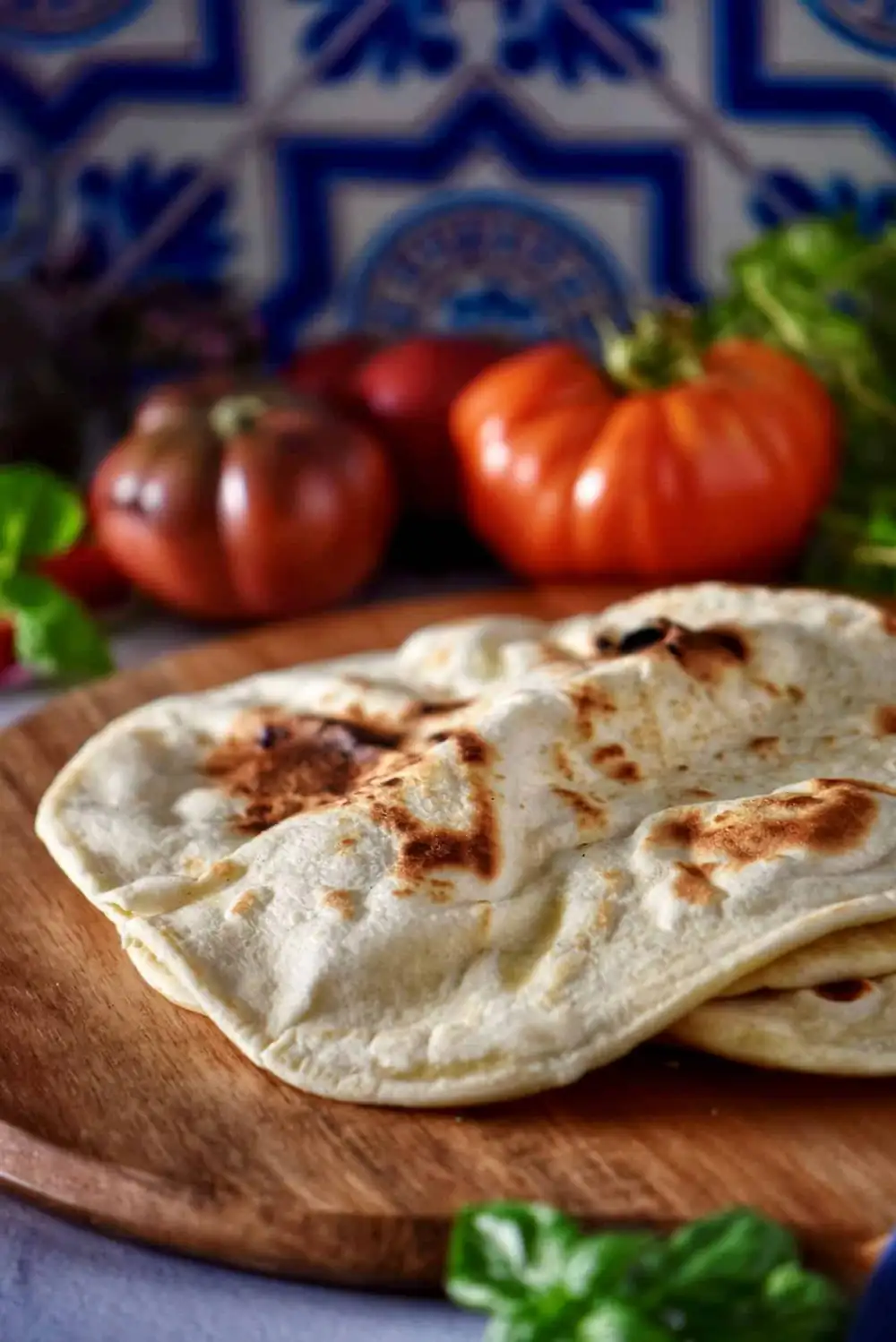
This piadina bread recipe makes a soft, Italian flatbread in under an hour. No yeast required, just a hot skillet.
- 2 cups 00 flour (284 grams, or all-purpose flour)
- ½ teaspoon baking powder
- ½ teaspoon salt
- ⅓ cup water (80 mL)
- ⅓ cup milk (80 mL)
- 2 teaspoons olive oil (extra virgin)
- additional flour for dusting the wooden board
- additional olive oil to brush the dough with
- In a large mixing bowl, whisk together the flour with the baking powder and the salt.
- In a small pan, combine the water, milk and olive oil. Warm the liquids over low heat until it’s just lukewarm (105°F/40°C), being careful not to overheat.
- Slowly pour the warmed liquid mixture into the bowl of dry ingredients. Stir with a wooden spoon or spatula until a dough starts to form.
- Transfer the dough to a lightly floured surface and knead for about 5 minutes, until smooth and elastic. I like to knead the dough directly in the bowl. If the dough feels too sticky, add a little more flour as needed.
- Wrap the ball of dough with plastic wrap. There is no need to brush it with oil.
- Allow the dough to rest for about 30 minutes at room temperature.
- Divide and shape the dough into 4 balls (approximately 120 grams each).
- Dust the wooden board lightly with flour. Use a rolling pin to flatten each ball into a round about an 8-inch round disc, ⅛-inch thick,
- Continue to roll out the other balls of dough (discs can be stacked, separated with a piece of parchment paper).
- Heat a large skillet or cast-iron pan over medium heat.
- While the pan is heating, brush one side of the piadina lightly with a little olive oil.
- Place the oiled side down in the hot pan and cook for 1-2 minutes, until golden spots form. Flip and cook the other side for another 1-2 minutes, until both sides are golden and the bread puffs slightly.
- Wrap in a clean tea towel to keep warm. Repeat with the rest of the dough.
- Serve immediately (while still warm) with your favorite fillings.
Piadina bread has been my go-to for busy weeknights ever since I first tried a version adapted from La Cucina Italiana.
It’s a soft, simple Italian flatbread made with just a handful of pantry staples, and it comes together on the stovetop in under an hour, no yeast and no oven required.
As a retired dietitian, I love recipes that are short on ingredients but big on flexibility, and piadina checks both boxes.
A touch of baking powder keeps this version soft and pliable, so it’s just as good wrapped around a simple sandwich as it is served alongside a bowl of soup.
Quick Overview
- Serving Suggestions: Pair with your favorite cured meatsand cheeses, or try this piadina sandwich with burrata, heirloom tomatoes, and arugula.
What is Piadina
Piadina, sometimes called piada, is a thin Italian flatbread that comes from Romagna, a historical region now part of Emilia-Romagna in northern Italy.
The bread has humble roots as a peasant food, originally made with nothing more than flour, water, and salt, and cooked on a hot terracotta slab called a testo.
Over time, fat (lard or olive oil) and a leavening agent became common additions, giving piadina the softer, more pliable texture most people know today.
By the mid-1900s, it had become a popular street food along the Adriatic coast, sold from small kiosks and piadinerie and folded around cured meats, cheeses, and vegetables.
“Piada” and “piadina” refer to the same bread. Piada is the shorter, more casual regional term, while piadina is the name most people outside Italy use.
What You’ll Need
- Flour: This recipe calls for 00 flour, but you can easily substitute with all-purpose flour. For a heartier option, use whole wheat flour, though the texture will be denser.
- Baking powder: Just ½ teaspoon is added to give the piadina a softer texture. If you prefer a traditional, unleavened flatbread, you can skip it.
- Salt: Enhances the overall flavor. You can adjust to taste but keep it minimal.
- Olive oil: Extra virgin olive oil add richness. For a more traditional taste, you can swap it with lard.
- Water and milk: These liquids keep the dough soft. For a dairy-free version, use water or plant-based milk.
How to Make Piadina
- Whisk the dry ingredients: In a large mixing bowl, whisk together 2 cups (284g) of 00 flour or all-purpose flour, ½ teaspoon baking powder, and ½ teaspoon salt until well combined.
- Heat the liquids: In a small pan, combine 2 teaspoons of extra virgin olive oil, ⅓ cup water and ⅓ cup milk. Warm the liquids over low heat until it's just lukewarm (105°F/40°C), being careful not to overheat.
- Combine the wet and dry ingredients: Slowly pour the warmed liquid mixture into the bowl of dry ingredients. Stir with a wooden spoon or spatula until a dough starts to form.
- Knead the dough: Transfer the dough to a lightly floured surface and knead for about 3-5 minutes until smooth and elastic. I like to knead the dough directly in the bowl. If the dough feels too sticky, add a little more flour as needed.
- Rest the dough: Cover it with a clean kitchen towel or plastic wrap and let it rest for 30 minutes to allow the gluten to relax.
- Shape the piadina: After resting, divide the dough into 4 portions. Roll each portion into a ball, then use a rolling pin to flatten each ball into a round about an 8-inch round disc, ⅛-inch thick. Note that if you are having difficulty rolling out the dough, cover loosely with plastic film and let the dough rest for 10-15 minutes.
- Keep them warm: Wrap in a clean tea towel to keep warm. Repeat with the rest of the dough.
- Serve: Serve the piadina warm with your favorite fillings or toppings. Enjoy!
Tips for Best Results
- If possible, use 00 flour for a softer, more tender texture. If not, all-purpose flour is a great substitute.
- Ensure the water and milk are lukewarm (around 105°F) to help the dough come together smoothly without over-developing gluten.
- Over-kneading can make the piadina too tough. Once the dough feels soft, stop kneading.
- Let the dough rest for 30 minutes. This makes it easier to roll out and results in a more tender flatbread.
- Instead of drizzling oil in the pan, brush each side of the piadina with olive oil for even cooking and extra flavor.
Is piadina the same as piada?
Yes. Piada is simply the shorter, more casual name for the same flatbread, more commonly used within the Romagna region itself.
Is this a traditional piadina recipe?
It’s inspired by tradition with a couple of modern touches. Traditional versions often use lard and skip any leavening agent. This version uses olive oil and a small amount of baking powder for a lighter, softer result that’s easier to make at home.
Can I make the dough ahead of time?
Yes, you can prepare and refrigerate the dough for up to 24 hours before cooking.
How long does piadina stay fresh?
Freshly made piadina is best consumed within 1-2 days when stored properly.
How do I store piadina in the refrigerator?
First, allow the flatbreads to cool down completely. Once cooled, place them in an airtight container. You can then refrigerate the piadina for up to 2 days.
Can piadina be frozen?
Yes, cooled piadina can be frozen for up to 3 months. Before freezing, separate each flatbread with parchment paper.
What are some common fillings for piadina?
Popular fillings include prosciutto, mozzarella, arugula, and tomatoes, but you can get creative with your favorite ingredients like this Piadina sandwich with burrata, heirloom tomatoes and arugula.
Yeast-free Bread Recipes
If you love piadina’s simplicity, here are a few more no-yeast bread recipes to try.
Recipe Origins
I've adapted this Italian flatbread recipe from one that I found in La Cucina Italiana.
When I first got married, my husband gifted me a wonderful subscription to this Italian food magazine.
At the time, I wasn't sure if it was because he truly understood how much I enjoyed cooking or if he was hinting that my culinary skills could use some improvement 🙂.
Nevertheless, something worked because after 39 years, he is still my official recipe taster and pot washer, so it's all good.
As far as the changes are concerned, I substituted the lard with olive oil. Olive oil creates a piadina with a lighter and crispier texture, whereas lard (or even butter) will create a softer, denser texture.
I do hope you get a chance to try this piadina recipe.
★★★★★ If you have made this Piadina Bread, I would love to hear about it in the comments below and be sure to rate the recipe!
Piadina Bread Recipe: Soft Italian Flatbread
piadina bread recipe makes a soft, Italian flatbread in under an hour. No yeast required, just a hot skillet.
photos in the post and a short video in the recipe card to guide you through the recipe.
To refrigerate: Once they have cooled down, place in an airtight container and refrigerate for up to 3 days.
To freeze: Once they have cooled down, place in an airtight container and freeze for up to 3 months. Separate with a piece of parchment paper.
To reheat: Remove piada from refrigerator or freezer and place in a large skillet over medium-low heat. Reheat gently.