Cómo preparar corazones de pollo estofados
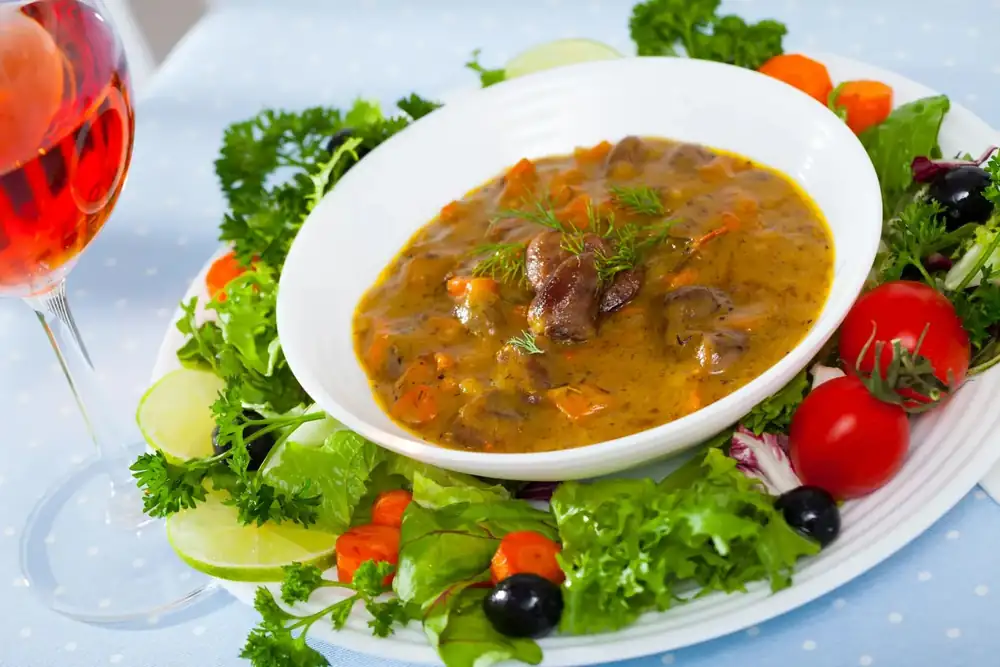
Deliciosos corazones de pollo estofados con cebolla, pimientos y zanahorias. Un plato que puede resultar inusual, pero que es muy tradicional.
- 600 g de corazones de pollo frescos
- 2 zanahorias medianas
- 1 cebolla blanca grande
- 2 dientes de ajo
- 100 g de guisantes (chícharos)
- 1 pimiento rojo (pimentón)
- 2 patatas (papas medianas)
- 150 ml de vino blanco seco
- 500 ml de caldo de pollo o carne
- 2 cucharadas de aceite de oliva virgen extra
- 1 hoja de laurel
- Sal y pimienta negra al gusto
- Una pizca de tomillo seco
- Limpia los corazones retirando la capa de grasa superior y las pequeñas arterias con un cuchillo afilado. Haz un corte longitudinal sin llegar a separarlos del todo para eliminar cualquier coágulo de sangre en el interior. Lávalos bajo el grifo con agua fría y sécalos muy bien con papel de cocina.
- Calienta el aceite en una olla amplia a fuego medio-alto. Cuando esté bien caliente, añade los corazones y séllalos hasta que estén dorados por fuera. Este proceso de Maillard es clave para que el guiso tenga un sabor intenso. Retira los corazones y reserva.
- En la misma olla, baja el fuego a nivel medio y añade la cebolla y el pimiento picados en cubos pequeños. Sofríe durante 8 minutos hasta que la cebolla esté transparente.
- Incorpora el ajo picado finamente y la zanahoria cortada en rodajas de medio centímetro. Cocina por 3 minutos más cuidando que el ajo no se queme.
- Regresa los corazones a la olla y vierte el vino blanco. Sube el fuego y deja que el alcohol se evapore durante 2 minutos mientras raspas el fondo de la olla para recuperar los jugos del sellado.
- Añade las patatas peladas y cortadas en cubos de 2 centímetros, la hoja de laurel y el tomillo.
- Vierte el caldo hasta cubrir todos los ingredientes. Cuando rompa a hervir, baja el fuego al mínimo, tapa la olla y cocina durante 25 minutos.
- Añade los guisantes y rectifica de sal y pimienta. Cocina 5 minutos adicionales sin tapa para que la salsa espese un poco.
- Apaga el fuego y deja reposar el estofado 5 minutos antes de servir para que los sabores se asienten.
Delicious braised chicken hearts with onions, peppers, and carrots. A dish that may be unusual but is very traditional.
Making a good stew with them requires a crucial first step: cleaning. If you skip the traces of blood or excess fat, the stew can end up bitter or heavy. In this version, we're going to transform a humble ingredient into a hearty, comforting dish, using a searing technique to enhance the flavor and a selection of vegetables that add sweetness and balance.
Recipe for braised chicken hearts
- 1 h
- 285 Kcal
- 600g of fresh chicken hearts
- 2 medium carrots
- 1 large white onion
- 2 cloves of garlic
- 100 g of green peas
- 1 red bell pepper paprika
- 2 medium potatoes
- 150 ml of dry white wine
- 500 ml of chicken or beef broth
- 2 tablespoons of extra virgin olive oil
- 1 bay leaf
- Clean the hearts by removing the top layer of fat and any small arteries with a sharp knife. Make a lengthwise cut without cutting all the way through to remove any blood clots inside. Wash them under cold running water and dry them thoroughly with paper towels.
- Heat the oil in a large pot over medium-high heat. When it's very hot, add the hearts and sear them until golden brown. This Maillard reaction is key to giving the stew its intense flavor. Remove the hearts and set aside.
- In the same pot, reduce the heat to medium and add the diced onion and bell pepper. Sauté for 8 minutes until the onion is translucent.
- Add the finely chopped garlic and the carrot cut into half-centimeter slices. Cook for 3 more minutes, being careful not to burn the garlic.
- Return the hearts to the pot and pour in the white wine. Turn up the heat and let the alcohol evaporate for 2 minutes while you scrape the bottom of the pot to recover the juices from searing.
- Add the peeled and diced potatoes (cut into 2-centimeter cubes), the bay leaf, and the thyme.
- Pour in the broth until all the ingredients are covered. Once it comes to a boil, reduce the heat to low, cover the pot, and cook for 25 minutes.
- Add the peas and adjust the seasoning with salt and pepper. Cook for an additional 5 minutes uncovered to allow the sauce to thicken slightly.
- Turn off the heat and let the stew rest for 5 minutes before serving to allow the flavors to settle.
Tips for perfect chicken hearts
- To remove the strong ferrous taste, you can soak the cleaned hearts in a bowl of milk for 30 minutes before cooking them. Then drain and dry them thoroughly.
- The initial searing should be done with very dry meat. If the hearts have water in them, they will steam instead of browning, and you'll lose some of the dish's appeal.
- If you notice that the sauce is too thin at the end, mash a piece of cooked potato with a fork and mix it with the broth; this will thicken it naturally.
- Avoid adding salt at the beginning of cooking the hearts, as this can toughen their fibers. It's best to adjust the salt level halfway through or at the end of the cooking process.
How to store and reheat
Store leftovers in an airtight container in the refrigerator for up to 3 days. As this is a stew with potatoes, their texture may change slightly as it cools, becoming a bit more mealy.
To reheat, use a saucepan over very low heat, adding a couple of tablespoons of water or stock to thin the sauce. Avoid using a microwave at full power, as this can cause the hearts to burst or become rubbery.
Frequently Asked Questions – FAQs
What is the science behind achieving a tender texture in hearts?
Tenderness depends on collagen breakdown. As a muscle that works constantly, it requires prolonged cooking over low heat (between 85°C and 95°C) so that the fibers relax without hardening from excessive heat.
How to effectively remove the ferrous taste from offal?
The most effective technique is soaking in an acidic or dairy medium. Submerging the hearts in cold milk or water with a splash of vinegar for 20 minutes helps neutralize the metallic notes of residual blood.
How does freezing affect the texture of cooked heart?
Chicken hearts freeze well due to their muscle density. However, if the stew contains potatoes, they will become grainy upon thawing; it is recommended to freeze only the meat with the sauce and softened vegetables.
What happens if I don't remove the white grease on top?
That fat is saturated and has a high melting point. If it's not removed, it will leave a heavy, oily film on the palate that overpowers the flavor of the vegetables and wine.
Can you cook hearts without sealing them first?
Yes, but the dish will lose the "umami" that the Maillard reaction provides. Searing creates a flavorful crust that then dissolves into the broth, resulting in a much more complex and richer stew.