Julie Andrieu's “Speedy Spaghetti”: Her quick recipe that pleases the whole family
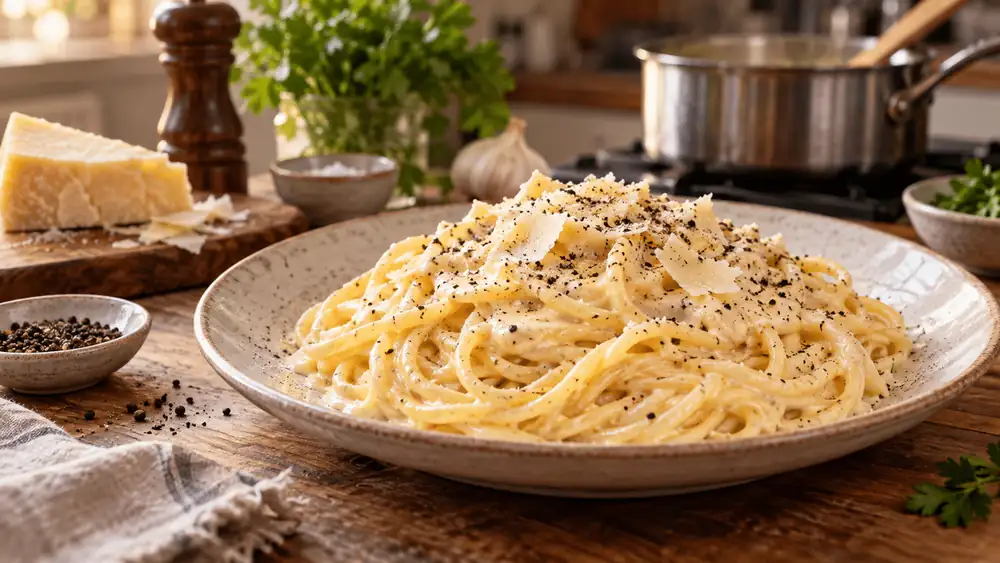
Julie Andrieu's speedy spaghetti is the perfect go-to dish for those evenings when you want to cook without complicating dinner.
- 300 to 400 g of spaghetti or rigatoni;
- 1 small clove of garlic, finely minced;
- 30 cl of liquid cream;
- 1 teaspoon of salty soy sauce;
- 100g of grated parmesan cheese;
- pepper;
- a little butter, optional, to melt the garlic.
- I recommend measuring everything before you start making the sauce. The cream reduces quickly, and the Parmesan should be ready to be added to the pan as soon as it thickens enough to coat the back of a spoon. Using pre-grated cheese makes it easier to incorporate evenly, without leaving large pieces that would melt more slowly.
The principle is familiar, but two details give it a special touch. The soy sauce subtly enhances the seasoning, while the pasta water softens the cream and helps it coat each spaghetti or rigatoni more effectively. These are small, easy-to-reproduce gestures that prevent a thick sauce from settling in a lump at the bottom of the plate.
I also love this recipe because it doesn't require a long shopping list or complicated preparation. You simply need to keep an eye on the cream reduction and reserve the cooking water at the right time. The rest is very straightforward.
Why these quick pasta recipes work so well
Julie Andrieu calls her recipe "speedy spaghetti" and also presents it as her "Wednesday pasta". The idea is clear: to offer an accessible, comforting dish that is fairly quick to prepare, with a smooth cream-parmesan sauce that remains easy to master.
The small amount of soy sauce doesn't transform the pasta into an Asian dish. Rather, it adds a salty, umami note that can enhance the depth of the Parmesan and cream. Since the cheese and soy sauce are already salty, I recommend not automatically adding more salt. Taste before adding more: it's the surest way to maintain a balanced result.
The other crucial point happens in the pot. The cooking water contains starch released by the pasta. Incorporating it in small amounts at the last minute helps the sauce loosen and adhere. Before emptying the pot, reserve a small ladleful of the cooking water. If you'd like to delve deeper into this technique, here's why pasta shouldn't be drained too vigorously.
The ingredients of "speedy spaghetti"
To maintain the balance of the recipe, use 300 to 400g of spaghetti or rigatoni. Long pasta creates a wonderfully enveloping effect; rigatoni readily holds the sauce within its tubes. In both cases, keep the following quantities.
The preparation, step by step
- Cook the spaghetti or rigatoni in a pot of water. Just before draining them, remove a small ladleful of their cooking water and set it aside.
- In a pan, gently melt the finely minced garlic clove with a little butter. This butter is optional: the garlic can also be added directly to the cream.
- Pour in the 30 cl of liquid cream, then add the teaspoon of salty soy sauce.
- Let it reduce for about 5 minutes over medium heat, until the cream thickens enough to coat the back of a spoon. Watch it carefully and stir to maintain a consistent reduction.
- Add the 100g of grated Parmesan cheese. Stir just until it melts, then turn off the heat.
- Add the pasta to the pan and pour in a small ladleful of the cooking water. Mix thoroughly to bind the sauce and coat the pasta. Season with pepper, taste, and adjust the seasoning only if necessary.
The coating texture is easy to recognize: the cream has thickened, but it remains fluid and glossy. Don't wait until it's very thick, as the Parmesan will thicken it further. The cooking water is then added to restore the necessary smoothness.
The correct order to avoid an overly thick sauce
The order of actions matters more than technique. First, reduce the cream with the soy sauce, then melt the Parmesan, and finally turn off the heat before combining the sauce and pasta. This pause minimizes the risk of the mixture continuing to thicken during mixing.
Add the small ladle of water gradually if you prefer to control the consistency. Stir, observe, then adjust with the reserved liquid. The goal is to obtain a sauce that coats the pasta, not a runny base. The thickening process takes place directly in the pan, where each ingredient can distribute evenly.
Two simple variations to complete the plate
The cream and Parmesan base can accommodate a few additions without losing its practicality. For a touch of green, add frozen peas to the pasta water 3 minutes before the end of cooking. They will cook in the same pot, avoiding the need for multiple utensils and allowing you to mix them into the pasta.
You can also slice leftover roast chicken into thin strips and add it to the dish. Cooked ham, cut in the same way, is the other suggested variation. In both cases, the idea is to complement the pasta with leftover ingredients, without changing the base of the sauce.
If your cupboard is nearly bare, the original version is perfectly sufficient. And when the urge for another minimalist dinner strikes, these quick recipes with just three ingredients offer further options in the same spirit.
The details that make all the difference when serving
The main pitfall would be to salt the water, cream, and the dish without considering the soy sauce and Parmesan cheese. Their intensity varies depending on the ingredients. Tasting at the end of preparation is therefore more reliable than a predetermined amount of salt. Pepper, on the other hand, can be added after mixing to enhance the cream without masking its balance.
Another important point: don't leave the pan on medium heat once the cheese has melted. The residual heat is enough to finish the mixture, while prolonged cooking could make the sauce thicker. If it does thicken, use a little of the reserved water rather than adding more cream.
Finally, mix thoroughly so that the sauce seeps between the rigatoni or spreads along the entire length of the spaghetti. Serve as soon as the pasta is well coated: this is when the sauce has its most pleasant consistency.
A "Wednesday pasta" to remember
This recipe reminds us that a very simple pasta dish can be elevated by two well-chosen steps. The soy sauce subtly adds its salty, umami touch; the pasta water binds the cream, Parmesan, and pasta together without weighing down the dish.
With their easily identifiable ingredients, variations with peas, roast chicken, or ham, and a sauce prepared directly in the pan, Julie Andrieu's speedy spaghetti has all the hallmarks of a "Wednesday pasta" that you'll happily make again and again. What I particularly remember is that little ladleful set aside: it seems insignificant, but it's what gives the mixture its beautiful final consistency.
Material
- Casserole
- Stove
- suspicious
- In a pan, gently melt the finely minced garlic clove with a little butter. The butter is optional: the garlic can also be added directly to the cream.
- Let it reduce for about 5 minutes over medium heat, until the cream thickens enough to coat the back of a spoon. Watch and stir regularly.
Advice
- Taste before adding more salt: the soy sauce and parmesan already provide salt.
- Reserve a small ladleful of cooking water to loosen the sauce if it thickens.
- Variations: add frozen peas 3 minutes before the end of cooking, or strips of roast chicken or cooked ham to complete the dish.