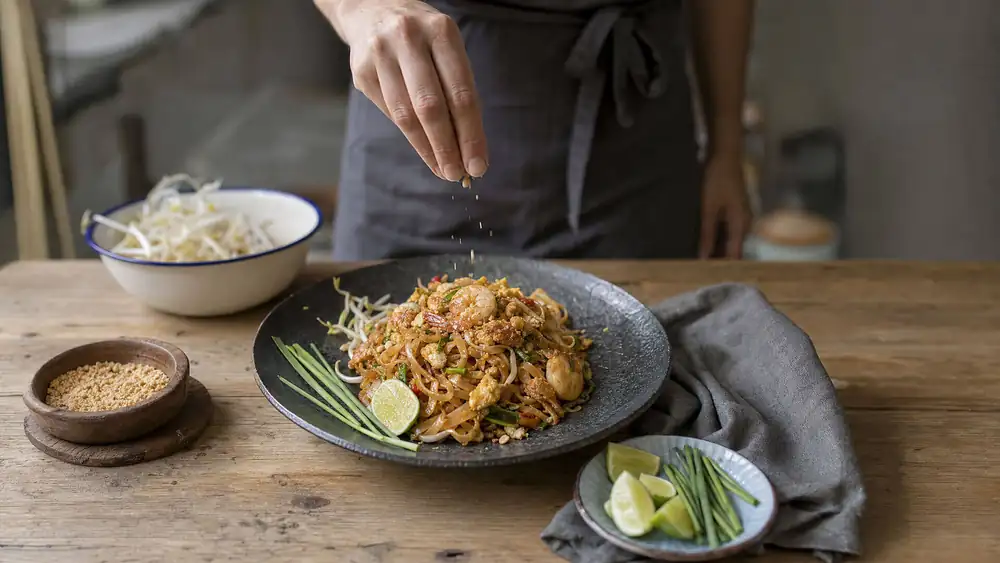
Pad Thai, the quick dinner full of sweet, sour and salty balance in 30 minutes
Every Wednesday, no matter the season, I make the same dinner.
Besides already having the spinach and onion pakora recipe saved, this is another one that's become one of my international favorites. My brother-in-law taught it to me after a trip to Thailand, and now I can't stop making it because it gets better every time.
The basic formula that changes everything
Before thinking about quantities, focus on the structure, because that's what will allow you to improvise without ruining the dish. A good homemade Pad Thai is always made with five pieces: rice noodles, a protein or vegetables, aromatics (garlic and shallot), the sweet and sour sauce, and a crunchy, fresh topping of peanuts, scallions, sprouts, and lime. If you understand this formula, you can change the protein or some of the vegetables, and the result will still be delicious.
According to Thailand's Department of Agricultural Extension, the dish combines rice noodles, shrimp, shallots, tamarind, palm sugar, bean sprouts, egg, tofu, dried chili, peanuts, and lime. It's a quintessential street food stir-fry, so don't expect restaurant perfection: aim for balance and good temperature.
The sauce is the heart of the flavor.
This is where almost everything hinges. The sauce must combine acidity, sweetness, and saltiness with that recognizable umami undertone. The tamarind provides the deep acidity, the sugar rounds out the blend, and the fish sauce adds salt and umami. The recipe for 4 servings calls for 6 tablespoons of tamarind concentrate, 3 tablespoons of brown or palm sugar, 3 tablespoons of fish sauce, 2 tablespoons of Thai black soy sauce, and 1 optional teaspoon of sweet soy sauce. Don't take this as a universal ratio: adjust to your taste.
The trick that makes all the difference: taste the sauce before adding it and aim for a slightly stronger flavor than you'd like. The noodles and other ingredients will dilute it during the stir-fry, so a robust mixture on the spoon usually ends up perfectly balanced on the plate.
How to make Pad Thai at home, step by step
The order matters as much as the ingredients. I prefer to have everything chopped and measured before heating the pan, because at high heat there's no time to adjust.
- Prepare the ingredients. Chop the protein, herbs, and vegetables, and mix the sauce separately. This mise en place is essential for the recipe to take 30 minutes and not twice as long.
- Hydrate the noodles. Soak them in hot water for 15 to 20 minutes. The real test is by touch: the noodle should bend and separate without breaking, but still hold its shape when bitten. Drain them well.
- Brown the protein. Heat oil in a large skillet over high heat, sear the protein until browned, and remove it.
- Cook with herbs and egg. Sauté garlic and shallot for a few seconds, without burning them. Remove the ingredients, add a little more oil, and cook the egg until it's about 70% set before adding it to the pan; this way you'll have recognizable pieces.
- Add noodles and sauce gradually. Stir in the drained noodles and pour in the sauce little by little, tossing the mixture so it coats evenly without becoming soggy.
- Finish with freshness. Add bean sprouts and scallions, return the protein, stir-fry for half a minute, and serve immediately with peanuts, lime, and chili.
Three versions to adapt it to your pantry
- Pad Thai with tofu. The vegetarian option that does appear in official sources. Use firm, well-dried, and golden-brown tofu, and substitute the fish sauce with soy sauce, tamari, or miso.
- Pad Thai with chicken. A convenient variation for home cooking, although it's not the traditional version, which features shrimp and tofu. Cut the chicken breast into thin strips so it cooks quickly.
- Vegetable Pad Thai. If you're lacking protein, add julienned carrots, napa cabbage, or thin green beans. Don't overdo it, though: too many vegetables release water and dull the stir-fry.
Common mistakes that ruin a stir-fry
- Cook the noodles. If they go in soft, they'll come out mushy. They should be firm when they reach the heat.
- Overcrowd the pan. The official recipe book recommends cooking two servings at a time: a full pan loses heat and the noodles cook in their own liquid.
- Pour all the sauce in at once. Add it gradually to control the consistency.
- Burning the garlic. It makes the whole dish bitter in seconds.
- Load up on vegetables. Less is more to keep the sizzling.
Adjust all the details to the minimum
Before serving, taste and adjust. If it lacks acidity, add lime or a little more tamarind, keeping in mind that lime provides a more direct and lighter citrus freshness and doesn't completely replace the tamarind. If it's too strong, add a pinch of sugar. If it tastes bland, enhance it with soy sauce or fish sauce. And save the chili for last, so you can control the heat.
Ultimately, this easy Pad Thai recipe isn't a rigid formula—like crispy spring rolls—but rather a technique you can repeat with shrimp, chicken, tofu, or just vegetables. Have your mise en place ready, keep a large, very hot pan, taste the sauce before adding it, and finish with peanuts, lime, and chili when serving. Save it and make it the next time you're craving Asian food without leaving home.