Vietnamese banana exporters seek to move up the value chain
Vietnam's banana sector continues to expand its export presence, but for some producers and exporters the next step is not simply to ship more fruit, but to obtain greater value per kilogram by betting on higher quality production and targeting buyers willing to pay for consistency.
Vietnam exported bananas worth over $222.6 million in the first seven months of 2026, making it the country's second-largest fruit and vegetable export by value, second only to durian. China accounted for 66.7% of the export value, followed by South Korea with 16.7% and Japan with 8.8%.
Quynh Hoang of Gila Foods distinguishes two clearly differentiated segments within Vietnamese banana production: mountain and lowland. The difference is reflected not only in the growing conditions but also in the markets each segment targets.
"In the case of mountain bananas, the current situation in Vietnam is one of very limited production. The planted area is very small due to numerous problems related to climate, soil, and the necessary investment," Quynh points out.
According to their estimates, the area of organized commercial production in mountain areas is currently around 1,000 hectares, while the rest corresponds mostly to small farms.
Production in lowland areas is considerably higher and is concentrated in areas near Ho Chi Minh City and the port of Cat Lai. In this segment, the goal is to produce larger-sized fruit for mass-consumption markets, including China and various destinations in the Middle East, he explains.
Both segments, therefore, follow different strategies. Quynh compares the ambition of the mountain production segment to the Ecuadorian model, which has consolidated a strong position in the global banana trade, while lowland production is more oriented toward the Philippine model, with an emphasis on large-scale supply. "China and other markets are focused on buying the largest possible volume. For now, quality is not their priority," he says.
The challenge for Vietnam is to translate its increased production and export volumes into higher returns. According to Quynh, the average export price of Vietnamese bananas is not as competitive as that of some rival origins, including the Philippines.
"China will remain a core market in that strategy, but the focus is increasingly shifting towards the premium segment. Instead of competing solely with low-priced regional suppliers, Gila Foods is seeking out Chinese companies that already recognize the value of bananas from origins such as Ecuador or the Philippines."
For the company, accessing these markets requires more than just producing fruit that meets size requirements. It also involves organizing production and post-harvest handling to ensure consistency and meet the specific requirements of each destination.
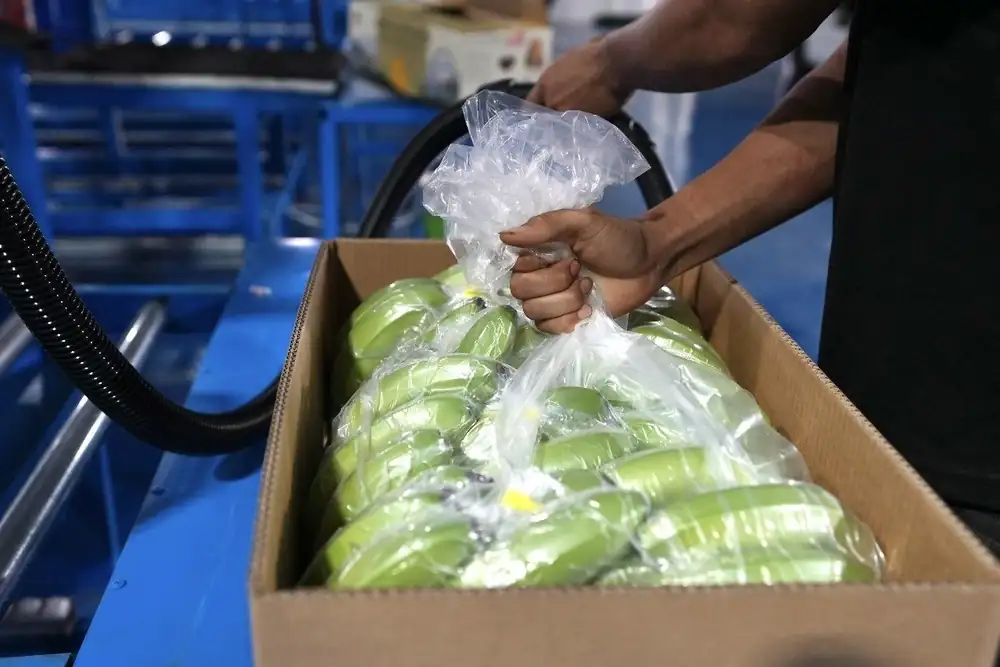
"We've worked hard to get things organized, not only on the farm, but also at the packing facility. This includes measures to ensure the boxes are insect-free and moving towards eliminating fumigation at the destination. GlobalG.AP certification is also part of the approach, along with other certifications required by each market."
For now, the supply from mountainous areas remains relatively small. "In 2025, around 62,000 tons of bananas were exported from mountainous areas. Although this is a modest figure compared to Vietnam's total banana export volume, the current supply is sufficient to meet existing demand."
What is changing is the composition of the markets. Demand is strengthening in higher-value markets such as Japan and South Korea, where buyers place greater importance on consistent quality, presentation, traceability, and reliable supply programs. For Gila Foods, this represents an opportunity for the mountain region, provided that the export-friendly growing areas continue to develop.
"The current supply is sufficient for today's market, but the development of new growing areas suitable for export will be fundamental to sustaining the next phase of growth in premium markets," Quynh points out.
For mountain production in particular, the challenge lies in building a sufficiently organized supply to support this positioning. Developing the higher-value segment is therefore a long-term process that requires better-organized farms, more robust packaging systems, certifications, and closer relationships with buyers.
As Quynh herself summarizes, the ultimate goal is to increase "the value of each kilogram exported," a change that could give Vietnam's mountain banana a more differentiated position alongside the country's larger, more commercially oriented production.