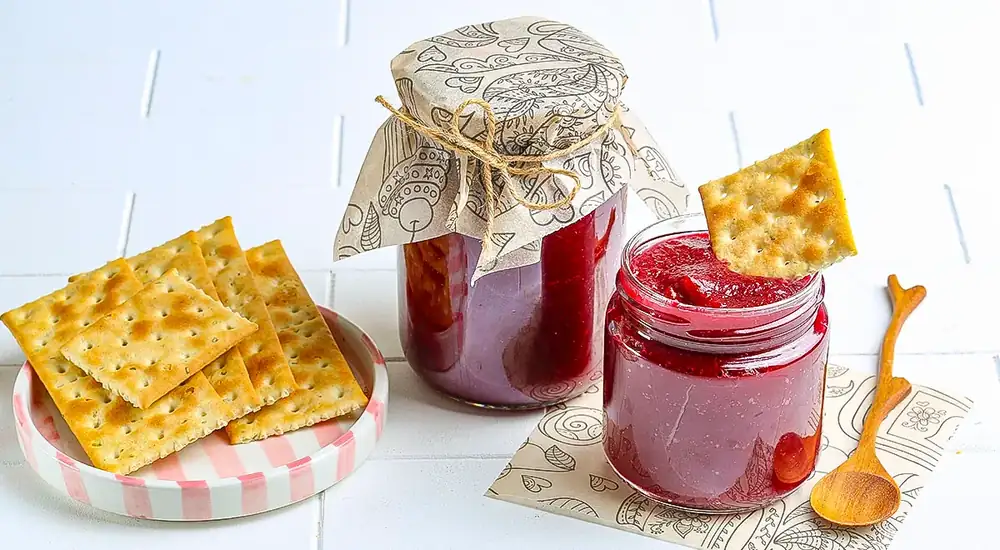
Kétchup de remolacha y jalapeño
La palabra "ketchup" se asocia invariablemente con los tomates, pero esta salsa se presenta en una gran variedad.
Beetroot ketchup with jalapeños
The word "ketchup" is invariably associated with tomatoes, but this sauce comes in a wide variety. Beetroot ketchup with jalapeño is a unique option that can be made at home without the need for long cooking times. The beets are first baked to soften them and retain their natural sweet flavor, then blended with spices and jalapeño. Hot peppers add the necessary piquancy and prevent the sauce from becoming too sweet. The ketchup's consistency is thick and smooth, making it perfect for serving with meat, poultry, pasta, potatoes, burgers, and sandwiches. This isn't a winter-preserved sauce, but a ready-to-use sauce that can be made for a specific dish and stored in the refrigerator.
Step 1
Preheat oven to 200°C. Wash the beets thoroughly. Pat dry. Wrap each beet in a double sheet of foil. Bake until tender, 45–60 minutes. Cool.
Step 2
Peel and dice the beets. Halve the jalapeño lengthwise, remove the seeds and membranes, and slice into thin half-moons. Coarsely chop the onion.
Step 3
Place the beets in a saucepan. Add the jalapeño, onion, vinegar, sugar, coriander, cloves, and salt.
Step 4
Bring to a boil. Reduce heat to low. Cover and simmer for 35 minutes.
Step 5
Blend with an immersion blender. Strain through a sieve.
Recipes for delicious homemade ketchup can be completely varied. You can experiment with spices and herbs, use different vinegars and sugars, choose seasonal tomatoes of different varieties, pickled tomatoes, or tomato paste as a base, and even use nectarines or apples for a richer flavor. We present tried-and-true recipes and 7 unexpected ways to use delicious homemade ketchup, from making a glaze for frying to boiling pork.
Have you ever made chili ketchup for the winter? If not, we suggest learning how to do it using our tried-and-true recipe. The key to success is plump yet juicy, large, and ripe tomatoes—seasonal, of course. Pink tomatoes, with their rich, slightly sweet flavor, or the beloved Astrakhan tomatoes are excellent. As for the ketchup's spiciness, don't overdo it: remove the seeds from the chili pepper the first time you try it. If you find the sauce not spicy enough, keep that in mind for future use. In any case, no one would ever call the resulting ketchup bland!
Is it worth making tkemali sauce for the winter if you can always buy something similar at the store? We're sure you can, because homemade tkemali is much more delicious and flavorful. And, of course, it's also natural, as homemade sauce contains no questionable ingredients, and you'll undoubtedly select the ingredients required for the recipe very carefully. Finally, it's worth noting that preparing tkemali sauce is effortless: the entire process is simple and straightforward. And the end result is a delicious seasoning that will transform even the most ordinary roast meat into a sophisticated dish.
August is ending, which means it's time for homemade winter preserves. Tomato preserves are especially popular – juicy tomatoes are used to make a variety of preserves that families enjoy all winter long. We'll show you how to make tomato paste, ketchup, and adjika for the winter.